Research Summary: Indigenous Land Zones and Wilderness
Publication: The Ecological Citizen
Year Originally Published: 2026 m
Using archaeological and ecological evidence, the authors describe Indigenous land use as spatially distributed into distinct zones. Examples from the Intermountain West and northeastern United States suggest that intensive land use was often concentrated in low-lying fertile valleys, while upland forests and mountainous regions were lightly used for hunting, gathering, and spiritual practices. This pattern mirrors our modern-day land use where most development is concentrated in lowlands, and most large Wildlands occur in inaccessible or infertile mountainous regions.
Key findings include:
- Indigenous land use was highly localized: Settlements, agriculture, and burning were largely confined to river valleys and coastal areas in relatively small patches, on the order of 10 to 20 acres.
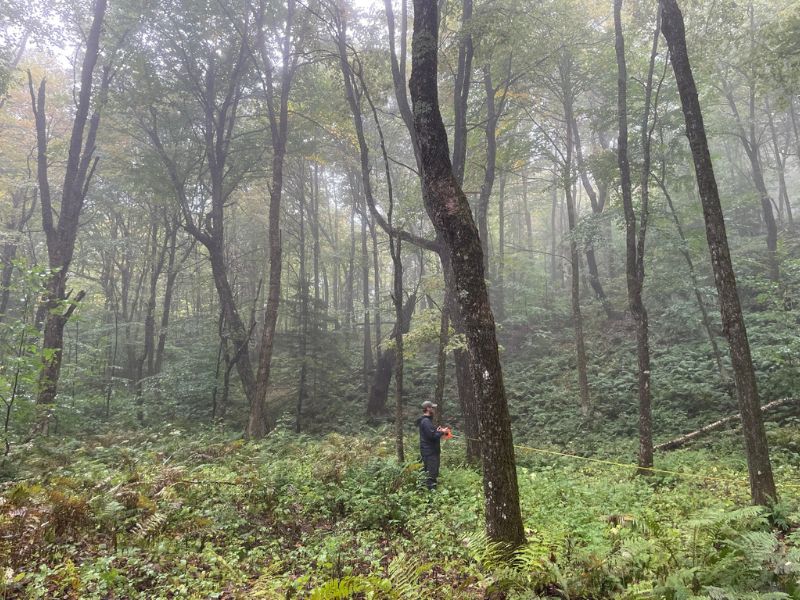
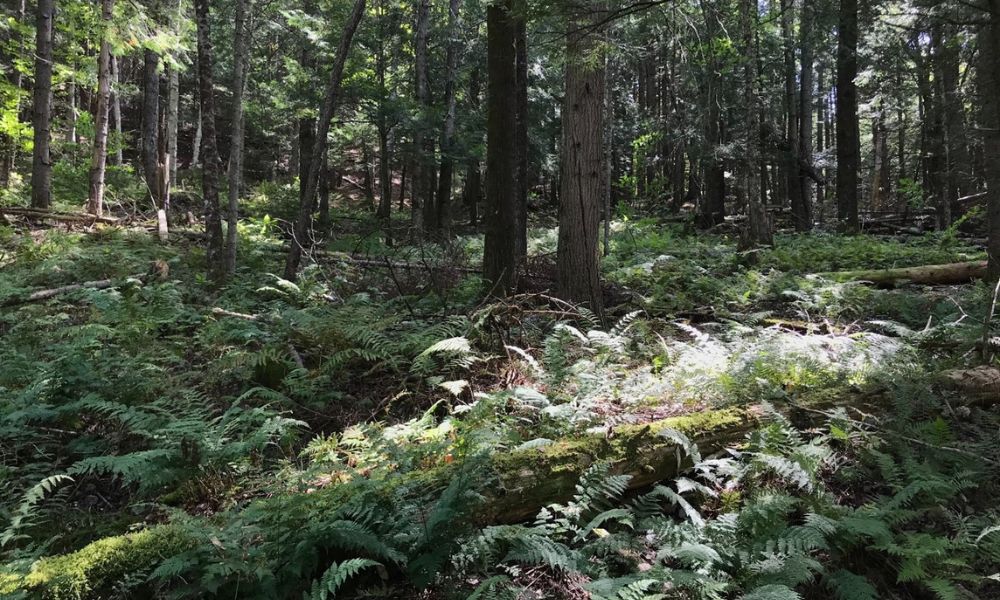
- Large upland forests were minimally impacted by humans: Upland regions, referred to as táuohkômuk (Algonquian) and titoqa-nót wétes (Nimiipuu, meaning “people-less land”) were primarily shaped by natural processes and largely absent of permanent habitation.
- Human presence did not always imply intensive impacts: Many areas were visited often and used for hunting, ceremony, and travel between population centers, but cultural norms limited impact.
- Population densities were extremely low compared to modern day: Estimated population densities in the northeastern United States around 1500 CE were roughly 0.15 to 0.7 people per square kilometer.
- Modern wilderness areas overlap historical patterns: Many of today’s large Wildlands such as the Adirondacks and mountainous areas of northern New England align with areas that were historically uninhabited or lightly used.
Taken together, the evidence suggests that large portions of North America’s upland forests were characterized for centuries by minimal human disturbance and self-willed ecological processes. Modern concepts of wilderness mirror historical concepts of wilderness in practice, intent, and geographical distribution suggesting that wildlands conservation may be a continued tradition rather than a post-colonization concept.
Outstanding Questions/Caveats: This paper challenges the dominant narrative—popularized in works such as 1491—that human-altered landscapes were not only widespread across the Americas, but were the norm. However, it draws some sweeping conclusions from a limited geographic scope, focusing on just a small number of regions where this information was available. Areas where Indigenous land use may have been more intensive and/or more widespread such as fire-adapted forests, seem underrepresented.
The authors’ argument also relies, in part, on the absence of evidence, from which it can be difficult to draw definitive conclusions. While the ecological arguments are strong, the paper leans heavily on these patterns in landscape ecology to support its conclusions. The social and political questions of how Indigenous societies designated and use these lands are more complex and remain contested and are not fully supported by the evidence presented here.
Application to Northeast Wilderness Trust’s Work: The concept that wilderness has existed in some form in this region for as long as humans have inhabited it adds both philosophical and scientific integrity to NEWT’s mission. Rather than positioning wilderness as a countercultural response to colonization, development, and resource extraction, this insight puts wilderness in a broader perspective of carrying out a tradition of leaving land aside for self-willed processes to prevail. It also challenges the assumption that human management is needed in some systems for ecological integrity to exist, and strengthens the case for passive rewilding.
Link to the Paper: https://www.ecologicalcitizen.net/pdfs/epub-150.pdf