Visitor Guidelines
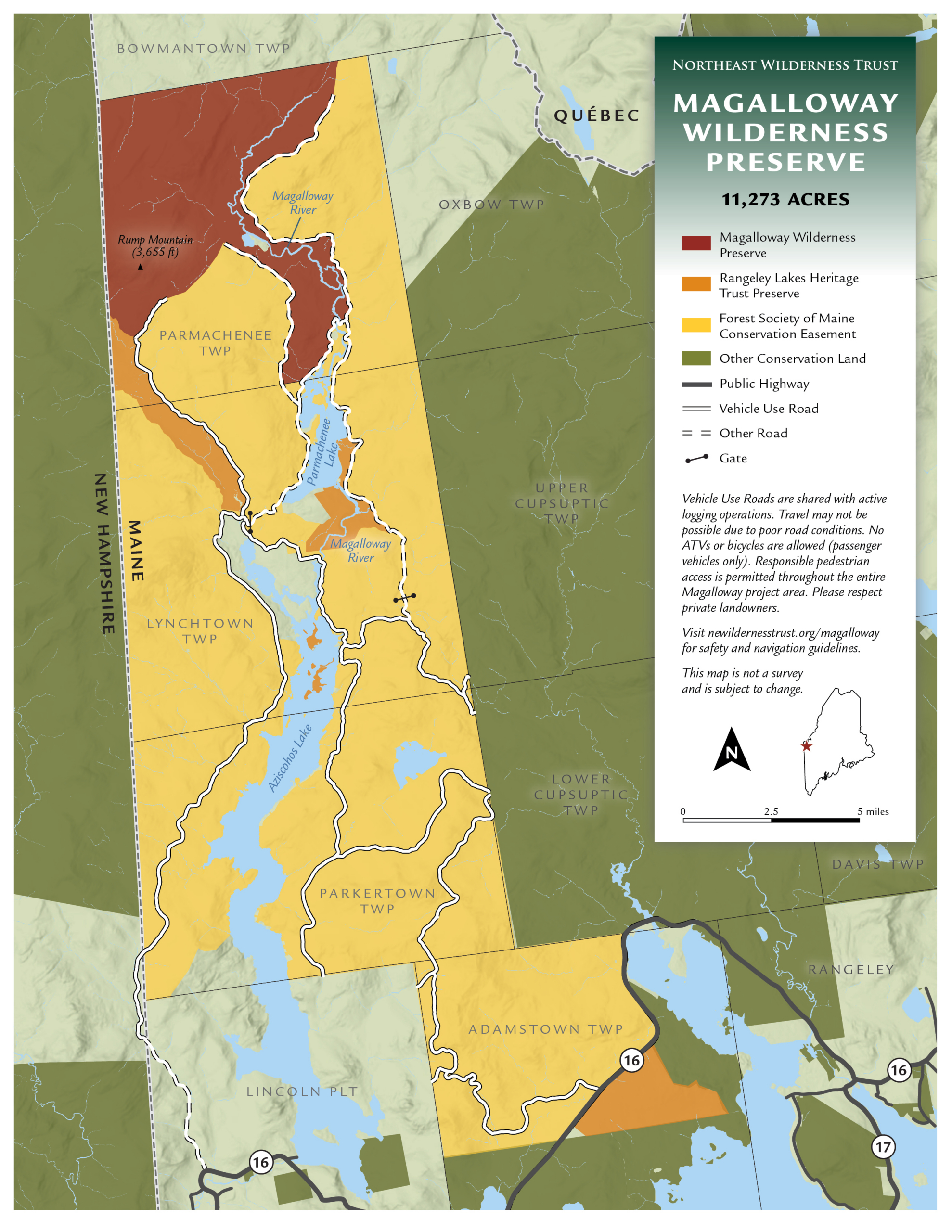
Magalloway Wilderness Preserve is open to the public for quiet exploration and enjoyment. The Preserve lies in a remote and difficult-to-access part of Maine. For a comprehensive guide to exploring the Maine Woods safely, visit magalloway.org/know-before-you-go/. Please respect the plants and animals who live here, show consideration to wildlife, other visitors, and neighboring landowners, know and obey the law, and leave the natural environment as you found it.
Enjoy your visit and respect the following Northeast Wilderness Trust guidelines while on Magalloway Wilderness Preserve:
Welcomed Activities
– Walking, hiking, snowshoeing, and cross-country skiing
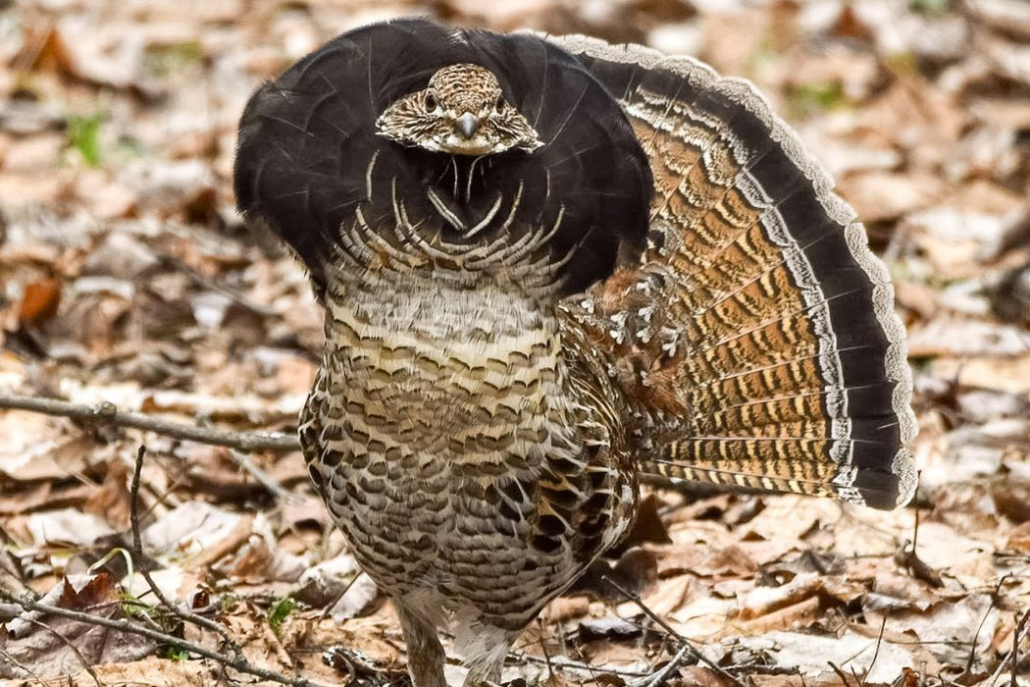
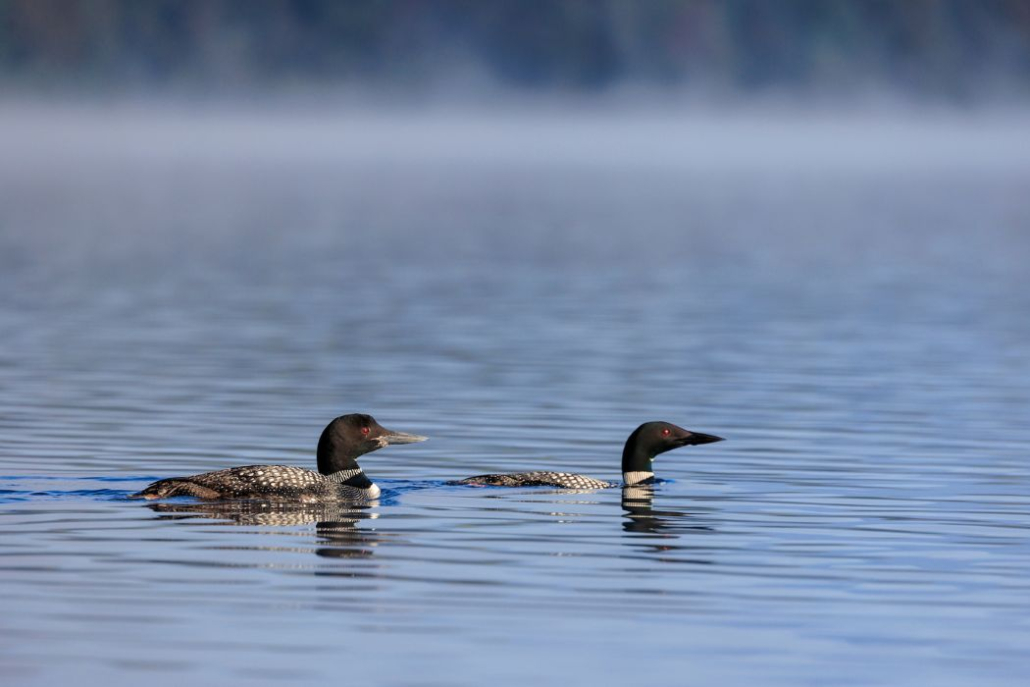
– Photography, wildlife observation, and Nature study
– Swimming, fishing, paddling, and non-motorized boating
– Hunting with permission (NO trapping, hounding, or predator hunting, including bears)
– Dogs under voice or leash control
Prohibited Activities
– Motorized vehicles (ATVs, dirt bikes, 4x4s, snowmobiles, or other motorized or mechanized vehicles)
– Bicycles
– Horses or pack animals
– Fires, and fireworks
– Loud music or radios
– Trapping, hounding, or predator hunting
– Cutting or damaging plants or trees
– New trails or unauthorized trail maintenance
– Launching and landing drones
Click here to read Northeast Wilderness Trust’s Preserve & Sanctuary General Visitation Guidelines
Camping
We welcome the public to camp at Magalloway Wilderness Preserve. Campers must follow Leave No Trace principles and Northeast Wilderness Trust’s specific visitation rules:
– Campfires are strictly prohibited.
– Plan ahead; this is a very remote area. Be fully prepared to camp without creating impacts on the land, water, and wildlife.
– Camp only on durable surfaces and in locations where overnight use will not damage vegetation and soils. The creation of new campsites, tent pads, fire rings, trails, or other site modifications is prohibited.
– Properly dispose of all waste. All trash, food waste, fishing line, and other refuse must be packed out. Solid human waste must be buried in a cathole 6–8 inches deep located at least 200 feet from waterbodies, wetlands, trails, campsites, and other areas of concentrated use. Catholes must be covered and disguised upon completion.
– Leave natural features, vegetation, rocks, wood, and cultural resources undisturbed. Cutting, breaking, clearing, collecting, or otherwise altering natural materials is prohibited.
– Respect wildlife by securing food and attractants, and avoid actions that disturb, harass, and feed wildlife.
– Preserve opportunities for solitude and a primitive wilderness experience by minimizing noise, light, visual impacts, and other disturbances to the natural environment.
– Leave no evidence of your presence. Upon departure, the site should appear as though no camping or overnight use occurred.
– If you are hunting, please secure hunting permission online.
Magalloway Wilderness Preserve is Northeast Wilderness Trust’s only wilderness area open to dispersed, Leave No Trace, primitive camping. This pilot program is intended to provide opportunities for solitude and primitive, self-reliant wilderness recreation on one of Northeast Wilderness Trust’s most remote preserves while maintaining the its wild character and conservation value. Camping is permitted solely at the discretion of Northeast Wilderness Trust and may be modified, suspended, or discontinued at any time if the Wilderness Trust determines that camping is causing, or has the potential to cause, impacts to the Preserve’s ecological integrity and wild character, or if camping activities are inconsistent with Leave No Trace principles.
Permission to camp on the Preserve is a revocable privilege, not a right. Continued access depends upon full compliance with all camping requirements and stewardship standards established by the Wilderness Trust.
Photography and video by Jerry Monkman.