← Back to Newts from the Field

Tracking a Moose in Late Winter

Jason Mazurowski, NEWT’s Wildlands Ecologist
April 20, 2026

One of the joys of working as an ecologist in land conservation is that the field season stretches year-round. One of my responsibilities at Northeast Wilderness Trust (NEWT) is conducting site visits at potential new preserves to create ecological inventories. NEWT pursues land acquisitions throughout the year, so while other ecologists often work within the short phenological windows when songbirds breed or certain plants flower, my field schedule more resembles that of timber companies and real estate agents. One upside to this expanded field season is that I get to explore new, wild places in winter, when much of the natural world lies dormant, on skis or snowshoes.

In late February in central Vermont, I set out on skis to document the ecology of a proposed NEWT preserve. At this point in the season, the snowpack is often at its greatest depth, and food resources that have sustained wildlife through the winter are beginning to run low. This past winter, in particular, brought consistently frigid temperatures and above-average snowfall. As a result, I was gliding on my skis across a landscape blanketed by more than 40 inches of snow, unimpeded by buried stumps, logs, and rocks lying beneath the dense snowpack.
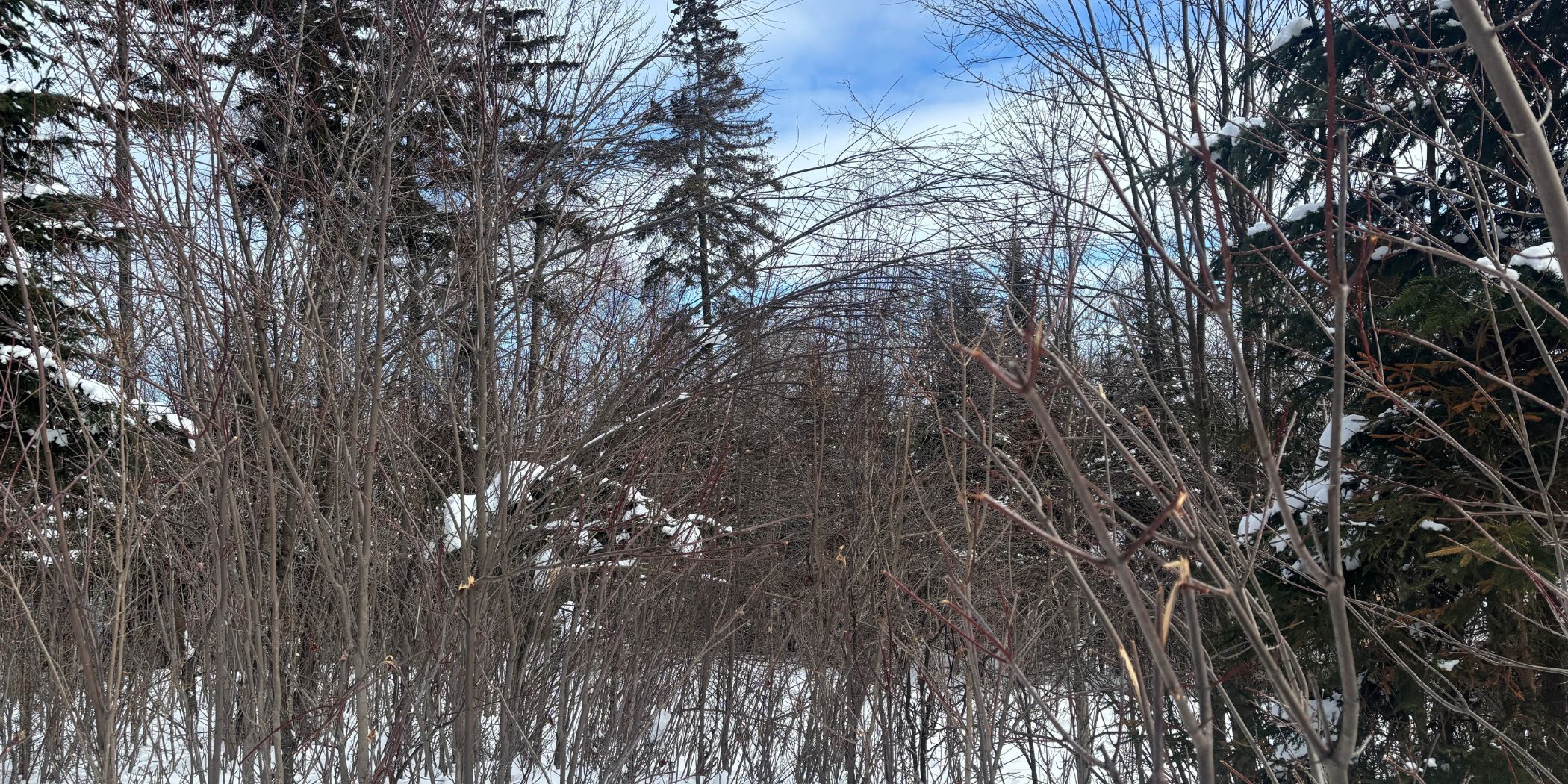
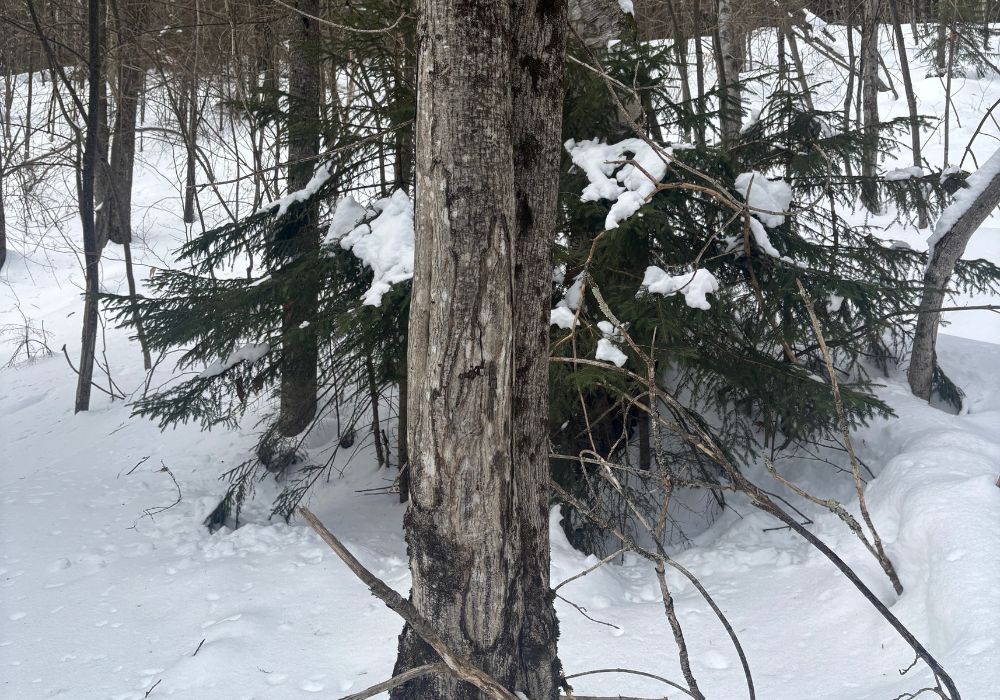
Landscape with trees

Reading Moose Movement

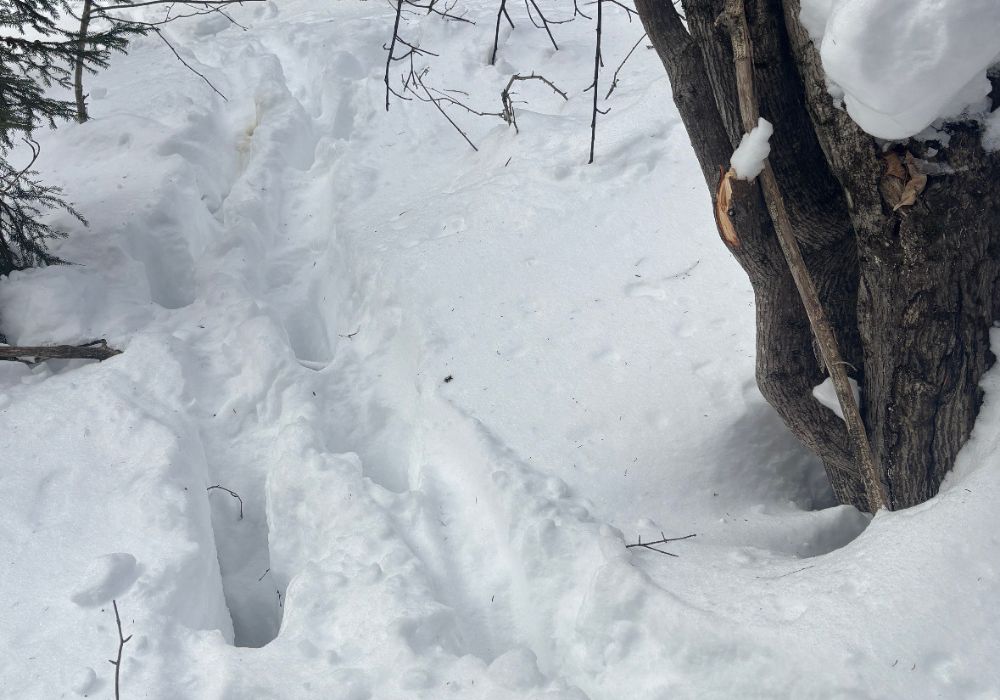
Midway through my journey, moving easily across the terrain, I came upon a set of unusually large tracks. At first, I wondered if they might belong to a lost human wandering through these former timberlands. But as I moved closer, it became clear that they belonged to the largest of New England’s megafauna: a moose.

I had noticed signs of moose earlier that morning: nibbled hobblebush buds and chew marks left on striped maple and young red maple stems. But the freshness of these tracks was clear evidence that the animal had passed by only recently, perhaps within hours of my arrival.

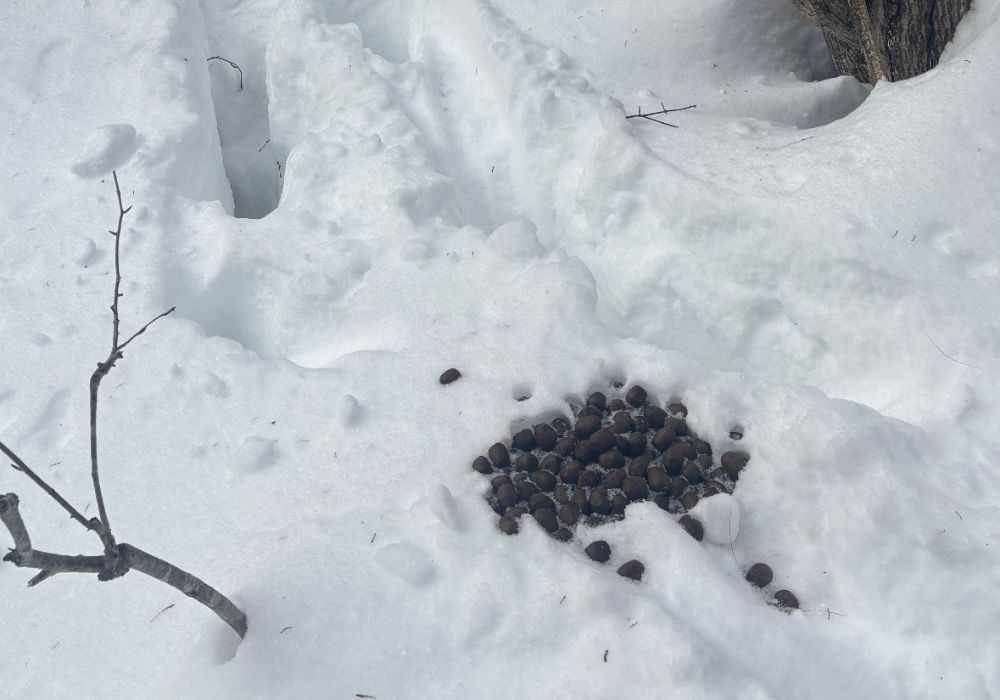
I inspected the tracks and the surrounding area. Wiry hairs lay in the deep hoofprints, and fresh scat sat piled periodically atop the snow. These signs created a clear trail, and I followed it for a while, noticing fresh browse on nearly every young tree or shrub along the path. Eventually, I came upon a large depression in the snow: the clear outline of where a moose had bedded down for the night. Fresh scat surrounded the bed site, along with clumps of hair shed from its thick winter coat.
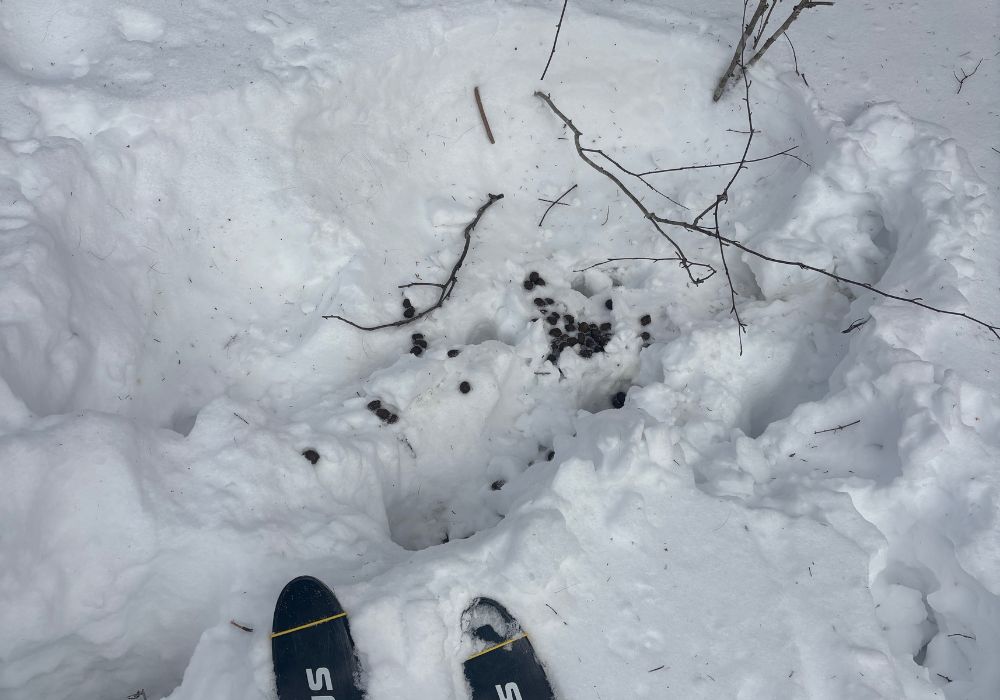
Moose tracks and scat in the snow
Moose tracks in the snow
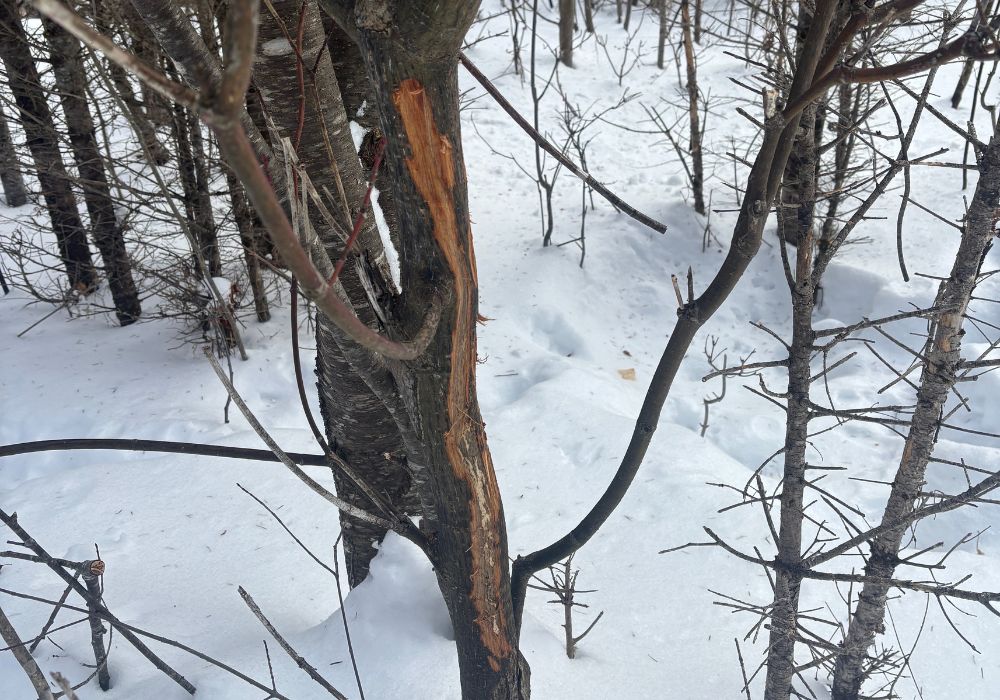
Tree with moose markings
Moose tracks and scat in the snow

Seeking Sustenance

The moose had tucked in for the night in textbook habitat—an early-successional ridgetop with an abundance of its preferred food, especially striped maple and hobblebush. Both of these understory plant species are sometimes referred to regionally as “moosewood” for their allure to these massive ungulates. Hobblebush buds are an important winter food, relatively abundant and at precisely the right height for a hungry moose, providing reliable energy and nutrients through much of the season.

The hobblebush and striped maple around the moose’s bedding site bore plentiful evidence of the “survival mode” these and other active winter residents enter as the season progresses. By late February, the deep snowpack has buried most remaining buds, and the rest have already been consumed. At this point, the dual pressures of limited food availability and cold temperatures, along with the added physical strain of moving through deep snow, force desperate mammals to seek less desirable food sources.

The cambium layer of trees, which sits just behind the bark, is one such food source. The cambium of striped maple seems to be the clear favorite for moose, followed by red maple. (Curiously, I have never once seen cambium scrapes on sugar maple, but that observation is merely anecdotal.)

Tree with moose markings

Lacking upper front teeth, moose scrape the bark upward with their lower jaw, peeling away the outer layer. The result is a vertical scar roughly two feet long, which, once healed, can resemble a blaze cut into the tree. These scars are often mistaken for antler rubbing and, in managed forests, for skidder damage. When walking through young or middle-aged forests, these scars are common on many small maples. They can remain visible for years.

The scars on the maples around the moose’s bedding site were some of the freshest I had ever seen. These recent scrapings, with clear tracks leading to and from them, may have been made earlier that very same day.

Braving the Long Winter

Near the bedding site, I observed still more evidence of a different survival strategy for deep winter, often called “cratering.” Moose and other large ungulates (including bison in their native range) will use their powerful front legs to shovel away and pack down snow in order to reach buried food. Nearby, a large birch limb—another preferred food source—had broken off a tree during an early-winter ice storm and lay buried beneath the snowpack. The moose had carved out a wide depression, or crater, in the snow around the limb, to expose the branches, which were clearly stripped of their buds by the moose.

The moose and I were on similar trajectories. Every time our paths seemed to cross during the several hours I spent traversing the future preserve on my skis, I expected to look up and see the large, lumbering creature, doing its best to persist through to spring.

Encounters like this are a reminder of why protecting large, connected forests matters. Even when the woods appear silent and empty, some of our largest and most charismatic wildlife are struggling to survive. Giving them the space and quiet they need is the best we can do to ensure their future in the snowy winter woods of northern New England.

Photography by Jason Mazurowski. Feature photo by Larry Master.

Rewild My Inbox

Bring the wilderness straight to your inbox with the Wild Times E-newsletter.

Accredited Land Trust logo.
Rewild my inbox!

NORTHEAST WILDERNESS TRUST
17 STATE STREET, SUITE 302
MONTPELIER, VT 05602

802.224.1000

info@newildernesstrust.org

Accredited Land Trust logo.
Logo of a one over a two.
Logo for the Global Rewilding Alliance.
A platinum Seal of Transparency.

© The Northeast Wilderness Trust 2025    TERMS OF USE    PRIVACY POLICY

Learn about our Green Guarantee.

Sign up for the Wild Times Enewsletter!

NORTHEAST WILDERNESS TRUST
17 STATE STREET, SUITE 302
MONTPELIER, VT 05602

802.224.1000

© The Northeast Wilderness Trust 2024    TERMS OF USE    PRIVACY POLICY

Learn more about our Green Guarantee.

Logo for Accredited Land Trust.
A one over a two, meaning one half.
Logo for the Global Rewilding Alliance.
A platinum Seal of Transparency.