
Guiding Principles
Submission will be reviewed by a review panel composed of the Vice President of Conservation Programs and the Wildlands Ecology Director, two members of NEWT’s Ecology Committee of the Board, and up to two rotating seats for external forest ecology researchers.
The Review Panel will give preference to projects that most substantially accomplish one or more of these objectives:
- Relevance to mission: Alignment with wilderness conservation and forest ecology priorities
- Scientific merit: Sound methodology and meaningful research contributions
- Feasibility: Clear timeline and realistic budget
- Innovation: Contribution of new approaches, methods, or perspectives
- Communications potential: Ability to generate compelling storytelling content
- Long-term value: Contribution to future wildlands conservation and stewardship efforts
Eligibility & Application Process
Who Can Apply?
- University-affiliated researchers, graduate students, independent scientists, community scientists, state agencies and collaborative teams are encouraged to apply.
- Projects must focus on forest ecosystems within the Northeast (ME, NH, VT, MA, CT, RI, NY).
- Project budgets must not exceed the 13% indirect cost- Facilities and Administration (F&A) cap.
How to Apply Applications MUST be submitted using the provided templates to wren@newildernesstrust.org adhering to the submittal schedule. Applications received outside of a funding cycle or that don’t follow the instructions will be discarded. Detailed guidelines for completing application materials are provided in the section below. Applicants must submit:
- A complete application using this template. See Required Materials section below for detailed guidelines on completing the application.
- Budget using this budget template. See Required Materials section below for detailed guidelines on completing the budget.
- Qualifications for PI and collaborators.
Grant Submittal Schedule
- Proposals due: April 22, 2026
- Awards announced: June 8, 2026
- Completion deadline: December 2026 (exceptions considered for longer-term work)
- Submission: wren@newildernesstrust.org
Required Materials
A complete application packet must include a completed proposal, budget, and qualifications for the PI and all collaborators. For more details on how to complete the application materials, please review the descriptions below:
Part 1: Proposal (4 pages max)
- Project information and screening questions (please try to stay within the requested character limits):
- Project Location (state(s), specific site(s) if known; indicate if work occurs on NEWT-protected land):
- Be as specific as possible – if you are planning field work, where will that work occur? If you are doing remote/desktop work, what areas will be covered by the analysis?
- What funding category does your project fall under? (select from the list below)
- Old-growth forest structure and function
- Carbon storage and sequestration dynamics in unmanaged or rewilding forests
- Long-term forest recovery trajectories
- Biodiversity responses to wilderness protection (plants, wildlife, fungi, invertebrates, etc.)
- Natural disturbance regimes and their ecological roles
- Forest resilience under climate change in unmanaged systems
- Watershed and hydrological functions of wildlands
- Wildlands and wildlife connectivity, particularly carnivores
- What is the project structure? (500 characters)
- Is this a stand-alone effort? Is it part of a longer-term research project? Is the research completed, and you are seeking funding to publish or present it?
- Project Location (state(s), specific site(s) if known; indicate if work occurs on NEWT-protected land):
- Project summary (for a general audience, 1-2 paragraphs):
- Write for an informed but non-technical reader. If funded, this summary may be used for public-facing communications.
- Background and Rationale (500 characters)
- Briefly describe the ecological context and existing knowledge relevant to this project. Projects may be observational, monitoring-based, baseline, or exploratory.
- Research Question(s) or Objectives (300 characters)
- Clearly state the primary research question(s) or objectives.
- Methods and approach (1500 characters)
- Describe the methods and approach you will use, including sampling design/frequency, data sources, tools, or analyses
- Please format in a bulleted list, rather than narrative, whenever possible
- If applicable, describe any potential ecological impacts of the project, and how you plan to mitigate them.
- Expected Project Timeline (500 characters)
- Brief, bulleted list of expected milestones and dates to project completion, as applicable to the funding application. If applying for part of a longer-term project, include major milestones and dates for the overall project as well.
- Communication (500 characters)
- Describe how you will communicate the work beyond technical outputs. Examples include published essays, field narratives, public talks, or presentations. If you don’t have any communication plans, and would like to collaborate with NEWT communications staff to create one, state that clearly.
Part 2: Qualifications
- Please provide a CV, resume, or biosketch for PI and all collaborators
- Please limit qualification materials to 1-2 pages per collaborator
Part 3: Budget using provided template
- Complete the budget in the template provided, please note that the first tab is the template for you to fill in, and the second tab is a completed (fictional) example to demonstrate how to use the template.
- Please note if this funding will serve as match for other sources. If other areas of the budget are not yet secured, explain your confidence in other funding sources, and if this project is likely to continue if the other, unsecured funding doesn’t come through.
- Project budgets must not exceed the 13% indirect cost (F&A) cap.
For submission please combine the proposal (part 1) and qualifications (part 2) into a single PDF, the budget (part 3) may be included in the PDF, or attached separately as an excel spreadsheet.
Selection & Evaluation
How Applications are Selected A 5-6-member committee will select projects based on our project rubric, scoring the projects on criteria such as:
- Alignment with WREN Program Goal and Funding Categories
- Scientific Merit/Ecological Insight
- Demonstration of Need/Novel Contributions to Wildlands Ecology
- Communications Potential
- Consideration of Ecological Impact
- Feasibility
NEWT Small Grant Program: Review Protocol
- Overview & Purpose
The goal of this protocol is to ensure a fair, transparent, and rigorous selection process that aligns with the mission of the Northeast Wilderness Trust (NEWT). This document serves as the official guide for the Review Committee, covering the transition from individual assessment to final funding decisions.
- The Review Committee Structure
To ensure technical expertise and organizational alignment, the committee is composed of six members:
-
- NEWT Staff (2): Wildlands Ecology Director and Vice President of Conservation Programs.
- NEWT Board (2): Rotating members of the NEWT Board Ecology Committee.
- External Researchers (1-2): Independent forest ecology researchers (assigned for the current round).
- The Multi-Step Review Process
Step 1: Administrative Screening (NEWT Staff)
Before the committee receives any applications, NEWT staff will perform a pass/fail check based on the following:
-
- Completeness: All required narrative and budget templates are present and formatted correctly.
- Eligibility: The project meets geographic requirements and aligns with forest ecology/wilderness conservation. Project budget does not exceed the 13% indirect cost (F&A) cap.
- Submission Format: The application was received as a single PDF and budget spreadsheet via the designated email address by the deadline.
Step 2: Technical Review (Individual Scoring)
Each committee member will receive a digital folder of all “Compliant Applications.” Members are required to score each application independently using the 1–5 Scoring Rubric provided in Section 4.
Step 3: Selection and Ranking Meeting
The Review Committee will meet to discuss individual scores and identify top-tier proposals.
-
- Ranking: Staff will consolidate scores into a master list prior to the meeting.
- Consensus: The committee will deliberate on the projects that “rise to the top” to reach a consensus on awardees.
- Tie-Breaking: In the event of a tie or lack of consensus, final funding decisions will be made by NEWT President and CEO.
Step 4: Notification and Awarding
-
- Award Letters: Successful applicants receive an award notification including a request for a W-9 and a signed Grant Agreement.
- Disbursement: 70% of funds are disbursed once all legal and fiscal documentation is returned, and the remaining 30% will be paid upon completion of final deliverables.
- Evaluation Rubric & Scoring Criteria
Each application is scored on a scale of 1 (Low) to 5 (High) across six categories. Download the Rubric to better understand how projects will be scored.
Note on Matching Funds:
NEWT recognizes that funding in this field is limited. A cash match is not required. However, applicants who demonstrate “In-Kind” support (donated time, equipment, or partnerships) will be recognized in the “Feasibility” score.
- Conflict of Interest Policy
All reviewers (staff, board, and external) must disclose any professional or personal affiliation with an applicant organization. If a conflict exists:
-
- The reviewer will recuse themselves from scoring that specific application.
- The reviewer will leave the room (or digital meeting) during the final deliberation of that specific application.
Administration & Contact
Program Staff
Shelby Perry, NEWT Wildlands Ecology Director
Shelby@newildernesstrust.org | 802-224-1000 x107
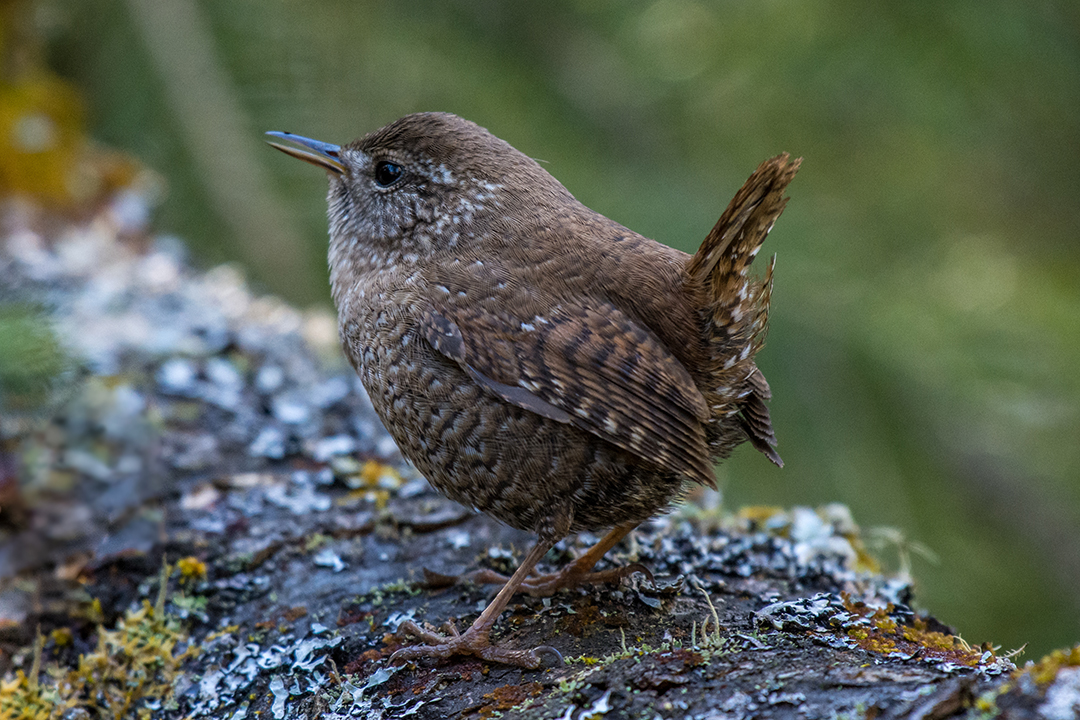
Wild Sarsaparilla by Shelby Perry, Winter Wren by Brendan Wiltse.