← Back to Field Stories

In Search of an Old Forest

Shelby Perry, NEWT’s Wildlands Ecology Director
September 23, 2026

We drove up the night before, setting up our tents at a little New Hampshire campground near the Maine border and making plans over maps while cooking dinner on our campfire. We would start as soon as we could break camp in the morning, drive as close as we could to the border of Northeast Wilderness Trust’s (NEWT) newly protected Magalloway Wilderness Preserve, and hike the last three-quarters of a mile to the property line. We intended to be out of the woods no later than 2 p.m. to get started on our 3.5-hour drive home.

The next morning, Blue Jays fussed as NEWT’s Wildlands Ecologist Jason Mazurowski and I parked the car and pulled out our packs stuffed with gear. We had made this long journey in search of rumored old forest, but the forest around our parking spot did not instill confidence. It was clear no logging had occurred here recently, but by all appearances, the forest was of middle age, like most forests in New England. Old forest is one of the rarest forest conditions in the region, with some estimates putting the total at less than half a percent of land area.

Still, we continued on, ditching the road and entering a forest unmarred by track or trail.
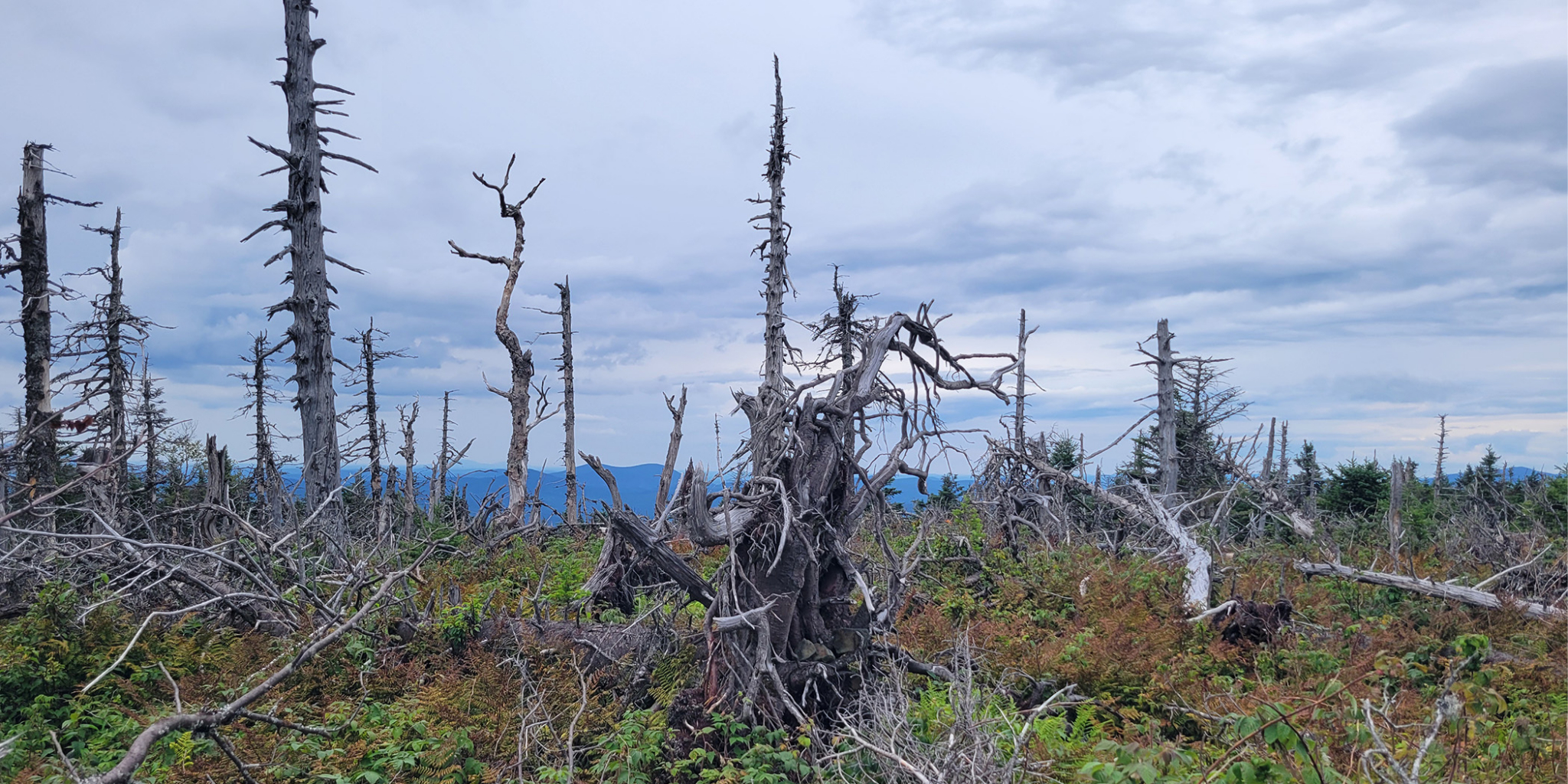
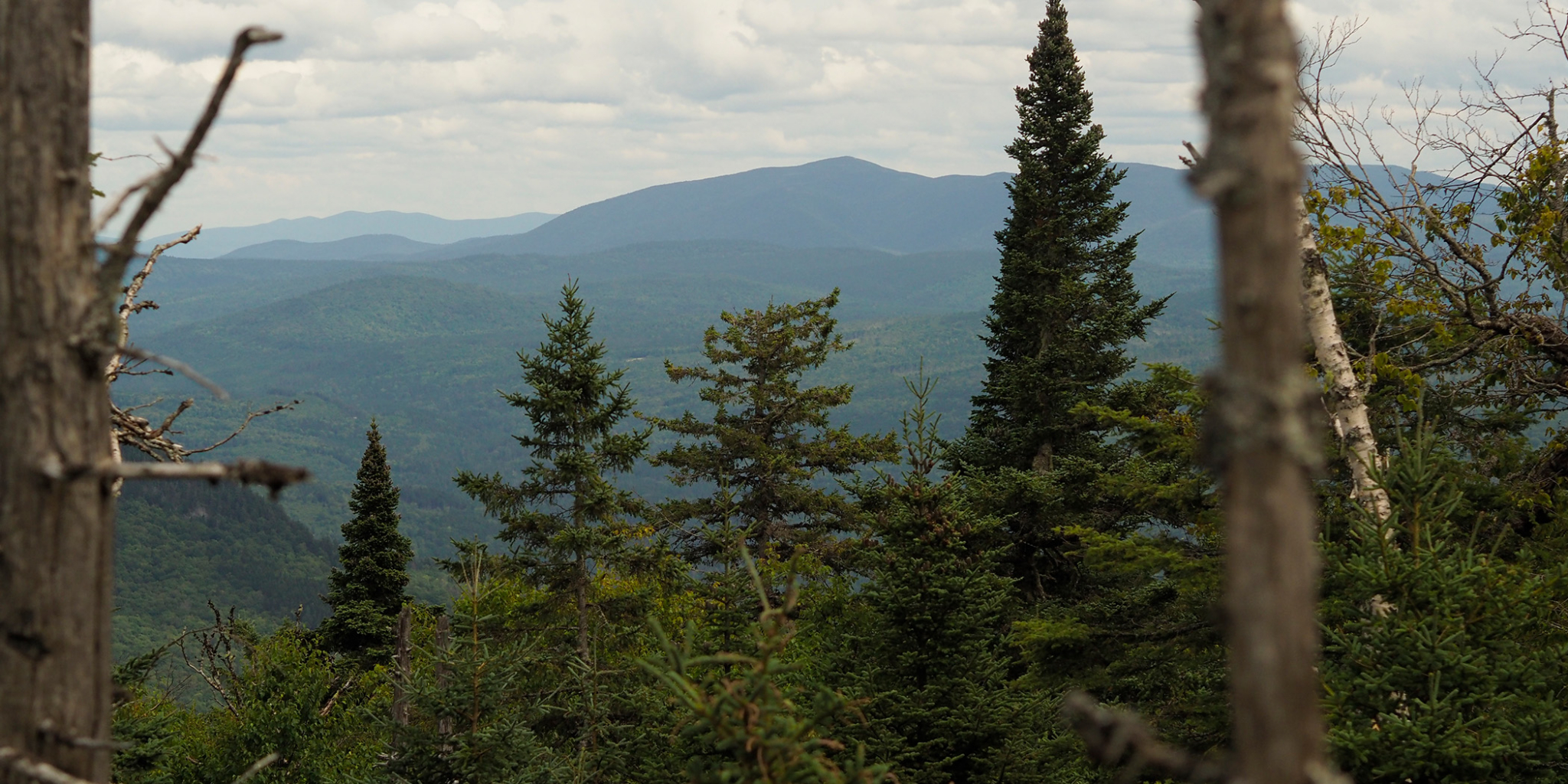
Magalloway_Shelby_Banner and Feature Image 1

We expected to see boundary evidence at some point, but we never found any indication that we had entered Maine or crossed a property border. Instead what we noticed first was an open, ferny glade with an enormous white spruce covered in sticky globs of resin: spruce gum.

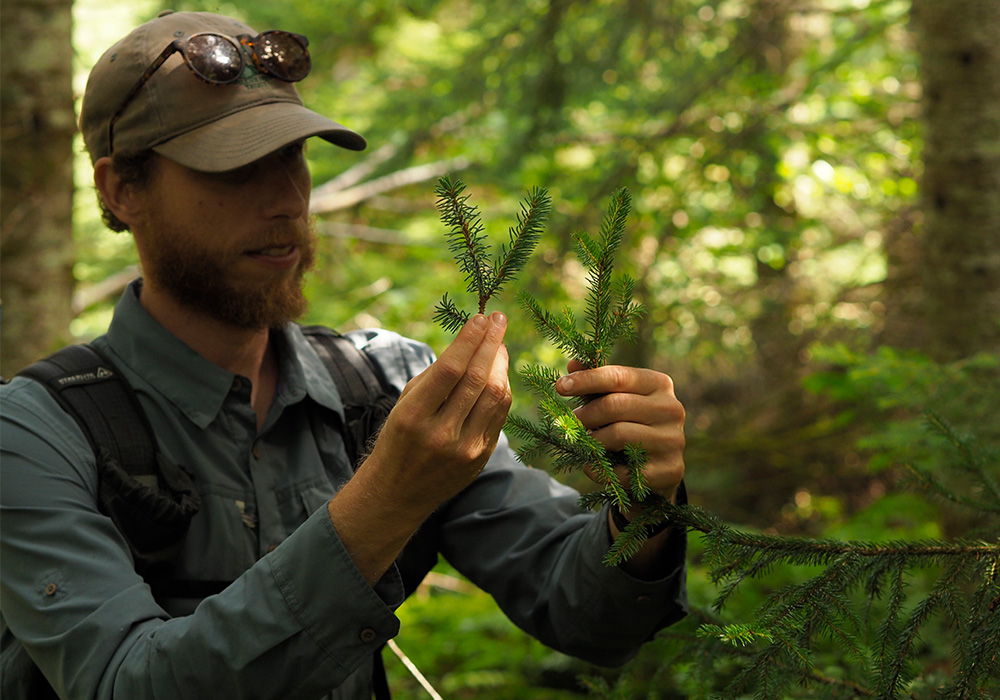
Checking the GPS, it was clear that we were well into the Preserve, so we dropped our packs and cored the tree. Jason grabbed a chunk of spruce gum and popped it into his mouth, and I got out my notebook. The tree was 44.5 centimeters (17.5 inches) in diameter; it was approximately 21.3 meters (70 feet) tall. We missed the center, but counted 75 years on the core. It was old, but not exceedingly so.

“How’s that spruce gum?” I asked Jason, having never particularly enjoyed the experience when I had tried it in the past.

“Less bad than I was expecting,” he answered.

When he was still chewing it 10 minutes later, I could no longer resist trying. I cracked off a rust-colored orb of the resin from the tree, tested it with a fingernail, and then popped it into my mouth. It softened quickly as I chewed, pleasantly sprucey and just a tad bitter. When I spit it out my mouth seemed extra fresh, with a slight taste of spruce.

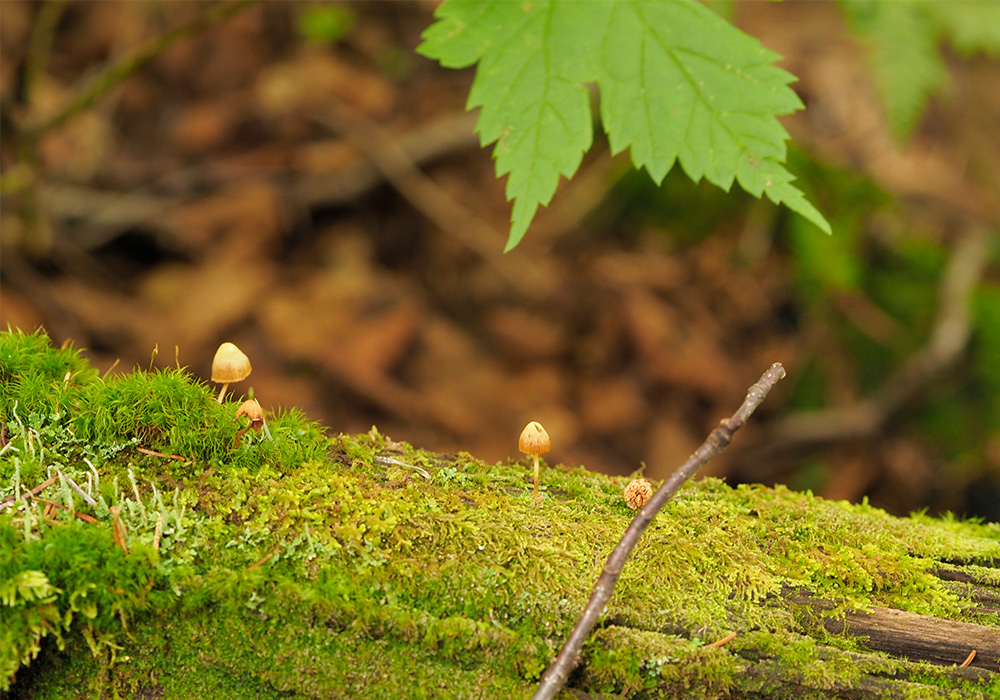
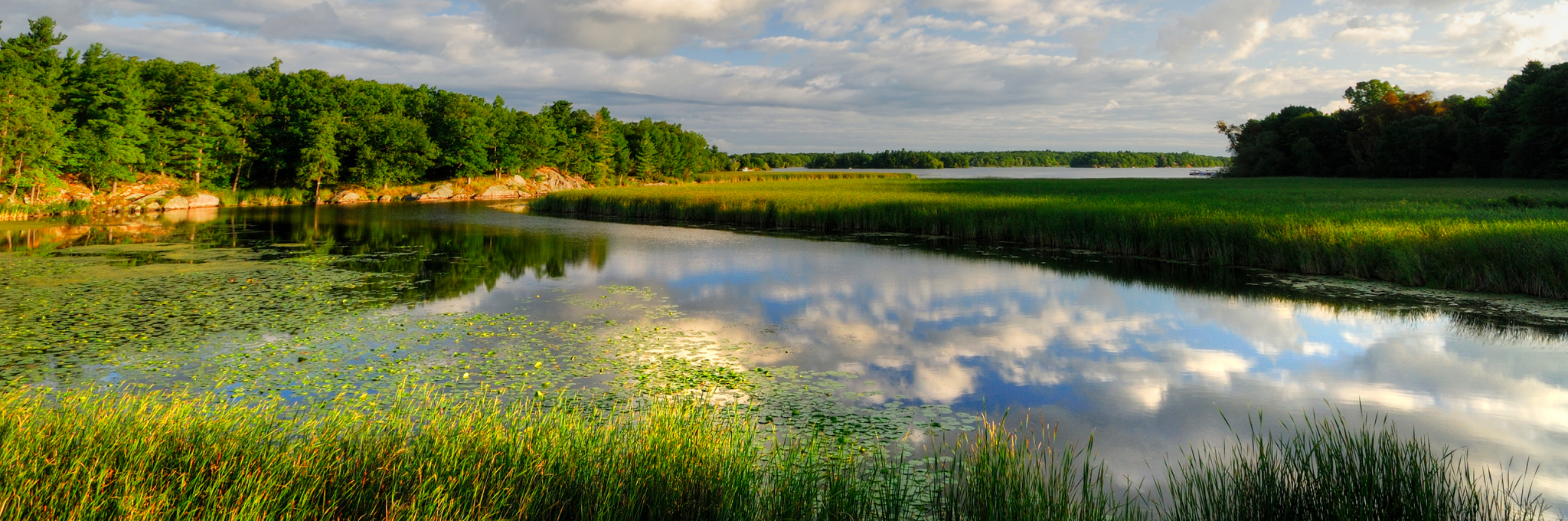
Magalloway_Shelby_Banner and Feature Image 3

The Wildness We Sought

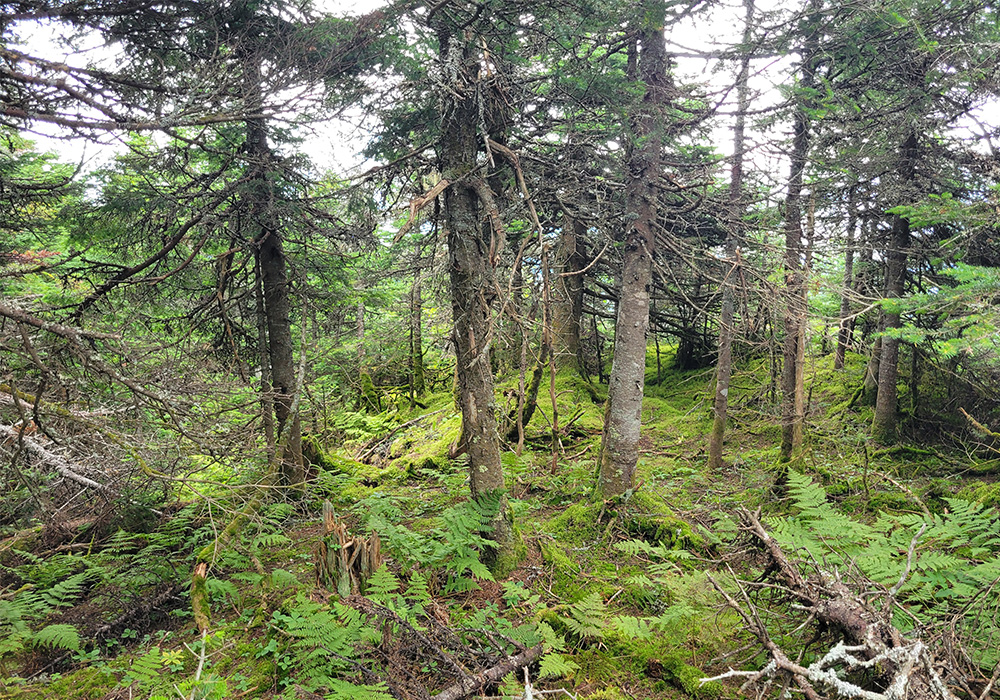
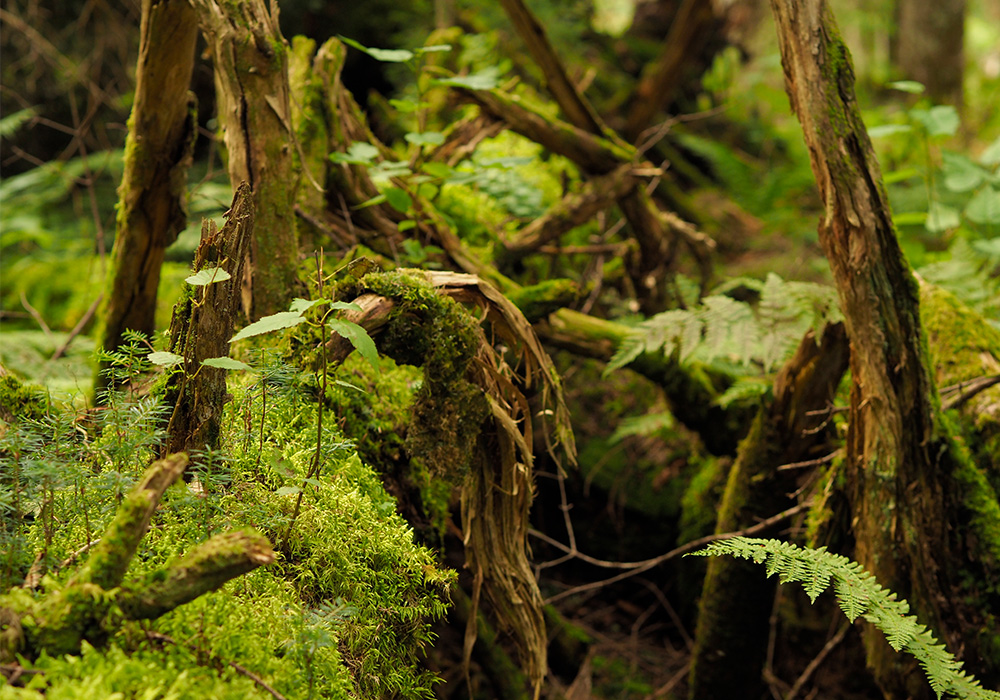
Distracted as we were by the beauty of the day, we might be forgiven for failing at first to notice the increasing signs of a forest of advanced age. But then, all at once, the structures and functions one seeks to verify old forest seemed to be present and accounted for: trees of all sizes and ages; deep spongy layers of moss and organics on the ground; many layers of decaying wood in all stages of decomposition; trees with big wonky branches in their canopies; tipped-over and snapped-off trees; and an abundance of lichens, mosses, and other plants that grow on plants (epiphytes).

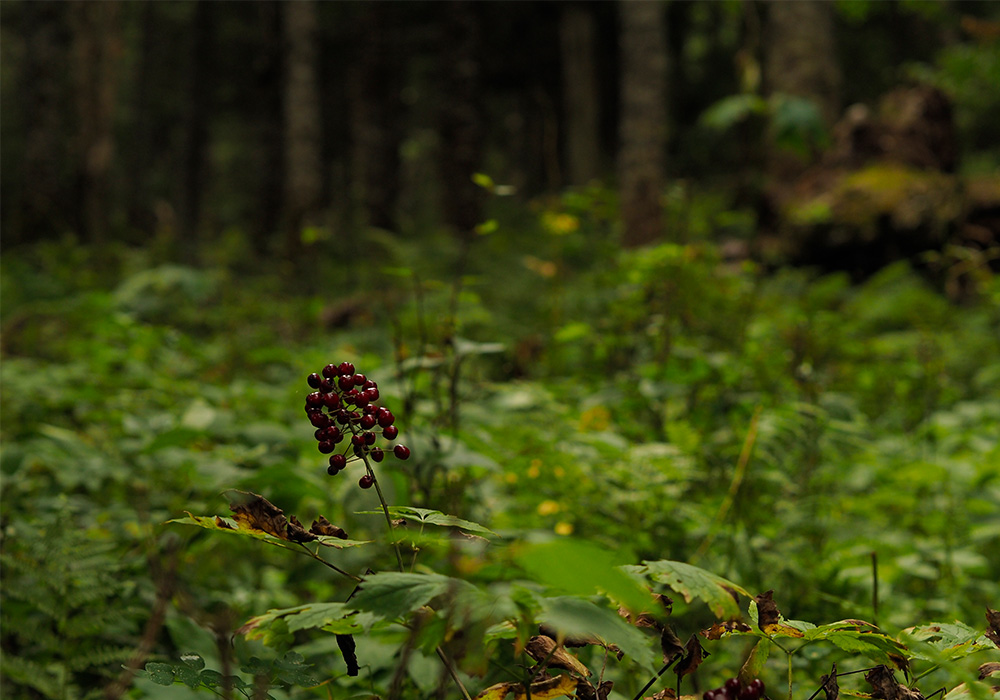
At one point we struggled through a stand of chest-high hobblebush shrubs with gnarled old stems bonsaied into odd shapes by generations of moose browse. At another we were reduced to crawling and clambering over a portion of the forest blown down by a storm and now filling in with brambles taking advantage of the abundance of sunlight. Still later we traversed a field of rocks so completely obscured by decomposing wood and moss that we were post-holing in the forest floor.

This mosaic of forest ages and conditions is exactly what I was trained to look for in old forests. They are not places of big old trees that throw deep shade and result in a static state of slow growth, as we once thought. They are dynamic, with areas shaped by wind, ice, insects, and sometimes even fire. These disturbances give rise to patches of younger trees and dense new growth within the larger old forest. To fully appreciate what an old forest can be, we must look past the ages of the individual trees and instead to evidence of the continuity of natural processes. An old forest can be filled with young trees if those trees are growing on the legacy of the generations who came before them, nourishing the young ones with a lifetime of stored nutrients and retaining moisture around their roots.

Indeed, we noticed that nearly all of the baby trees we saw here were growing on the large logs and tipped-over trunks of a prior generation. These large logs were critical, as the dense carpet of mountain wood fern didn’t let much sun reach the forest floor. The seedlings on these “nurse” logs were held up above the ferns in a cradle of soft and moist moss.

Reaching the Summit

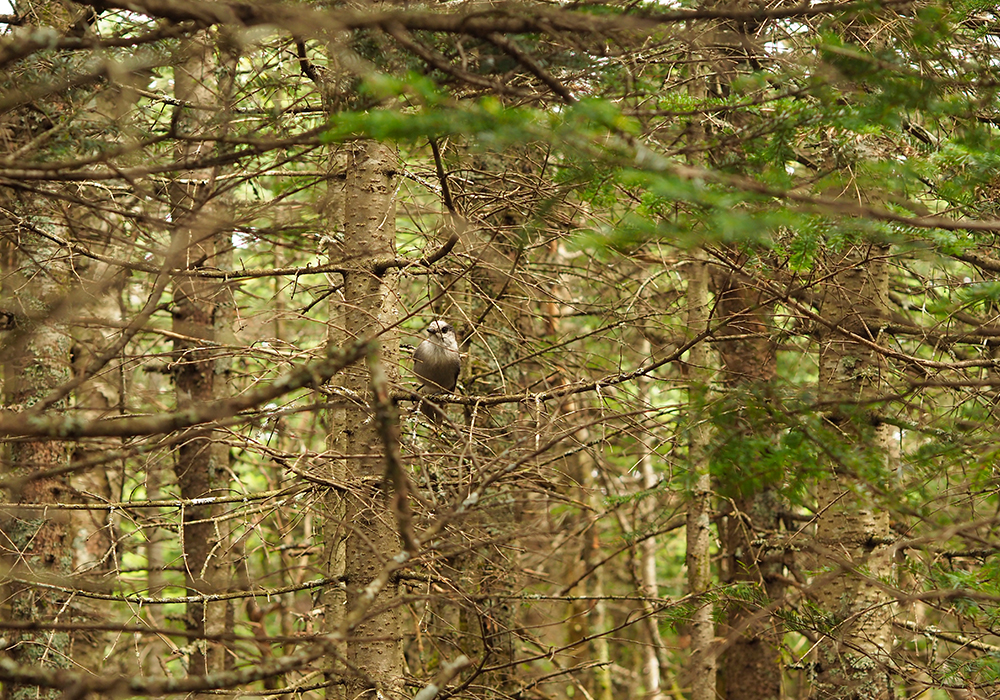
Somewhere around 2:30 p.m., we reached the summit of the mountain whose northern slope we had been climbing all day. In the dirt of the overlook where we broke for lunch, we noticed some conspicuous impressions. Sure enough, when we finished eating and got up, we found a Spruce Grouse patiently waiting their turn to take a dirt bath where we had been sitting.

Up here the balsam firs grew so dense that we had to shimmy through them sideways. Frequent distractions like red and purple toadstools poking through the moss and the intricately patterned backs of spiders further slowed our progress. Our plans to get home at a reasonable hour were out the window, but at this point spending more time in this place felt like the most important thing we could be doing.

For another three hours we pushed through walls of fir, waded through waist-deep wood ferns, and gawped at the complexity and diversity of this forest. Finally, at around 5:30 p.m., tired, sweaty, and filled with wonder, we arrived back at the car. I think it is fair to say that both of us are still inspired by everything that we saw that day, and still learning what it all means.

Places like this often only escaped logging by mere accident—usually because it was difficult or prohibitively expensive for humans to secure or develop the needed access for extraction. Northeast Wilderness Trust exists to remove chance from that equation; to give forests and other ecosystems the freedom to grow old and wild on purpose. After spending a day immersed in the wonders of this old forest, the idea of that future fills me with hope.

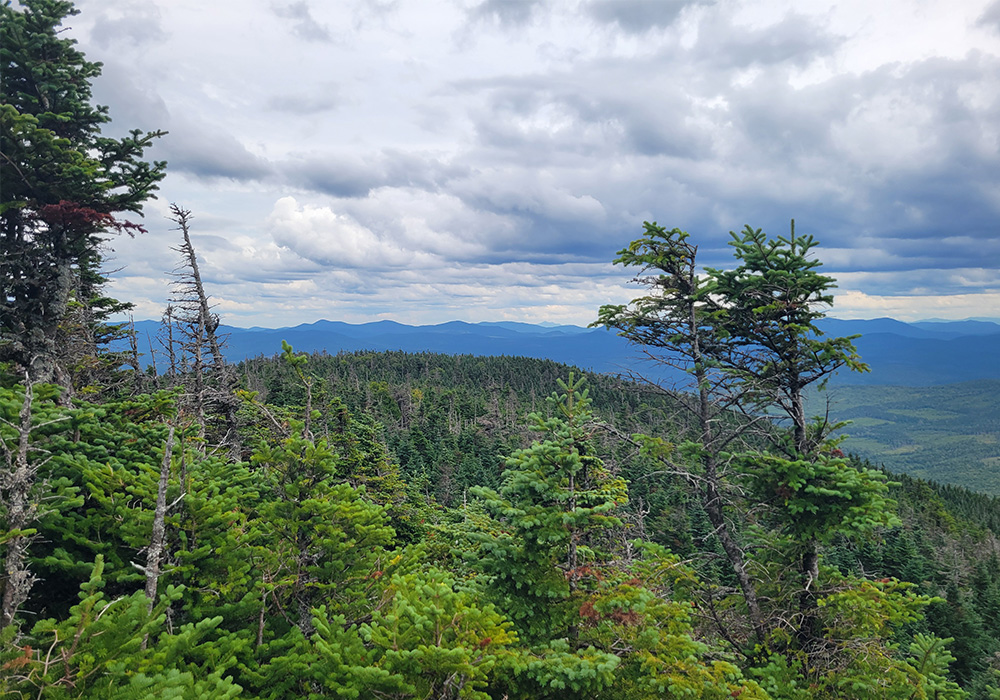
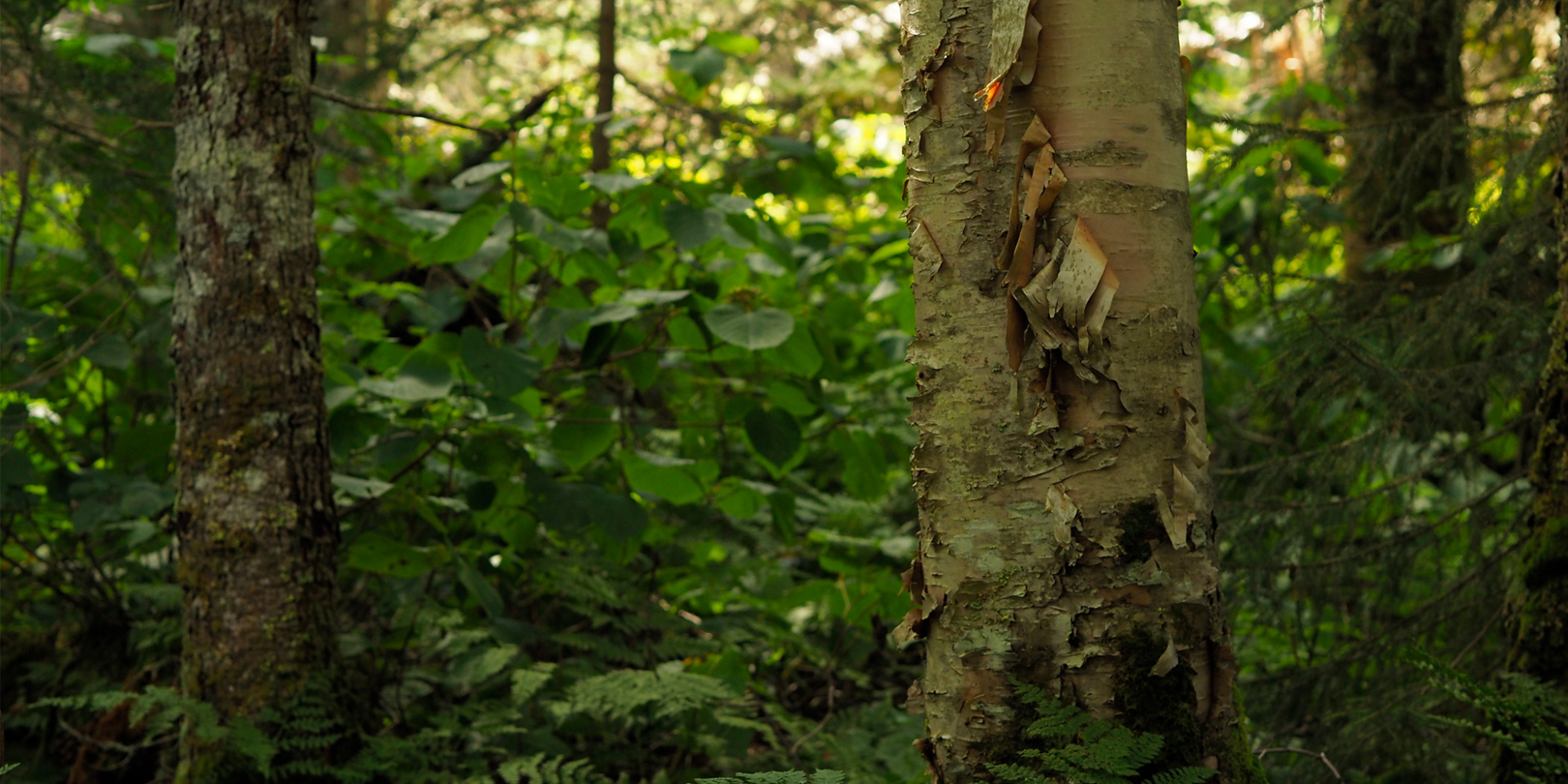
Magalloway_Shelby_Banner and Feature Image 2

Photography by Shelby Perry.

Accredited Land Trust logo.
Rewild my inbox!

NORTHEAST WILDERNESS TRUST
17 STATE STREET, SUITE 302
MONTPELIER, VT 05602

802.224.1000

info@newildernesstrust.org

Accredited Land Trust logo.
Logo of a one over a two.
Logo for the Global Rewilding Alliance.
A platinum Seal of Transparency.

© Northeast Wilderness Trust 2026    TERMS OF USE    PRIVACY POLICY

Learn about our Green Guarantee.

Sign up for the Wild Times Enewsletter!

NORTHEAST WILDERNESS TRUST
17 STATE STREET, SUITE 302
MONTPELIER, VT 05602

802.224.1000

© The Northeast Wilderness Trust 2024    TERMS OF USE    PRIVACY POLICY

Learn more about our Green Guarantee.

Logo for Accredited Land Trust.
A one over a two, meaning one half.
Logo for the Global Rewilding Alliance.
A platinum Seal of Transparency.