← Back to Field Stories

Finding Boundaries and Jack Pines

Janelle Jones, NEWT’s New York Land Steward
November 17, 2026

Whenever I meet someone new and they ask about my job, they always tell me how lucky I am. To be outdoors all the time and to steward some of the wildest places in New York are two of the more enchanting bullet points in the list of my professional responsibilities.

Still, as enjoyable as spending countless hours roaming wilderness preserves and sanctuaries is, there are difficult tasks that I need to tend to. Some are annual, like writing site-visit reports. Others are weekly, like monitoring the footpaths at Northeast Wilderness Trust’s (NEWT) Ambassador Preserves.

One of them is walking the entire boundary of the numerous preserves I steward. In doing this, I am able to 1) make sure NEWT’s signage is intact and visitors can readily observe rules and regulations, and 2) check for any signs of encroachment or trespass.

As I’m sure you can imagine, some preserves have a lot of boundary miles! Our six preserves in New York run to more than 60 miles of boundaries combined. And not every one of those miles follows a road. There are vertical cliffs, uncrossable wetlands, and, sometimes, forests so dense one of my friends compared the experience to “walking through a wall of angry cats who wanted to scratch you.” Wilderness, as it should be, is rugged country.
Jack_Pine_Banner and Feature Image 3

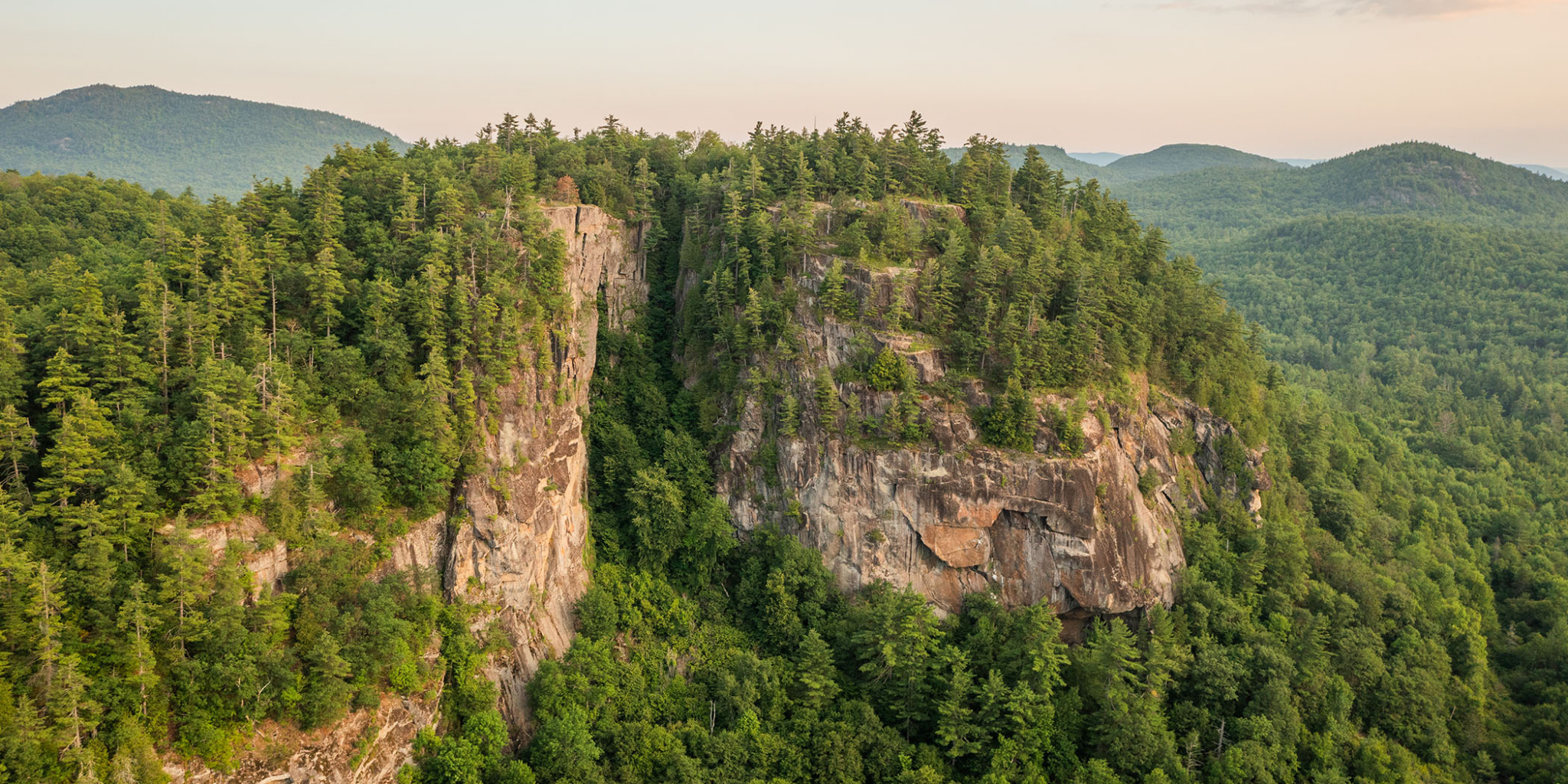
But I live for this stuff. I’m a “Type 2 fun” kind of person. So, recently, when it came time to walk the boundary at Eagle Mountain Wilderness Preserve in Chesterfield, New York, which accounts for nine of those 60 boundary miles, I eagerly packed my bag with a gleeful smile on my face. I knew it was going to be a challenging day. When I mapped a boundary-marking route out, I learned that it would be a 1,500-foot climb in elevation (off trail) just to reach the nearest boundary.

On days like this, with many miles to cover and many hills to climb, I like to enlist the help of a buddy, so I called on my NEWT colleague Annie Norland, our Northern New England Land Steward, who is (thankfully) game for any adventure, too. We set off early in the morning with maps and plenty of good snacks. Both necessary for long days in the woods.

It took us four hours just to reach the boundary. Admittedly, that time included very important diversions to identify plants, check out an old beaver meadow, and negotiate our way around some seriously steep terrain. We noted how the forest changed as we gained elevation. At one point, we found ourselves in what we named “the spooky trees.” It was an area so tightly packed with evergreens it felt darker and cooler than the surrounding area, vastly different from the oaky forest from which we had just emerged. One special thing about the wilderness preserves NEWT protects is that no two are alike. Eagle Mountain is immensely different from Split Rock Wildway, which are both entirely different from Little River Wilderness Preserve. Each place offers something new and exciting to see.

I had heard rumors of a distant stand of jack pines (Pinus banksiana) somewhere at Eagle Mountain, but I had yet to lay my eyes on these interesting trees. Most people are probably familiar with the common conifers of the Northeast: balsam fir (Abies balsamea) and their wonderfully festive aroma, or maybe even eastern white pine (Pinus strobus), often among the tallest trees on the horizon. Jack pines, however, are not nearly as well known, especially in the Adirondacks.

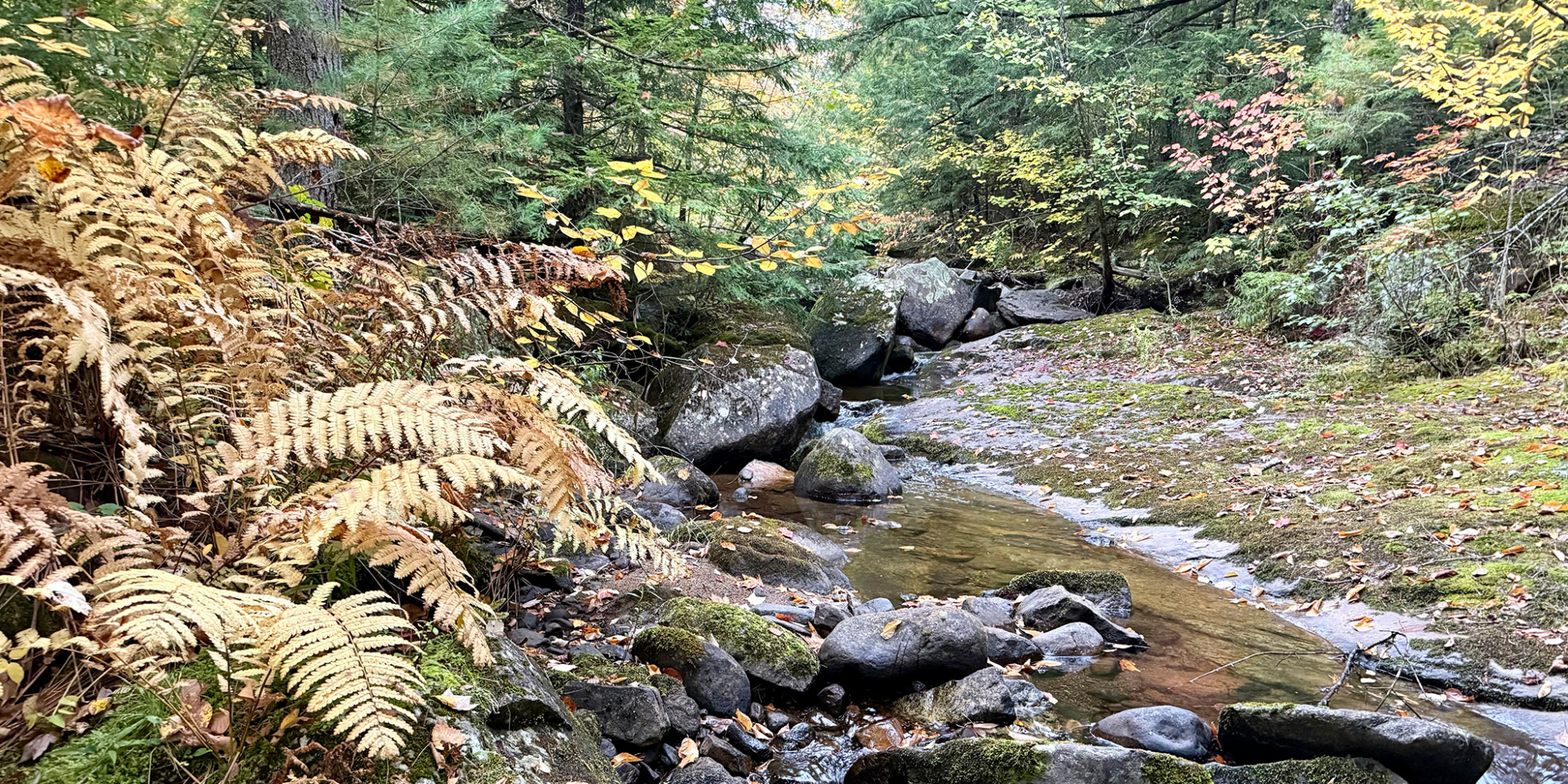
Brook at Eagle Mountain

But ecological luck was on Annie’s and my side on this visit. We stumbled into the rumored jack pine stand as we traced the Preserve boundary. I’m sure I exclaimed in delight as we crawled into the opening, as I am wont to do when encountering a new species, whether it be bird or tree or something else. (I probably followed this up with a curse at our timing, because the abundant blueberry bushes growing near the trees likely would have gifted us a delicious reward for all our hiking had we found this spot just a month or two earlier.)

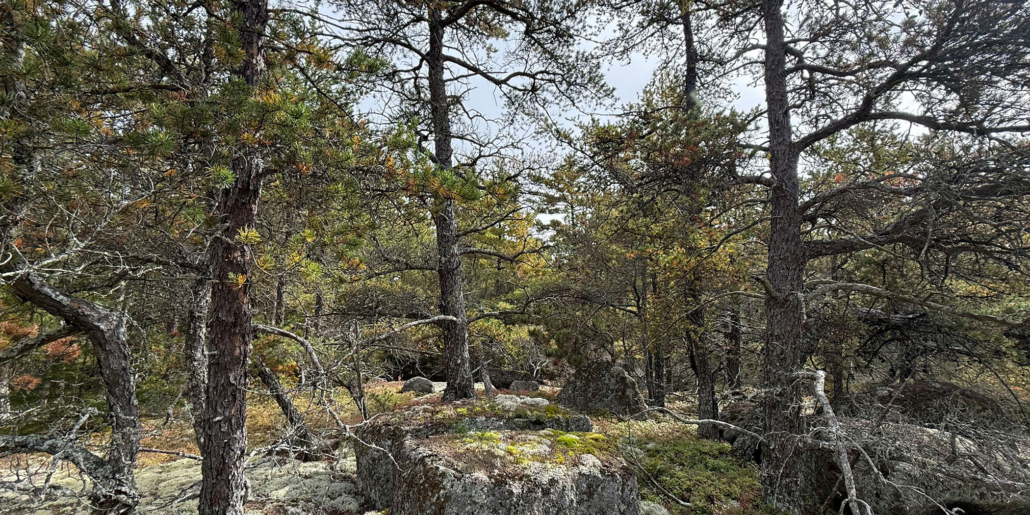
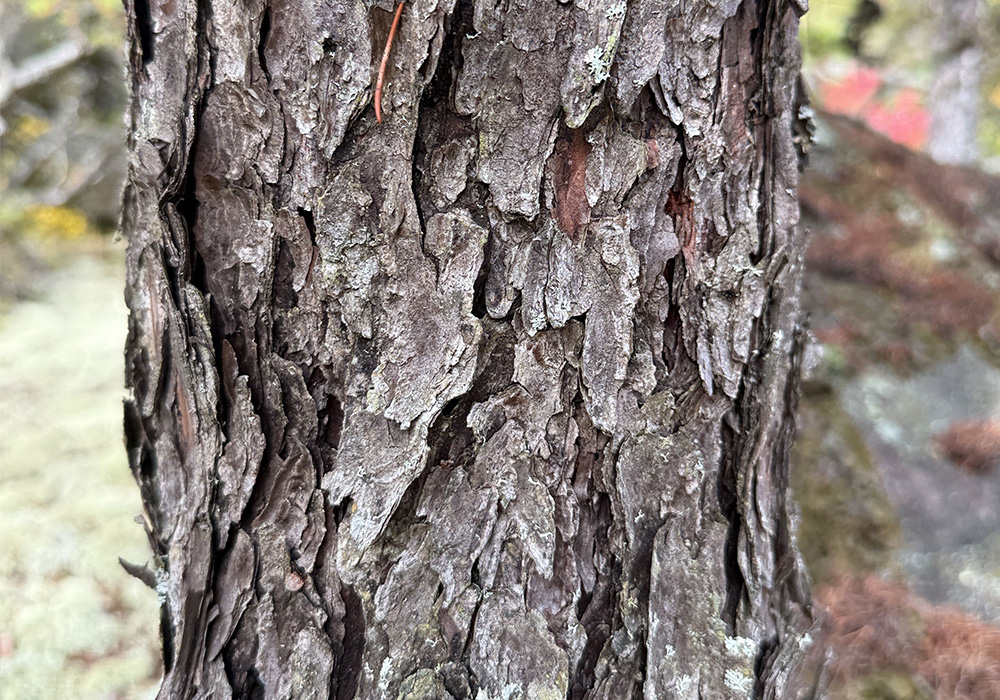
The stand seemed like a different world. The jack pines looked gnarled and weathered, like something that has been around awhile and is wiser for it. They are a native species, just not a common one. New York gives them an S3 rating, meaning they are vulnerable to extinction in the state. These unique conifers primarily occur in places where the growing conditions are seemingly subpar. Thin soils, drought-prone locales, and nutrient-poor areas are attractive homes for jack pines.

Group of jack pines.
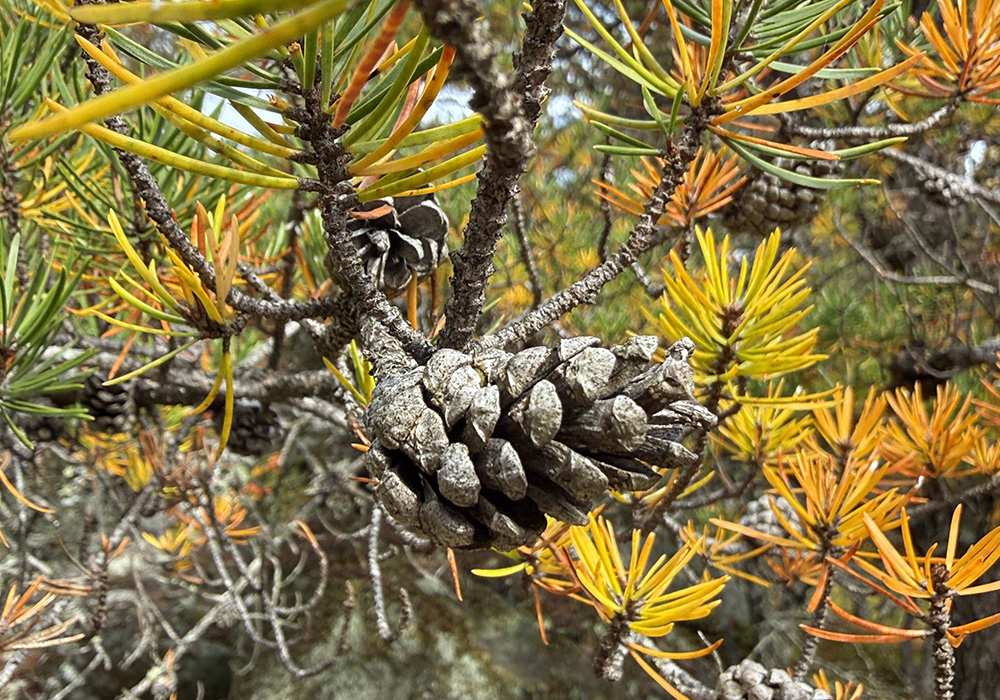
Close up of jack pine needles and pine cone.

But what really distinguishes jack pines is their need for fire. They require blistering temperatures (upwards of 140 degrees Fahrenheit) brought about by fire to melt the resin off the trees’ pinecones so that they may open and release small seeds into the burnt soil. The cones are serotinous—meaning “delayed”—and can remain closed for many years. Even if a forest fire kills the mature tree, it unlocks the cones and disperses the seeds from which new trees will grow, each one like a phoenix rising from the ashes.

As I wrote earlier, stopping to identify plants really slows my progress down when trying to walk boundaries. Likewise, writing about trees apparently slows down my stories about marking boundaries. But I’ve always said that a good day boundary marking ends with a good natural history lesson. Funnily enough, Annie and I learned that the Eagle Mountain boundary actually goes right through the stand of jack pines.

Since Eagle Mountain’s forever-wild preservation in 2019, this particular stand of trees has had the freedom to flourish (despite existing in exceptionally thin soils without great nutrients) and the good fortune to grow old. The task of maintaining boundaries and walking all those miles may seem daunting, but it’s a great way to learn about the places NEWT has conserved. On this day, we observed so many fascinating species and saw landscapes few others have. Ten hours after we started, I finally began my drive home, tired from descending all the Preserve’s cliffs but filled with joy that we were able to finish walking the boundary and meet some really cool trees.

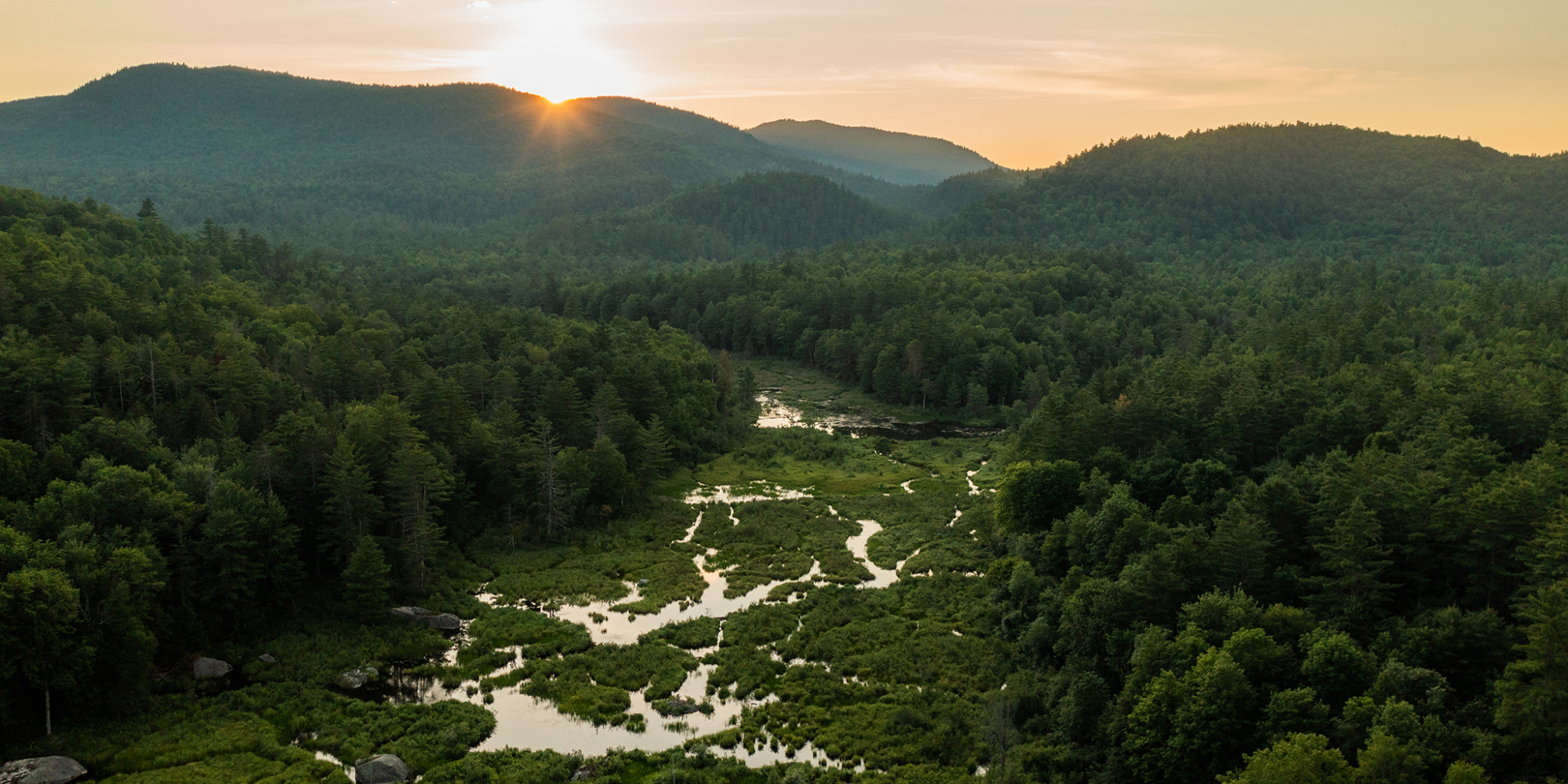
Eagle Mountain Doyle Brook

Photography by Janelle Jones and Stephen Matter.

Accredited Land Trust logo.
Rewild my inbox!

NORTHEAST WILDERNESS TRUST
17 STATE STREET, SUITE 302
MONTPELIER, VT 05602

802.224.1000

info@newildernesstrust.org

Accredited Land Trust logo.
Logo of a one over a two.
Logo for the Global Rewilding Alliance.
A platinum Seal of Transparency.

© Northeast Wilderness Trust 2026    TERMS OF USE    PRIVACY POLICY

Learn about our Green Guarantee.

Sign up for the Wild Times Enewsletter!

NORTHEAST WILDERNESS TRUST
17 STATE STREET, SUITE 302
MONTPELIER, VT 05602

802.224.1000

© The Northeast Wilderness Trust 2024    TERMS OF USE    PRIVACY POLICY

Learn more about our Green Guarantee.

Logo for Accredited Land Trust.
A one over a two, meaning one half.
Logo for the Global Rewilding Alliance.
A platinum Seal of Transparency.