A Poor Fen of Floral Delights
The clouds of mosquitoes thicken as we approach the pond. We ponder, only half in jest, whether they might be a built-in defense mechanism of the rare ecosystem we’re approaching; a trial to ensure that only the most devoted reach the sodden promised land.
As I swat away in futility, Shelby Perry, NEWT’s Wildlands Ecology Director, reminds me that a greater abundance of biting insects tends to signal a healthier ecosystem.
Lovely consolation, I think, as one gets me good behind the ear.
We are dogged travelers in search of a Poor Fen. One exists on this wildland permanently protected by Northeast Wilderness Trust. Poor Fens are aquatic ecosystems anchored by a lush and soggy mat of sphagnum moss. Over time, as the sphagnum moss and other plants die, their undecayed matter forms peat, a terrific carbon sponge. While peat is a core feature of both fens and bogs, the former are mostly fed by streams, ponds, or groundwater flowing downstream, while the latter are chiefly recharged by precipitation.
The “poor” in Poor Fen refers to the acidity of its waters and the resulting dearth of nutrients. Poor Fens are more acidic than Intermediate or Rich Fens (though still less acidic than bogs) and so support a different array of species than their counterparts, though sedges, shrubs, grasses, and rushes typify all three fen types.
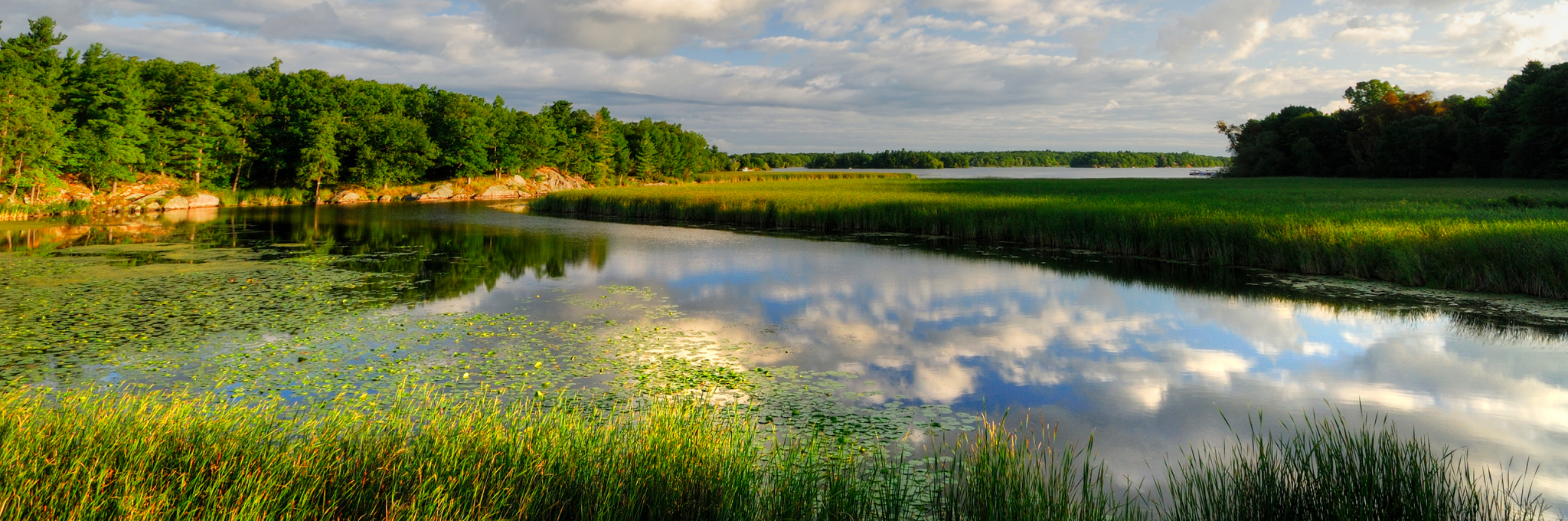
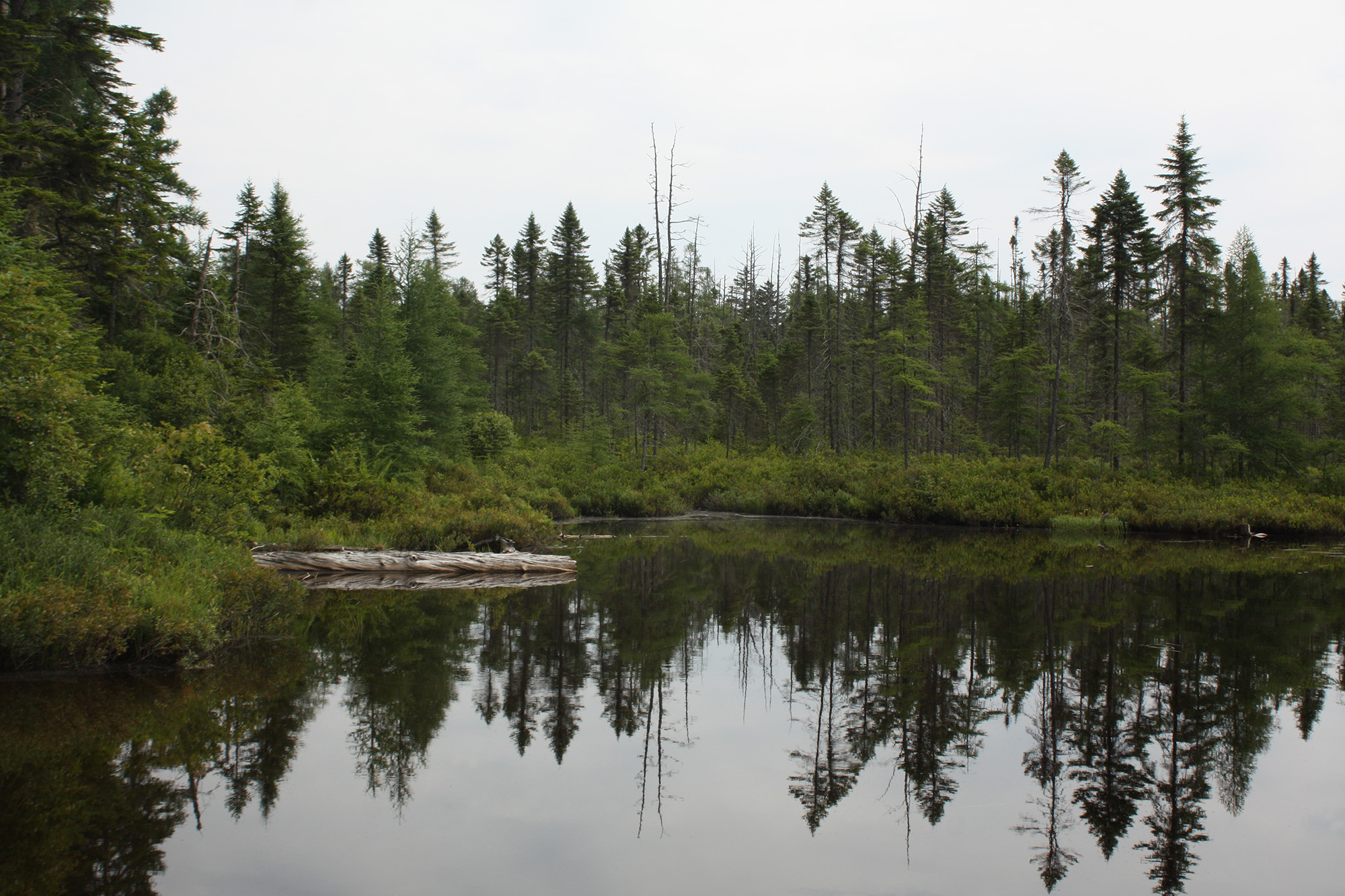
We come to the edge of the pond. The morning is grey and heavy with humidity, the conifers encircling the water pulsing, verdant. A crown of darker grey mountains peaks over the trees at the pond’s southern edge. Voltaic-blue dragonflies dart around us and dip down to the surface. We entreat them to feast on the mosquitoes feasting on us.
Shelby points, tiny gluttons swirling around her outstretched arm.
“There it is.”
At first glance, the stretch of shore in question looks unremarkable, aside from perhaps a slight red tint where the water and greenery meet. Bedraggled spruces rise from the vegetal carpet, undergirded by shrubs.
We set off. We curve around the pond’s edge. Sheep laurel and leatherleaf hug us as we pass. The sun comes out and, mercifully, its rays seem to banish all but the most dedicated mosquitoes.
We come out into a narrow break in the relentless tangle of shrubbery, where a stream empties into the pond. The muck is deep, and it wants to swallow my boots. I haul them out, the mire relinquishing its grip with a deflated sucking sigh, and step to a firmer tongue of ground.
Ten feet from me, poking up bashfully from the undergrowth, is a peatland celebrity, and the most enticing among the floral motivations for our journey here.
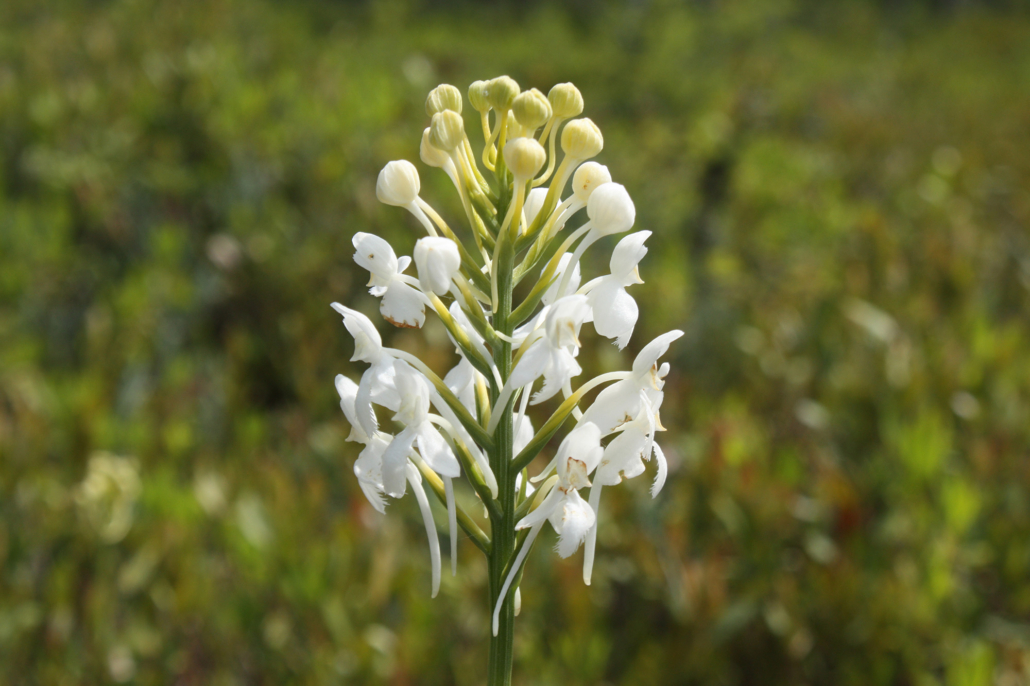
White-fringed bog-orchid. Platanthera blephariglottis, the species name meaning “fringe-tongued” for the lacy edges of its labellum, or lip, the flower’s downward-facing petal.
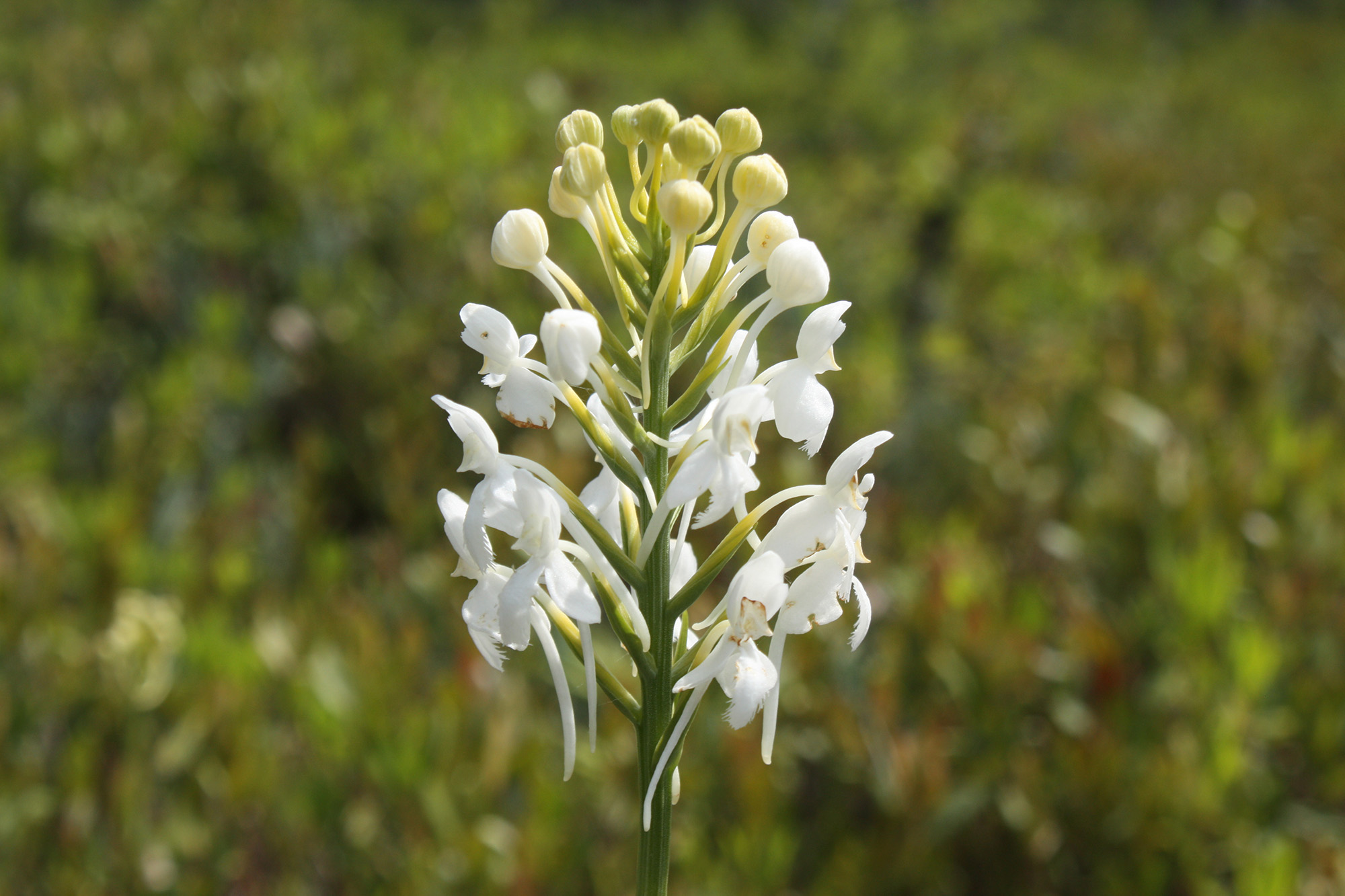
White-fringed bog-orchid.
I am giddy. Nearby are rose pogonia, pitcher plant, more sheep laurel. Shelby, at this point advancing into the Poor Fen while I linger on its edge, admiring this first white-fringed bog-orchid, spots sundew and small cranberry in bloom.
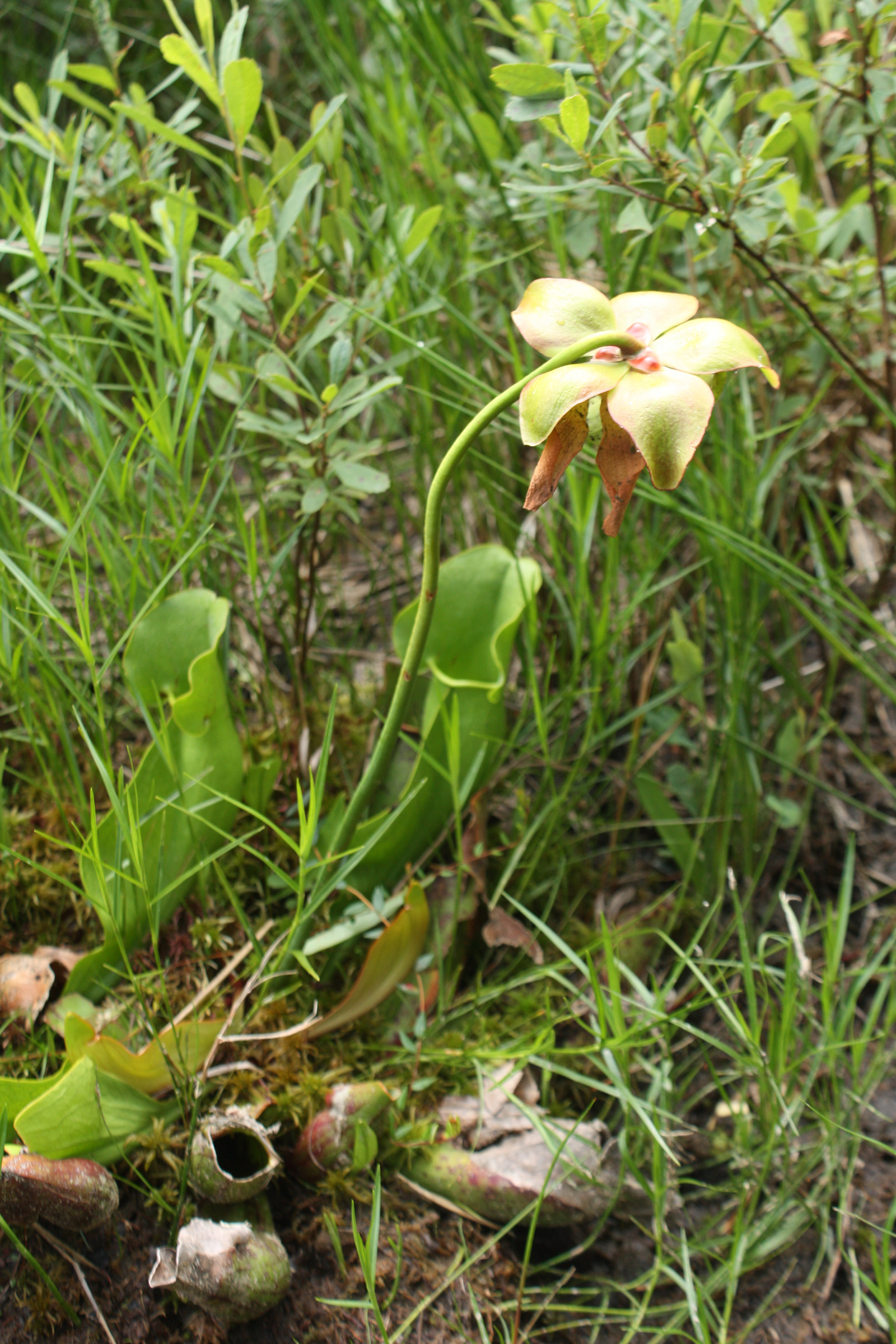
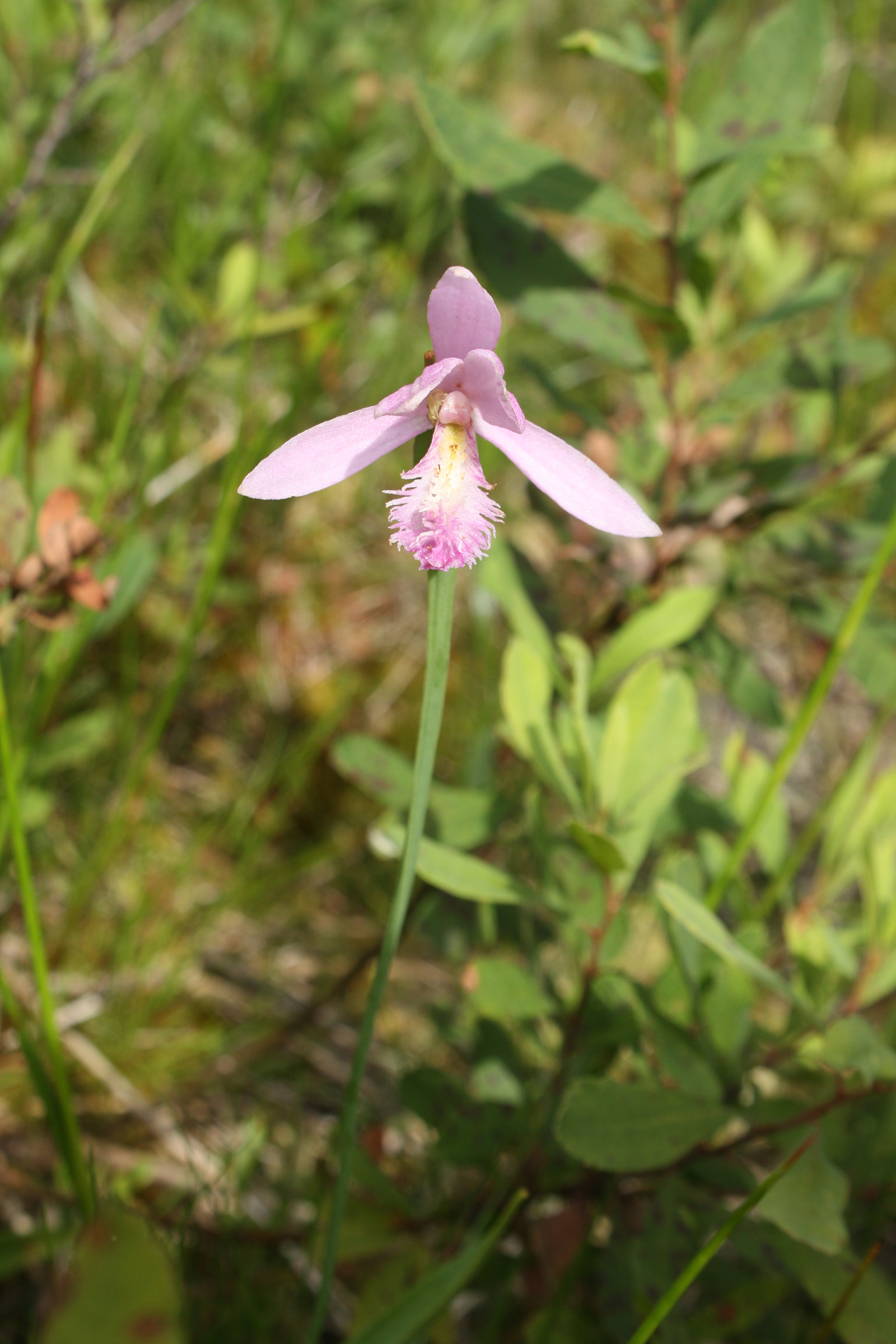
Pitcher plant; Rose pogonia.
By the time I rise from my crouch, my knees ache. I advance onto the sphagnum moss of the fen. This substrate sits directly atop the water, forming a peninsula of woven moss. With each step the moss around the edges of my boots swells with water; I feel the displacement beneath my soles. We tread lightly, following deer paths as closely as possible, minding our footfalls.
Shelby, still ahead of me, yells: “There are more!”
I look up. White-fringed bog-orchids dot this little spit of sphagnum moss. Each plant is at a different stage of its bloom: On some inflorescences (the mass of individual flowers atop the stalk), nearly all the buds are open, the exquisite flowers unfurled in every direction. Others are still buttoned up, waiting to blossom.
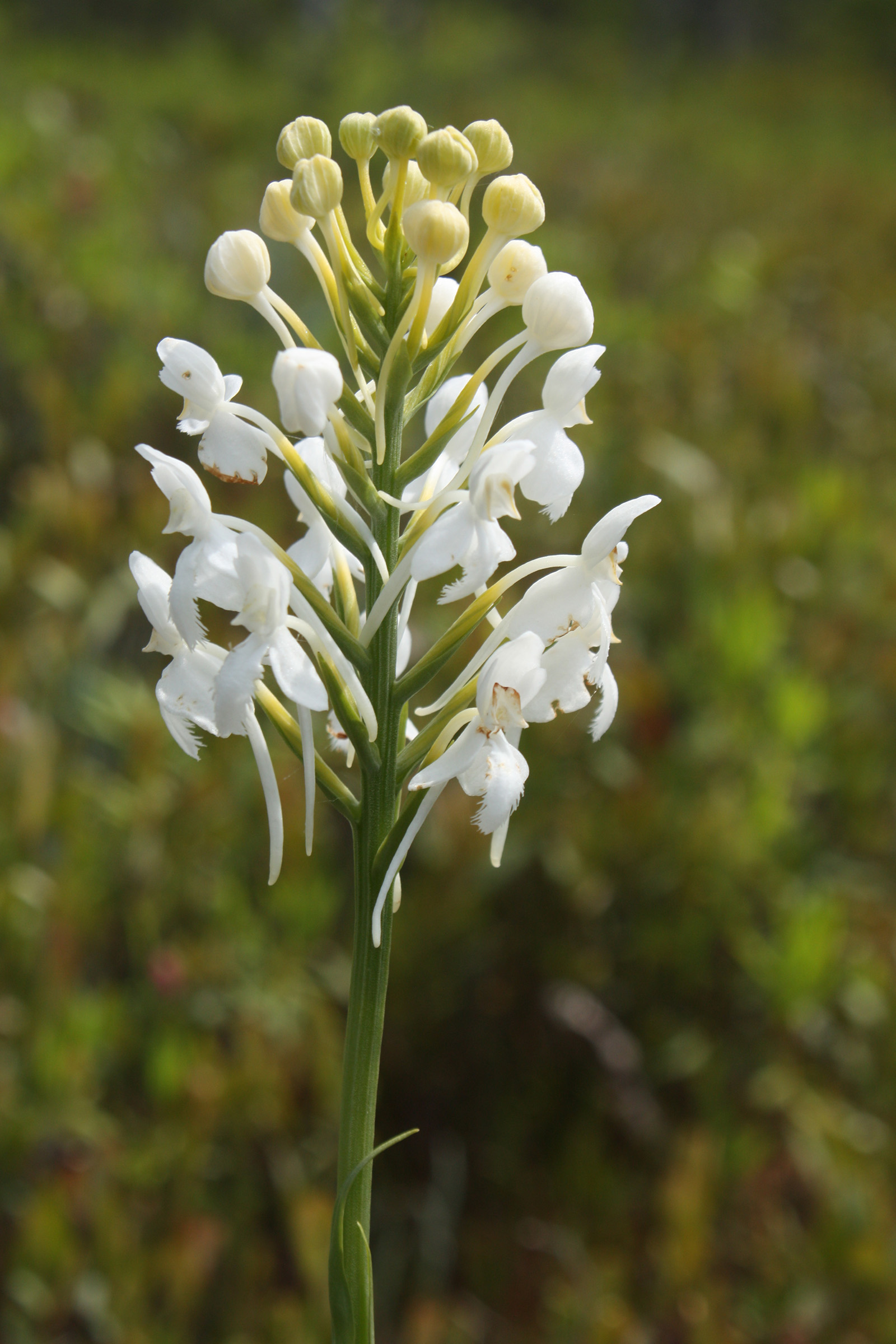
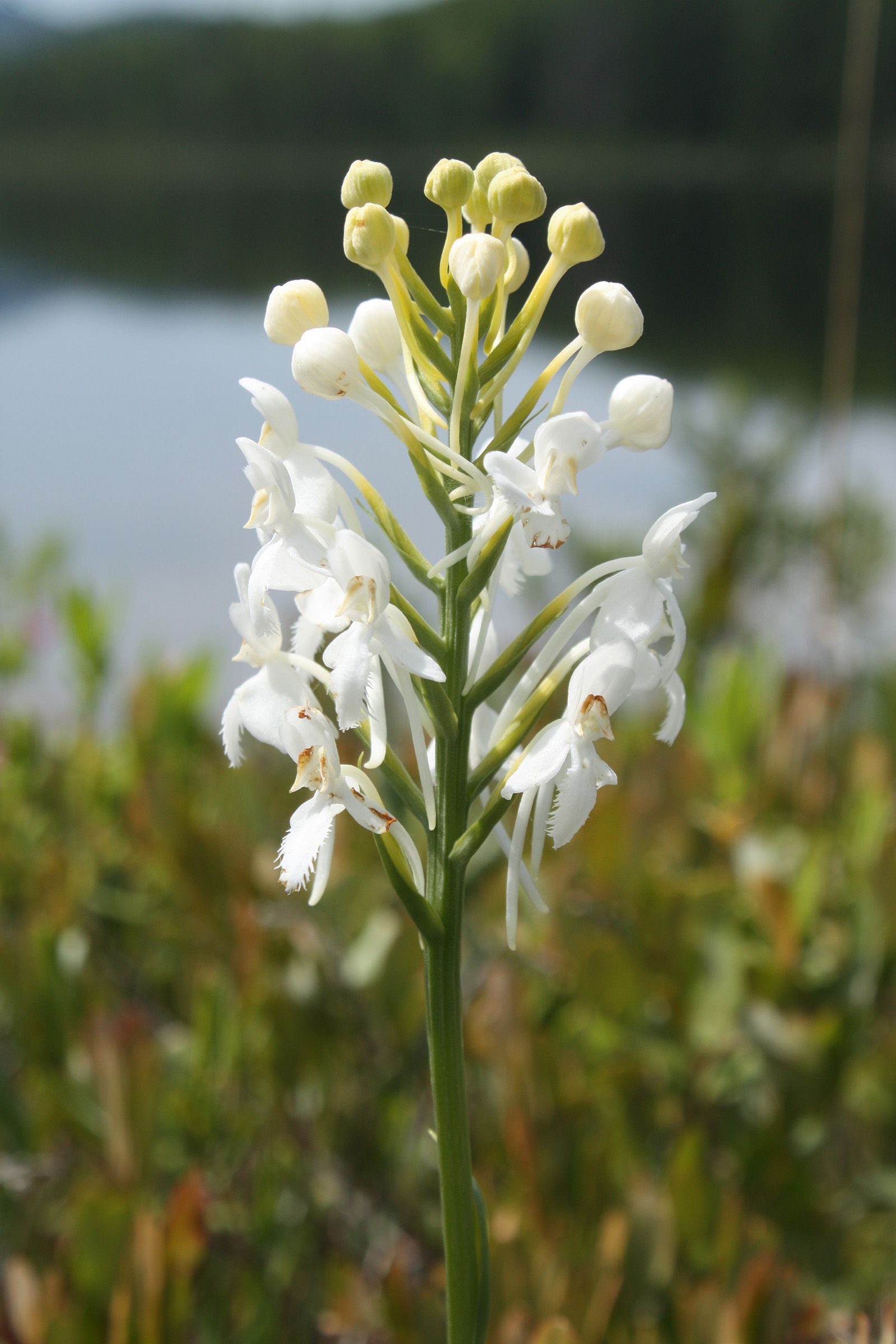
White-fringed bog-orchid.
This concentration of white-fringed bog-orchids is more than a pageant of boggy beauty. It is a rare and precious sight, given the species’ rarity in northern New England. It is also an indicator of the integrity of this ecosystem, as white-fringed bog-orchids are very sensitive to disturbance and, when stressed, will not bloom. Large-scale changes to the water table through development or agriculture can wipe out populations entirely, an ominous sign for the wellbeing of the environments in which the orchids grow. And those wider environments are already disappearing. The United States has lost more than half its wetlands since the late eighteenth century.
But here, on this wildland, given the freedom to exist and evolve according to the ebb and flow of Nature, the orchids thrive. They and their floral counterparts in this Poor Fen are protected from development and extraction permanently, their place among this wider patchwork of forests, farms, and communities safeguarded by two layers of legal protection for the land. This strategy is what makes Northeast Wilderness Trust’s wilderness preserves and easements “forever-wild,” and what ensures continuity here amongst a world otherwise characterized by breakneck change.
After we get our fill of the fen, we follow the deer paths north, into what Shelby says is a Red Spruce Cinnamon Fern Swamp. The Common Yellowthroats sing; the mosquitoes go on buzzing.
I think of something I read before we arrived here. Poor Fens can take up to 10,000 years to develop. Unprotected, they can disappear in a flash.
This one, all its wildness, endures.