Preserving a Slice of the Northeast’s Glacial Past in Vermont’s Champlain Valley
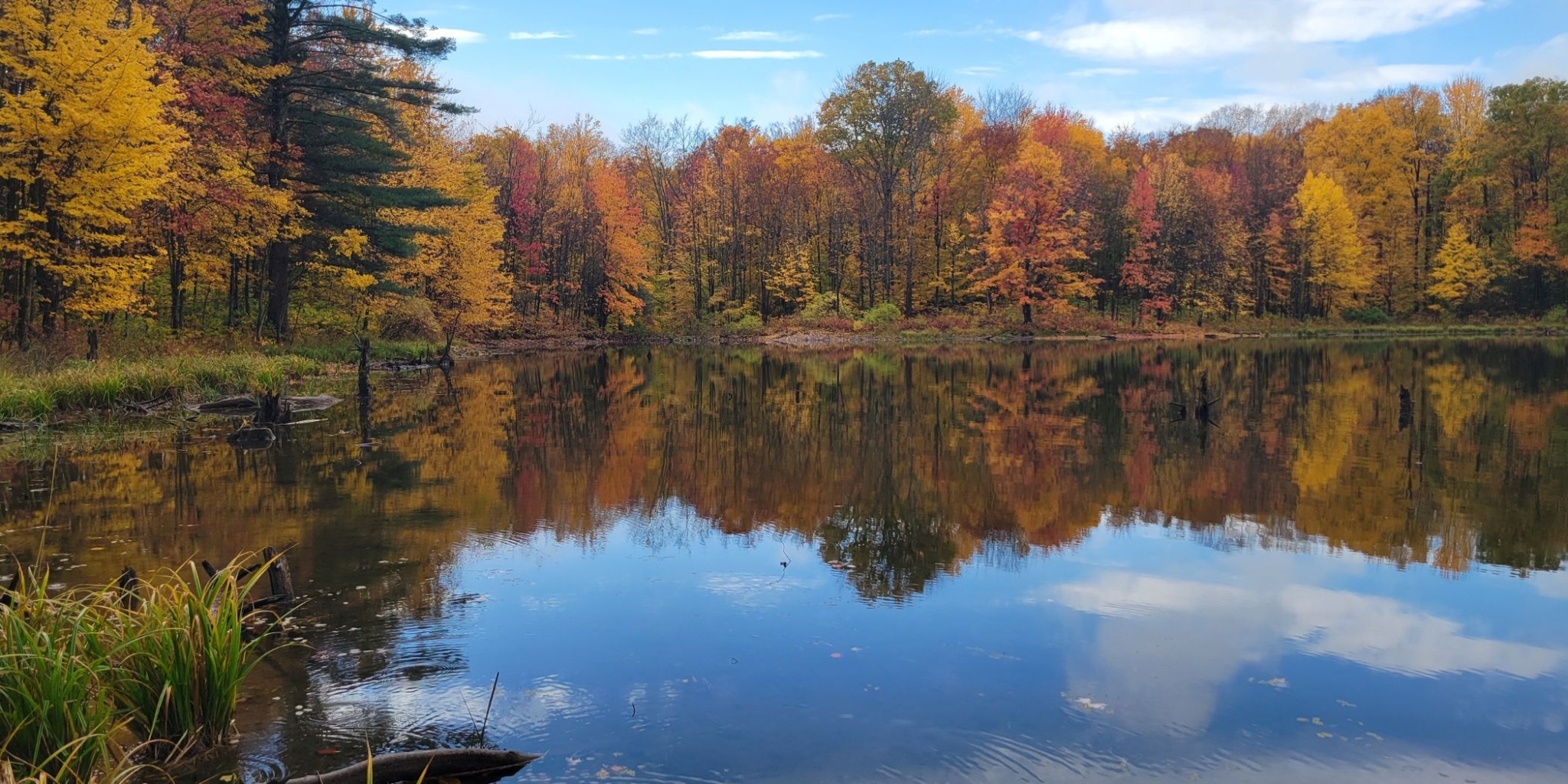
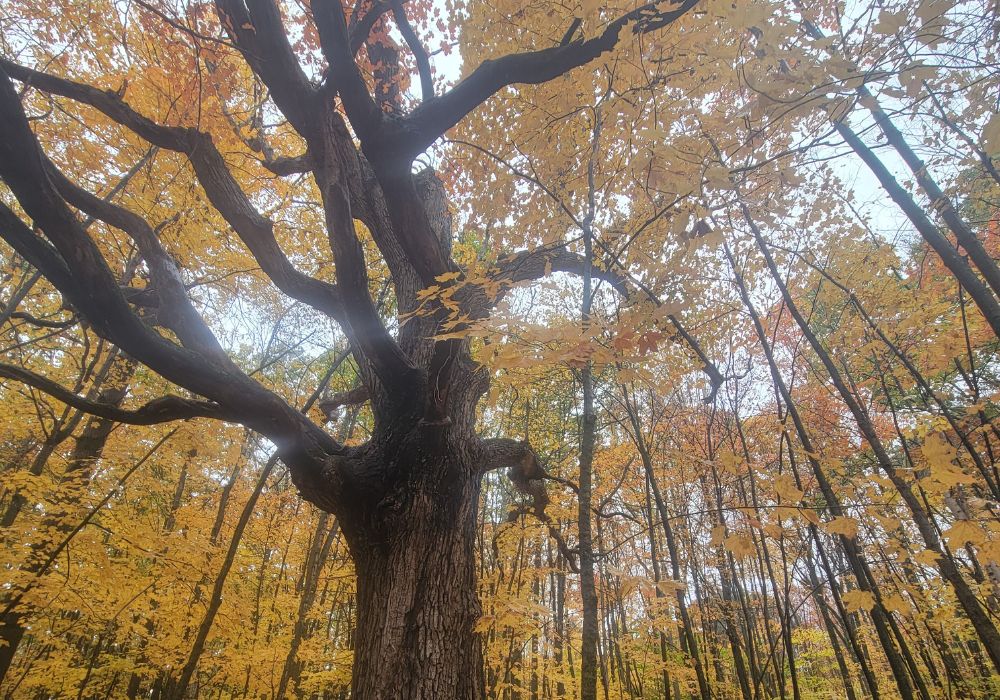
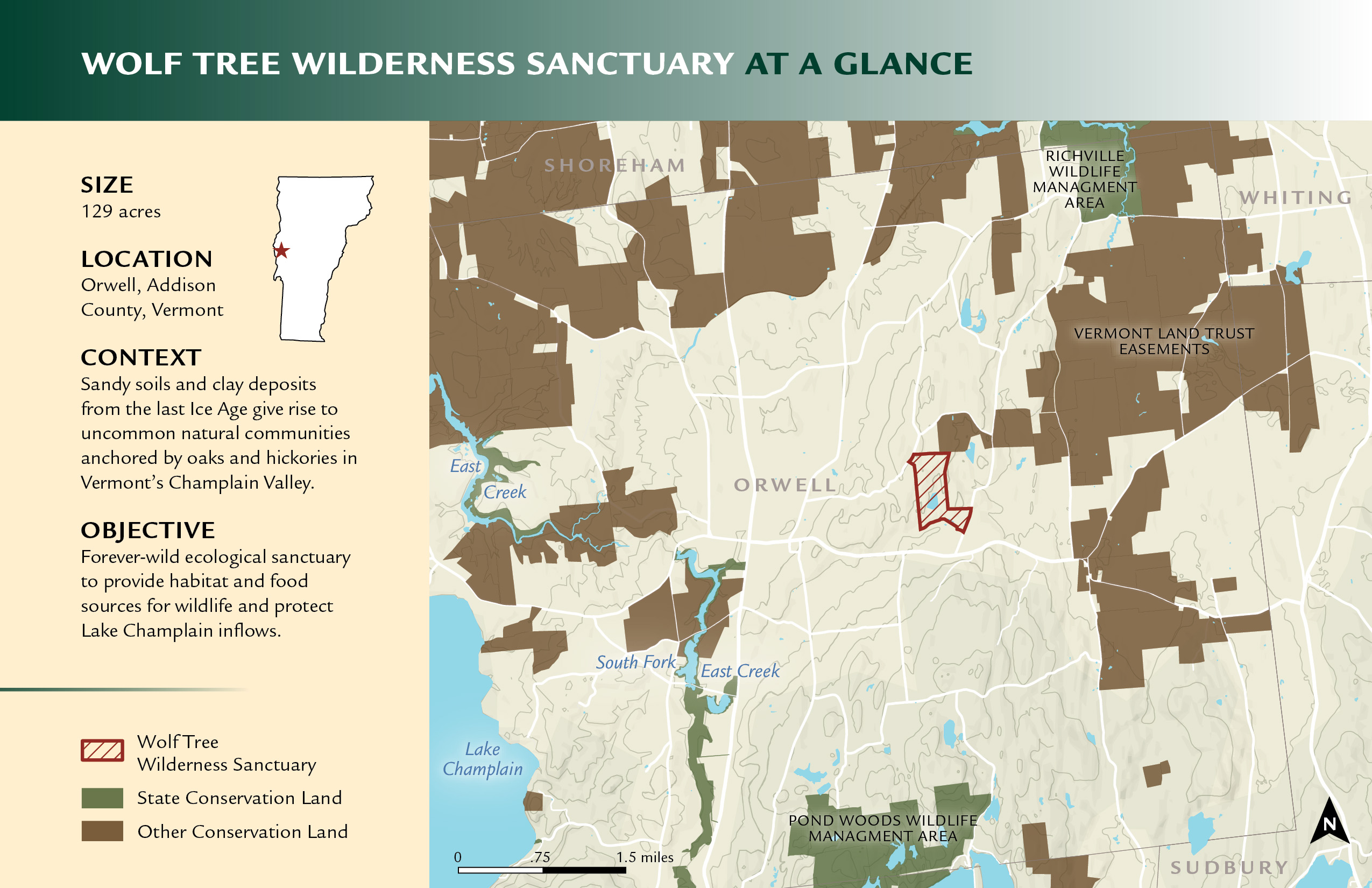
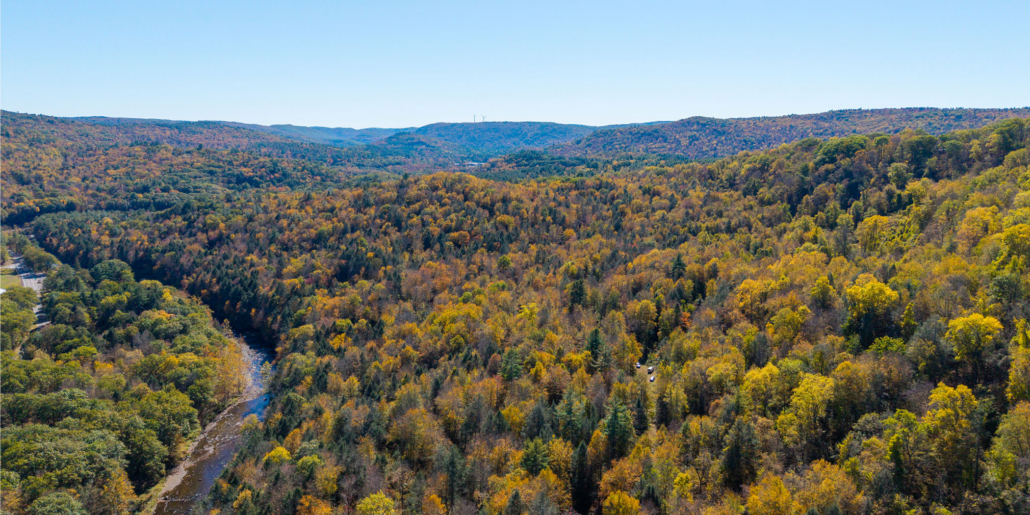
Standing in an oak forest or on the colorful shores of a beaver pond at the future Wolf Tree Wilderness Sanctuary, it might be difficult to imagine a time when a sheet of ice nearly a mile thick sat atop the land. But a closer look at the landscape elements of these 129 acres opens a window into the distant past, inspiring gratitude for Wolf Tree’s biological vibrance today—and underscoring the historical and ecological value of this verdant piece of the Champlain Valley.
Reading Ancient and Recent History in the Landscape
As the Laurentide Ice Sheet retreated 13,000 years ago, it formed Glacial Lake Vermont in its wake. The northern portion of what is now Wolf Tree Wilderness Sanctuary sat on the icy shores of this massive waterbody. The parcel’s southern portions, meanwhile, dipped beneath the ancient lake’s muddy waters, which were 900 feet deep in spots. This history is evident in Wolf Tree’s soils, which are mostly sand, silt, and gravel.
Another clue about the property’s natural history resides in these soils. Clay substrates underlay limited areas of the property. These deposits are a vestige of the pre-colonization Champlain Valley, when Valley Clayplain Forest, a rare natural community in Vermont, ringed Lake Champlain. Centuries ago, these substrates were canvas to a more diverse array of oaks, maples, hickories, and many other plant and animal species. Given the freedom to grow old and rewild according to evolutionary processes, Wolf Tree might someday once again host Valley Clayplain Forests.
Though Lake Vermont may be long gone, water still has its place on the Sanctuary. A beaver dam in an unnamed stream which bisects the property maintains a large pond in its south-central portion. Water exiting the pond eventually finds its way to Lake Champlain, highlighting how Wolf Tree’s protection contributes to aquatic health both on the property and farther afield.