Tag Archive for: celeb

The Wildlands Partnership Comes to Eastern New York

This press release first appeared as “CATS announces ownership of Twin Valleys Outdoor Education Center” in The Sun Community News on February 3, 2026.

LEWIS, NY— Champlain Area Trails (CATS) has announced that it has successfully raised the necessary funds to purchase the 675.5-acre Twin Valleys Outdoor Education Center.

With this acquisition, Twin Valleys is officially open to the public.

Located approximately 40 miles south of SUNY Plattsburgh, Twin Valleys has long served as a hub for environmental education. The property connects 15 miles of trails, cabins, and a lodge that historically hosted college programs, workshops, and events. Under CATS’ stewardship, the trails will now be fully accessible to residents and visitors, while plans are underway to determine the future use of the buildings to enhance and expand their use in alignment with CATS’ mission.

“This acquisition is a transformative step for CATS and for the Champlain Valley region,” said Arin Burdo, Executive Director of CATS. “Owning Twin Valleys allows us to ensure the land and trails remain open to everyone, while providing a platform to thoughtfully plan future programs and facilities that strengthen connections to nature and support local economic vitality.”
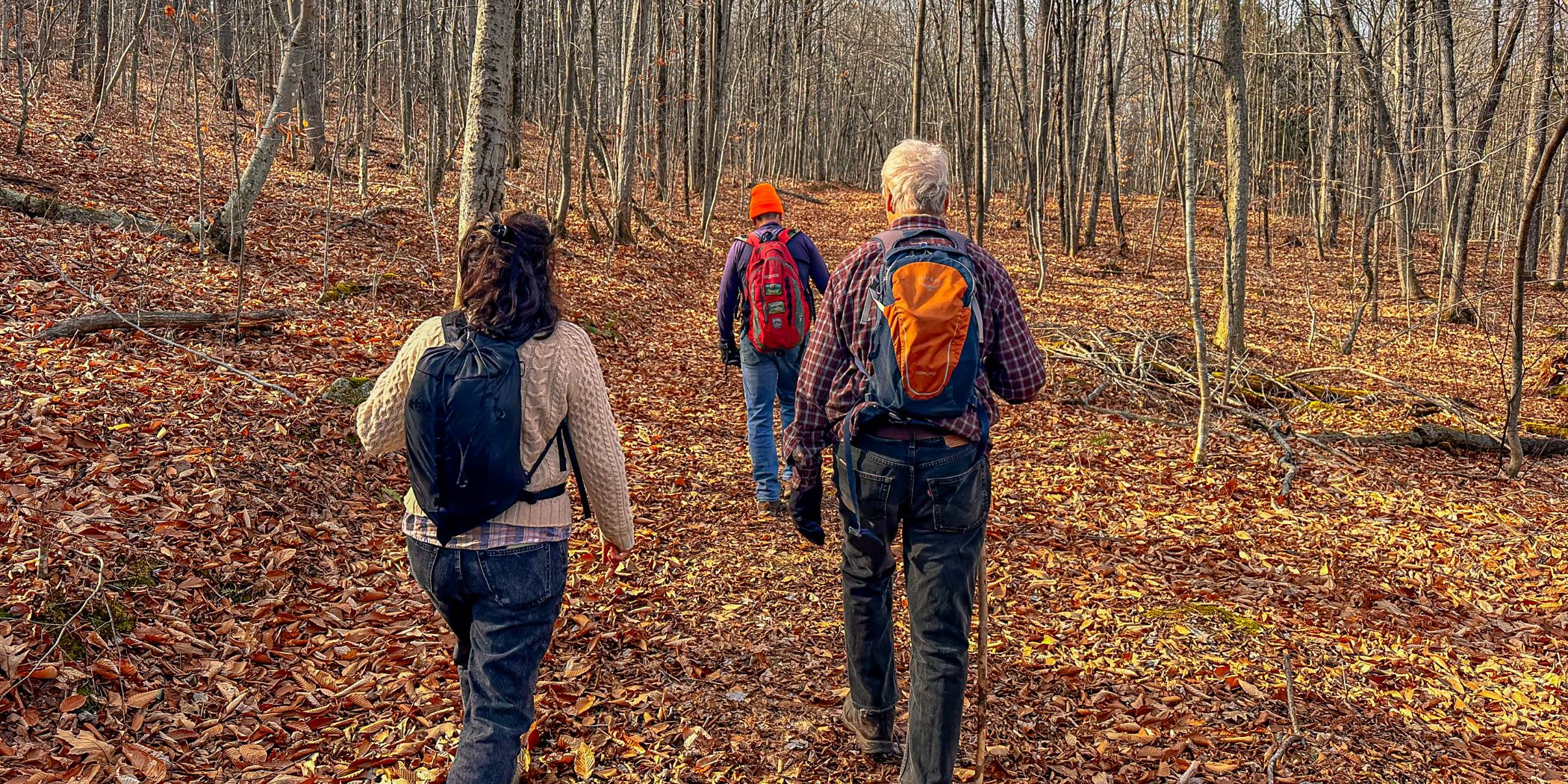
People walking on a trail at Twin Valleys.

A “forever-wild” conservation easement will keep Twin Valleys permanently undeveloped. CATS received assistance in purchasing the property from Northeast Wilderness Trust, a regional land trust that focuses on wilderness conservation. This support came through the Wilderness Trust’s Wildlands Partnership program, which offers guidance and funding to local land trusts to help protect their lands as forever-wild. Through the Partnership, the Wilderness Trust will hold a conservation easement on Twin Valleys, adding an extra layer of legal protection in addition to CATS’ ownership of the land. This project continues the long-standing relationship between CATS and Northeast Wilderness Trust.

“The forever-wild protection of Twin Valleys is a win for wildlife and people, and a testament to the longstanding relationship between CATS and Northeast Wilderness Trust,” said Peter Mandych, Land Conservation Director at the Wilderness Trust. “This project embodies what the Wildlands Partnership is all about: collaboration between land trusts to deliver tangible results for local communities, biodiversity, and the climate.”

Since its founding in 2009, CATS has created and maintained over 100 miles of trails, conserved 3,000 acres of land through direct action and partnerships, and offered hundreds of hikes, outdoor education experiences, and volunteer opportunities that bring people outdoors and draw visitors to the region. The addition of Twin Valleys significantly expands CATS’ ability to provide welcoming outdoor spaces, foster environmental stewardship, and contribute to the economic and recreational vitality of the Champlain Valley.

This project has been funded in part by a grant from the New York State Department of Environmental Conservation, Adirondack Park Community Smart Growth Program through appropriations from the New York State Environmental Protection Fund (EPF).

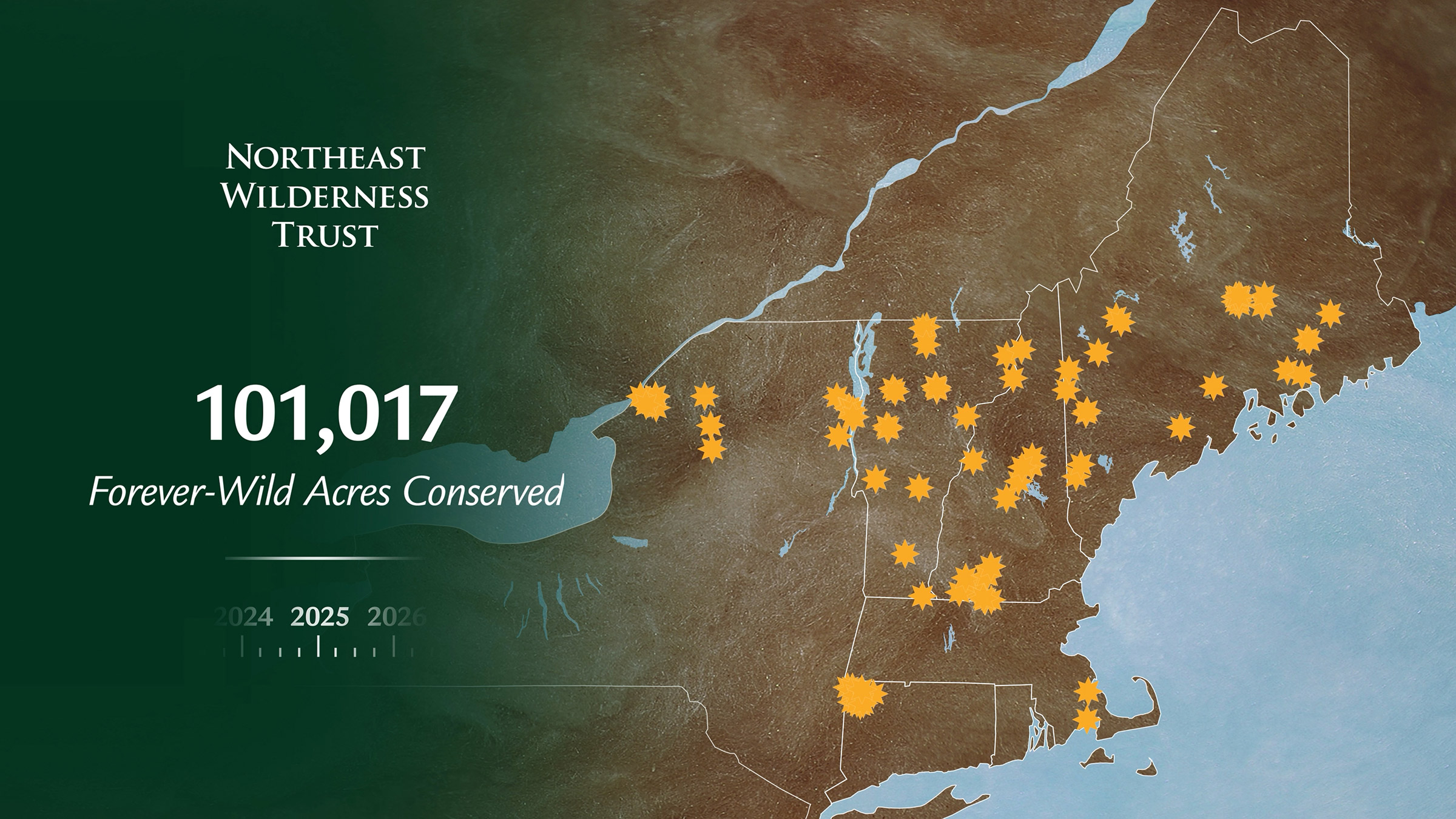
Northeast Wilderness Trust Surpasses 100,000 Forever-Wild Acres Conserved

Organization Celebrates Landmark Achievement in Rewilding and Land Conservation Across the Northeast

MONTPELIER, VT —Northeast Wilderness Trust, the only regional land trust dedicated exclusively to wilderness conservation in New England and northern New York, has reached a major milestone: more than 100,000 acres of land permanently protected.

This achievement represents more than two Acadia National Parks’ worth of forests, lakes, and rivers where Nature can thrive in freedom. These “wildlands”—stretching from the Berkshires of northwestern Connecticut to the North Woods of Maine—are now safeguarded as places where ecosystems can flourish, wildlife can roam, and future generations can experience the power and solace of wilderness. The Trust’s more passive management approach, known as “rewilding,” sets the stage for missing species to return and natural processes to guide the ebb and flow of life, as has happened for millions of years. Human visitors can enjoy quiet, non-motorized recreation, witnessing firsthand the community of life in untrammeled beauty.

“This milestone is less a triumph for Northeast Wilderness Trust than it is for the four-legged, the finned, the feathered, and the rooted, whose homes we work to preserve,” said Jon Leibowitz, President and CEO of Northeast Wilderness Trust. “Every single acre—from recovering forests in northern New York to the tidal streams of coastal Maine—is a permanent step toward a healthier, more resilient future. Most hopeful of all, each acre protected as wilderness today is an old-growth forest of tomorrow in a region where such forests are vanishingly rare.”

map of the Northeast showing the Northeast Wilderness Trust protected areas

A Growing Recognition of the Value of Wilderness

Wilderness has long been a neglected conservation element in the Northeast. Whereas approximately 25 percent of the region has been conserved in some form, the lion’s share of that conserved land is managed or farmed, while only about 3.5 percent is protected as wilderness. The consequences of this disparity have become more pronounced in recent years, as a growing body of research has confirmed that wildlands store immense amounts of carbon and boost both biodiversity and human well-being. Luckily, stakeholders in the private and public sectors are now taking initial steps to elevate wilderness and rewilding in conservation strategies. The Wilderness Trust’s own history mirrors this evolution, with remarkable growth over the past seven years: expanding from a staff of three to 24 across four states and increasing its protected land by 75,000 forever-wild acres.

Key projects that brought the Wilderness Trust over the 100,000-acre threshold include College Hill Wilderness Sanctuary in southern Vermont, which conserves hundreds of acres of forest unlogged since the 1940s, and Birch Stream Wilderness Preserve in central Maine, which protects rare aquatic natural communities. These new wilderness areas join iconic ones in the Wilderness Trust’s holdings, such as Woodbury Mountain Wilderness Preserve, the largest nongovernmental wilderness area in the state of Vermont, and Muddy Pond Wilderness Preserve, a remnant of the globally rare Atlantic Coastal Pine Barrens ecosystem nestled in the densely populated suburbs of southeastern Massachusetts.

A focus of the Wilderness Trust’s efforts is the buffer zone of the Appalachian Trail. Because the Trail itself is protected from logging and development by the U.S. National Park Service, it is not only a famed recreational fixture of the eastern United States but also a continuous ribbon of wildlands and a crucial wildlife corridor stretching from Georgia to Maine. Over the past seven years, the Wilderness Trust has enhanced the wilderness character of the New England stretch of the Trail by protecting more than 16,000 acres adjacent to it—including its most recent conservation success, the 2,000-acre Spruce Ridge Wilderness Preserve in Orford, New Hampshire, which also brought the Wilderness Trust over the 100,000-acre threshold.

Partnerships with other conservation organizations have been central to the Wilderness Trust’s 100,000-acre milestone. Forever-wild conservation easements held by the Wilderness Trust on major wildlands such as the 10,000-acre Vickie Bunnell Preserve, owned by The Nature Conservancy in New Hampshire, and on roughly 800 acres in northwestern Connecticut owned by Cornwall Conservation Trust, represent nearly 45 percent of the organization’s protected lands. Building on this legacy of collaboration, the Wilderness Trust in 2021 launched the Wildlands Partnership grant program. The Partnership mainstreams wilderness conservation and rewilding by awarding technical and financial support to partner land trusts that safeguard more of their lands as forever-wild. To date, more than 15,000 of the Wilderness Trust’s 100,000 protected acres have been conserved through the Partnership.

Collectively, more than 100 uncommon, threatened, or endangered species have been documented on Wilderness Trust lands. Many of these species find ample habitat among the 16,000 acres of wetlands and 300 miles of rivers and streams included in the 100,000-acre total. Over 9 million metric tonnes of carbon—and counting—have been removed from the atmosphere by lands under Wilderness Trust ownership.