Tag Archive for: Featured News

Tracking a Moose in Late Winter

One of the joys of working as an ecologist in land conservation is that the field season stretches year-round. One of my responsibilities at Northeast Wilderness Trust (NEWT) is conducting site visits at potential new preserves to create ecological inventories. NEWT pursues land acquisitions throughout the year, so while other ecologists often work within the short phenological windows when songbirds breed or certain plants flower, my field schedule more resembles that of timber companies and real estate agents. One upside to this expanded field season is that I get to explore new, wild places in winter, when much of the natural world lies dormant, on skis or snowshoes.

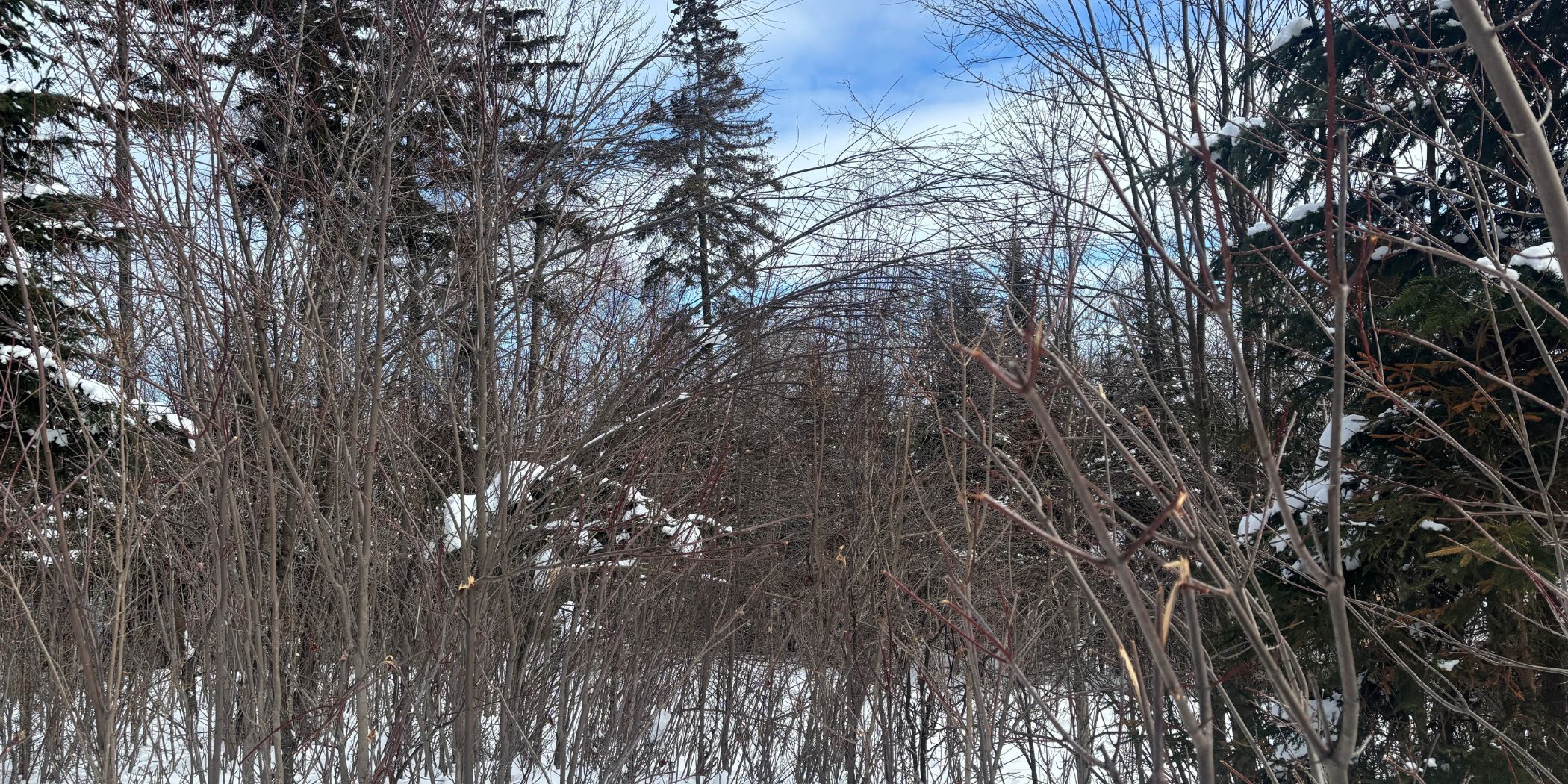
In late February in central Vermont, I set out on skis to document the ecology of a proposed NEWT preserve. At this point in the season, the snowpack is often at its greatest depth, and food resources that have sustained wildlife through the winter are beginning to run low. This past winter, in particular, brought consistently frigid temperatures and above-average snowfall. As a result, I was gliding on my skis across a landscape blanketed by more than 40 inches of snow, unimpeded by buried stumps, logs, and rocks lying beneath the dense snowpack.

Landscape with trees

Reading Moose Movement

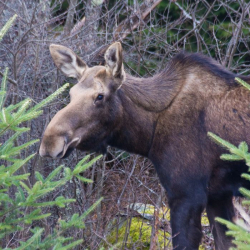
Midway through my journey, moving easily across the terrain, I came upon a set of unusually large tracks. At first, I wondered if they might belong to a lost human wandering through these former timberlands. But as I moved closer, it became clear that they belonged to the largest of New England’s megafauna: a moose.

I had noticed signs of moose earlier that morning: nibbled hobblebush buds and chew marks left on striped maple and young red maple stems. But the freshness of these tracks was clear evidence that the animal had passed by only recently, perhaps within hours of my arrival.

I inspected the tracks and the surrounding area. Wiry hairs lay in the deep hoofprints, and fresh scat sat piled periodically atop the snow. These signs created a clear trail, and I followed it for a while, noticing fresh browse on nearly every young tree or shrub along the path. Eventually, I came upon a large depression in the snow: the clear outline of where a moose had bedded down for the night. Fresh scat surrounded the bed site, along with clumps of hair shed from its thick winter coat.

The American Eel: Rewilding Watersheds

As an ecologist at Northeast Wilderness Trust (NEWT), I spend most days studying wild lands. As terrestrial creatures ourselves, things often feel more familiar on land—the sights, smells, and colors are welcoming, and the wildlife we encounter is recognizable and often charismatic. But the boundaries of a wilderness preserve do not stop at the river’s edge or the pondshore; they often extend into or encompass these freshwater systems. So every now and then my Wildlands Ecology colleagues and I turn our attention to the creatures that lurk in murky depths—those perhaps less photogenic but equally crucial and intrinsically valuable counterparts to the terrestrial species we know so well.

A Slippery Mystery

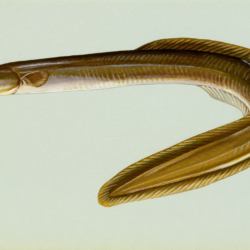
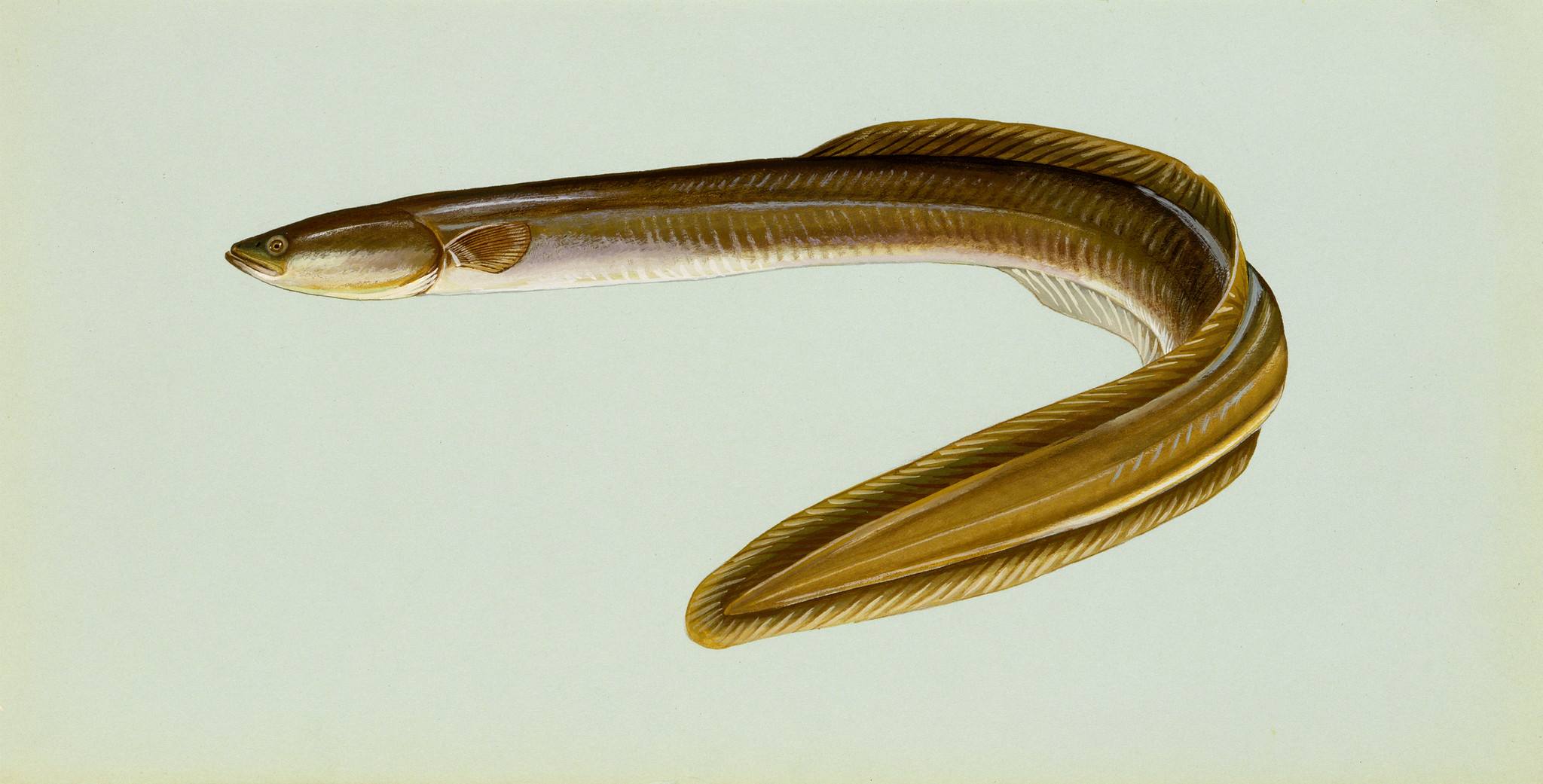
The American eel (Anguilla rostrata) is among the most fascinating and yet mystifying of these creatures. Once nearly ubiquitous in freshwater streams and rivers throughout Atlantic watersheds, the American eel is now largely confined to coastal waters and undammed inland waterways. Yet their story is bigger than the familiar tale of abundance severely diminished by human intervention. The American eel has puzzled scientists and naturalists for centuries, with critical details of the species’ biology still shrouded in mystery.


Illustration of an american eel

The American eel is North America’s only catadromous fish. They live much of their lives in freshwater (or brackish) environments but must return to the ocean to reproduce. This life cycle inverts that of anadromous fish like salmon, which live primarily in the ocean and return to rivers to spawn.

No one has ever observed eel spawning in the wild, but based on clues from their migration, we know that their life begins in the warm depths of the Sargasso Sea off the U.S. East Coast. There, adult eels spawn, producing tens of millions of eggs, and then perish. From those eggs hatch larvae (leptocephali) shaped like willow leaves, which drift along on ocean currents for months. As the larvae approach the continental shelf, they metamorphose into “glass eels”—transparent, androgynous juveniles—and begin the journey inland toward estuaries and rivers.

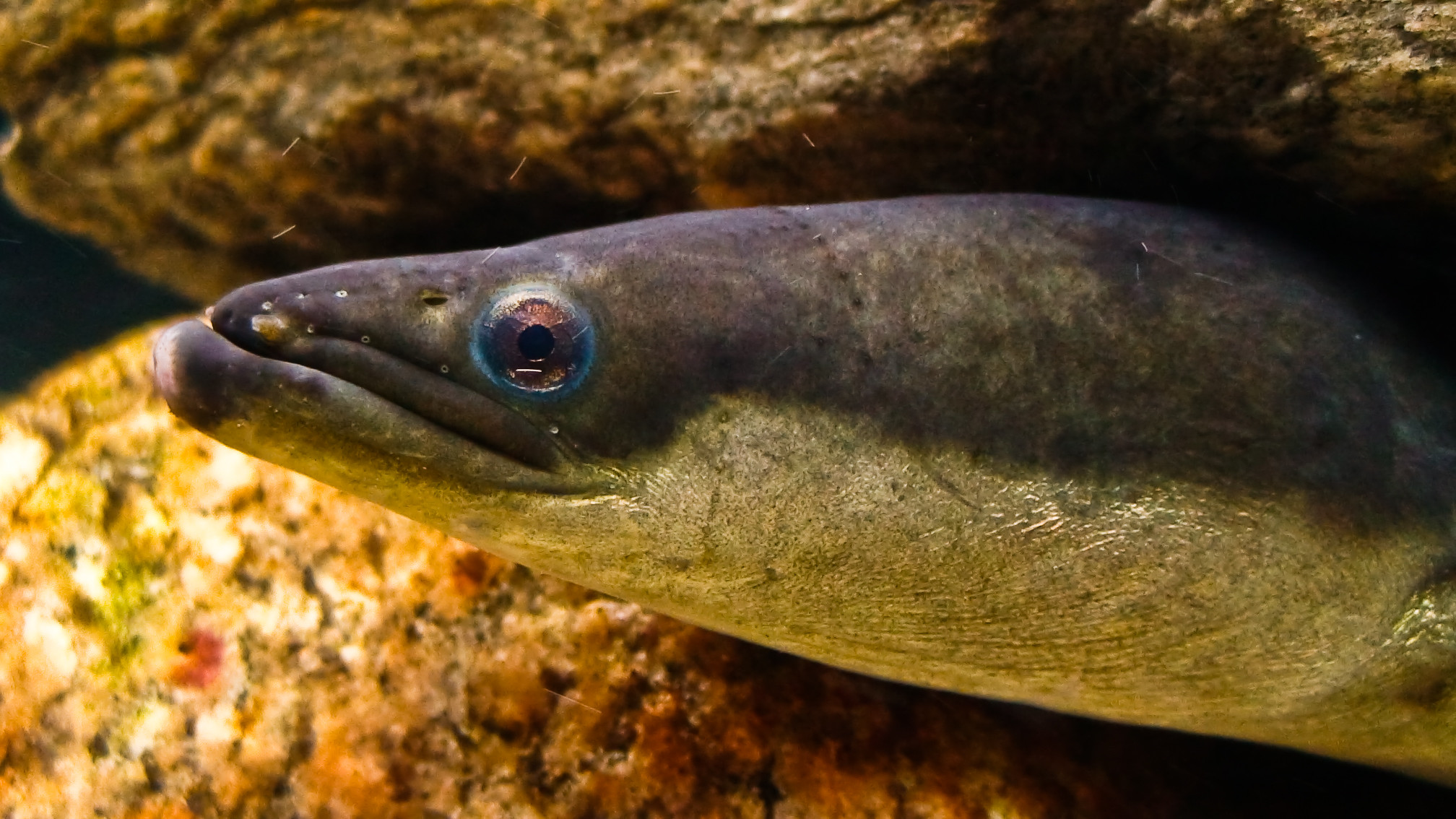
Once in fresh or brackish waters, they transform again, this time into elvers, and later into yellow eels, spending years to decades feeding and growing in streams, lakes, marshes, and rivers. In the yellow eel phase, they are nocturnal, hiding in sediment, root tangles, or under logs, nourishing themselves with a wide diet of macroinvertebrates, crustaceans, small fish, and amphibians.

When yellow eels reach maturity, they change once more, now into silver eels—their bodies develop sexual organs, their eyes enlarge, and their digestion shuts down. Fat reserves sustain them on the final, long migration back to the Sargasso Sea, during which they will not consume a single meal. There, the adults spawn and die, leaving their offspring to begin the cycle anew. Since they only develop sexual organs at this final, brief stage in life, leaving them little time to breed, scientists have struggled for centuries to figure out how reproduction occurs among eels.

Photograph of an american eel peeking out of a rock

American Eels as an Indicator Species

This catadromous life cycle, dependent on both healthy fresh- and saltwater systems, makes the American eel a reliable indicator of wild, connected aquatic ecosystems. They move nutrients and energy from the sea far into inland waters, reaching headwater ponds and streams that other migratory fish cannot. Eels are both predator and prey, a food source for herons, otters, larger fish, and people, while also regulating populations of invertebrates and small vertebrates.

Their ability to live in salt, brackish, and freshwater—and even to climb small waterfalls and cross damp ground between waterbodies—places them among the most adaptable fish on the continent. That such an adaptable species has declined so markedly demonstrates the severe disruption that barriers like dams and culvert wreak on aquatic ecosystems. These obstructions block eels’ upstream journey as juveniles and their downstream migration as adults. Global culinary demand for glass eels puts added pressure on already stressed runs, and shifting ocean currents caused by climate change may disrupt the timing of their larval drift.

In some places, like the Penobscot River, removing obsolete dams or replacing undersized culverts has already begun to restore eel runs and the health of entire watersheds. Conserving riparian forests, wetlands, and estuaries, and allowing natural processes to restore ecological integrity through passive rewilding, also benefits these migratory fish and countless other species that depend on clean, connected, and resilient waterways. When we conserve forever-wild land with an equal focus on both water and earth, imagining not only old, intact forests but also unbroken aquatic pathways, we give the American eel—and the watersheds it sustains—a chance to recover.

Public Notice of Land Trust Accreditation Renewal and Invitation for Public Comments

The land trust accreditation program recognizes land conservation organizations that meet national quality standards for protecting important natural places and working lands forever. Northeast Wilderness Trust is pleased to announce it is applying for a third renewal of accreditation—the Wilderness Trust earned its first accreditation in 2009. A public comment period is now open.

The Land Trust Accreditation Commission, an independent program of the Land Trust Alliance, conducts an extensive review of each applicant’s policies and programs.

“Accreditation is a rigorous process and recognizes land conservation organizations that meet national standards for excellence, uphold the public trust, and ensure that conservation efforts are permanent. Northeast Wilderness Trust’s accredited status demonstrates our commitment to best practices in the field and to forever-wild protection of natural places. We are proud to have been among the first land trusts to be accredited in the United States in 2009,” said Jon Leibowitz, President and CEO of Northeast Wilderness Trust.

The Commission invites public input and accepts signed, written comments on pending applications. Comments must relate to how Northeast Wilderness Trust complies with national quality standards. These standards address the ethical and technical operation of a land trust. For the full list of standards, see http://www.landtrustaccreditation.org/help-and-resources/indicator-practices.

To learn more about the accreditation program and to submit a comment, visit www.landtrustaccreditation.org, or email your comment to info@landtrustaccreditation.org. Comments may also be mailed to the Land Trust Accreditation Commission, Attn: Public Comments: 36 Phila Street, Suite 2, Saratoga Springs, NY 12866.

Comments on Northeast Wilderness Trust’s application will be most useful by November 30, 2025.

Old Trees and the People Who Know Them

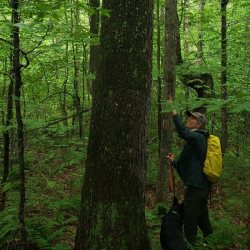
On a cool and breezy summer afternoon, a team of seasoned ecologists and I made our way across a steep talus slope in a remote section of Vermont’s Groton State Forest: a 25-acre stand of ancient hardwoods known as Lords Hill. Tucked into the hills of the town of Marshfield, this forest is a rare remnant of an older age—one of the few places in the state where towering sugar maple, yellow birch, white ash, hemlock, and basswood have been left to grow, die, decay, and regenerate largely undisturbed for centuries.

We were there to revisit a long-term monitoring plot established decades ago and to measure the diameter of trees tagged as early as 1977. With me were ecologist and naturalist Charlie Cogbill, our leader, NEWT board member Brett Engstrom, NEWT’s Wildlands Ecology Director Shelby Perry, and Rose Paul, former director of Science and Freshwater Programs for The Nature Conservancy. We slowly and systematically worked our way across 50-by-20 meter grids, calling out data while Charlie stood at each grid’s center, clipboard in hand, scribbling notes, and confirming each measurement with familiarity and enthusiasm.

“Yellow birch. Tag number 451. Diameter 72 centimeters!” I called out across the talus slope, my voice bouncing off of moss-covered granite boulders.

Charlie, perched atop one such boulder, flips through his notes. “Yellow birch… 451… YES!” he exclaimed triumphantly. “That one put on four centimeters since 2002,” he added, grinning.


The Eastern Coyote: An Adaptable, Misunderstood Addition to the Northeast’s Ecology

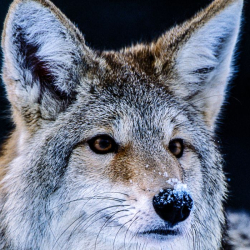
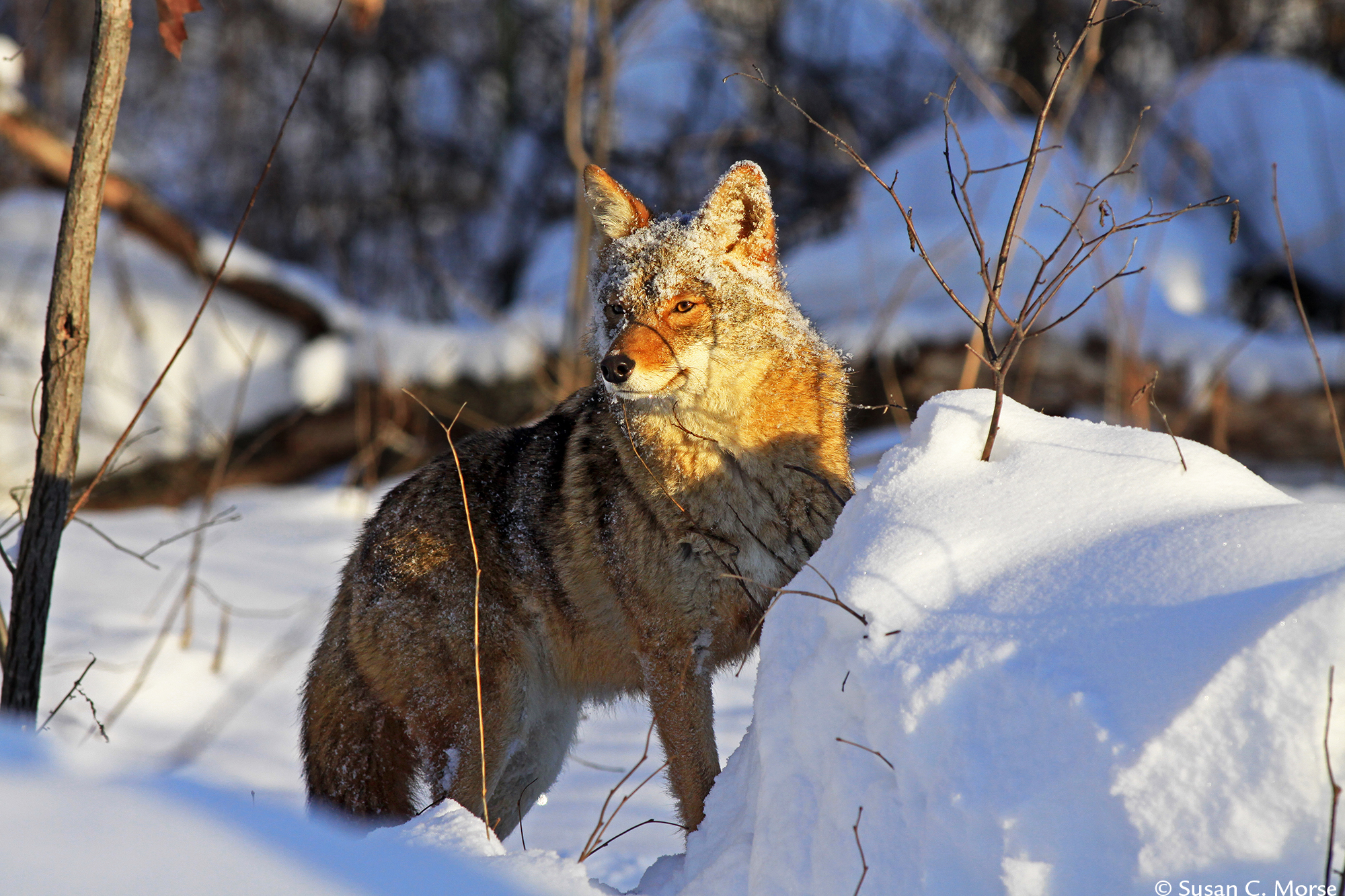
Among the myriad species documented by wildlife cameras across Northeast Wilderness Trust’s (NEWT) wilderness preserves, coyotes are perhaps the most ubiquitous. Whether in cedar swamps, atop spruce ridges, or roaming old fields, these adaptable creatures can be found in nearly every habitat throughout New England. Yet it may come as a surprise to many that coyotes are relative newcomers to our landscape.
coyote in winter

A Relative Newcomer

Coyotes did not appear in the Northeast until the 1940s. Beginning with European colonization, the conversion of large swathes of the eastern United States from forest to fields allowed this Great Plains species to move eastward. Along the way, coyotes interbred with remnant wolf populations in the Upper Midwest and Canada. The resulting hybrid, known as the eastern coyote, had become a larger, more robust, and wolf-like version of its western predecessor by the time it reached New England.

According to Vermont Fish and Wildlife, eastern coyotes are not considered invasive but rather naturalized—they have integrated into the native ecosystem and now partially fill the niche once occupied by wolves and cougars, which were extirpated from the Northeast by the late 1800s. The elimination of wolves, in particular, permitted coyotes to thrive, as wolves often establish territorial dominance and suppress coyote populations in regions where they coexist.

Research into coyote genetics has blurred the distinction between these former competitors. A 2014 study published in Molecular Ecology analyzed the DNA of 437 eastern coyotes and revealed a blend of several species: coyote, wolf, and domestic dog. According to the data, the eastern coyote’s genome was, on average, 64 percent coyote (Canis latrans), 13 percent gray wolf (Canis lupus), 13 percent eastern wolf (Canis lycaon), and 10 percent dog (Canis familiaris). This means that approximately 25 percent of their DNA is wolf, though individual variability can be significant. For example, a hunter in Cooperstown, New York killed a “coyote” in 2021 that was later found to be 98 percent wolf based on genetic analysis.

Coyote Ecology

The increasing abundance of coyotes on eastern landscapes has fueled misconceptions about their ecology. One frequent claim is that coyotes must be hunted to control their populations and prevent excessive deer predation. In reality, coyotes are compensatory breeders—they adjust their reproduction based on population pressures. When more coyotes are killed, the survivors tend to produce larger litters, meaning that hunting can actually increase their overall numbers. As for their effects on deer populations, coyotes are mid-level or “meso-” predators and opportunistic hunters. They primarily target small- to medium-sized prey like chipmunks, rabbits, and snowshoe hare, and while they may occasionally prey on deer or livestock, they usually only take old or sick individuals rather than healthy adults.

Coyotes’ adaptability extends into their social behaviors. The coyotes in the above video communicate and play as they move through the snowy woods of NEWT’s Moriah Wilderness Preserve in New York. Like their opportunistic diet and flexible reproductive strategies, coyotes are also adaptable in their social structures. They can range from solitary individuals to mated pairs, family groups, or even packs. This flexibility allows them to adjust to environmental conditions and survival needs. For instance, in areas where food is scarce—or where the only abundant prey species are large mammals like deer—forming a pack can provide a significant advantage.

Coyotes in the Northeast are the subject of fierce debate. But beyond the misconceptions is a species that exemplifies resilience and adaptability in a constantly changing landscape. By understanding and respecting these remarkable creatures as filling a critical ecological role, we can gain a deeper appreciation of them and the wild places they call home—a reminder that Nature’s inventiveness often comes in unexpected forms.

Warblers of the Shrublands

In my job as Northeast Wilderness Trust’s (NEWT) New York land steward, I come across a spectacular variety of bird species on NEWT preserves and easements. Beyond entertaining the birder in me, this dimension of my role also allows me to observe how land-use changes affect bird species composition. Most of the time, this involves seeing how interior forest birds respond to formerly logged lands rewilding via NEWT’s passive management approach. But sometimes, I’m treated to the surprises of different ecosystems—and the special delight that comes with the sighting of an unexpected species.

I had one such experience recently on a monitoring trip to a 60-acre conservation easement in the Split Rock Wildway in the Adirondack Park. This easement, despite its modest size, packs a big ecological punch. Upon leaving my vehicle, I experienced a landscape I know well. Water rushed over a waterfall while Eastern hemlocks towered above. Further on, an enormous rock face covered in moss and ferns emerged from behind the trees. This was familiar territory for me and for NEWT: an older forest, tranquil and wild.

But as I journeyed on, the landscape became less familiar. By the time I had reached the furthest point from my vehicle, the old forest had transitioned to young successional forest and shrubland. A deer path was the only clear way through this area; dense woody vegetation dominated the scene, with a few younger trees reaching taller than the shrubs.

As I walked through the maze of foliage, I froze in place when from a nearby shrub floated the song of a bird I had never seen before: a Blue-winged Warbler (Vermivora cyanoptera).

These songbirds are shrubland specialists. Their range has expanded northward since European colonization, when settlers cleared much of the Northeast’s forests for farmland. As many of those farms were abandoned, shrublands grew up in their place, creating vast new swaths of suitable habitat for the species.

These human-induced changes to the landscape were great news for Blue-winged Warblers, but not so much for another closely related songbird, the Golden-winged Warbler (Vermivora chrysoptera). Golden-winged Warblers are also a species of shrubby habitats, but they tend to nest in wetlands and then finish out the breeding season in the older forests like the one in which I started my day. The two species are nearly genetically identical, but the Blue-winged Warbler’s northward expansion has led to a dramatic decline in Golden-winged Warbler numbers. The latter often loses out when the two species compete for habitat and resources.

Upon further investigation, I spotted the songster, and found myself even more floored. The bird I spied looked like a Golden-winged Warbler, but was singing like a Blue-winged! The star of my shrubland show was what is known as a Brewster’s Warbler (Vermivora chrysoptera x cyanoptera), a hybrid resulting from interbreeding between Golden- and Blue-winged Warblers.

This was not a species I expected to see that day—or any other day, given that I generally work in the kind of towering forests I described earlier, and that both species specialize in early successional habitat. But it was a great reminder of the importance of a diversity of ecosystem types across the landscape. This shrubland will continue its reversion to forest over the coming years, but the adjacent, state-owned field to the easement’s north will continue to provide the shrubby habitat both species require—and the Golden-winged Warblers will have old forest right next door for their post-breeding needs.

This is a terrific example of the landscape vision of the Wildlands, Woodlands, Farmlands and Communities collective, of which NEWT is a member: a Northeast of diverse land uses and habitats, where wildlands sit side by side with timberlands and farms in a vibrant tapestry of ecosystems and dazzling biodiversity.

Studying Birds and Wildlands Ecology on the Great Plains

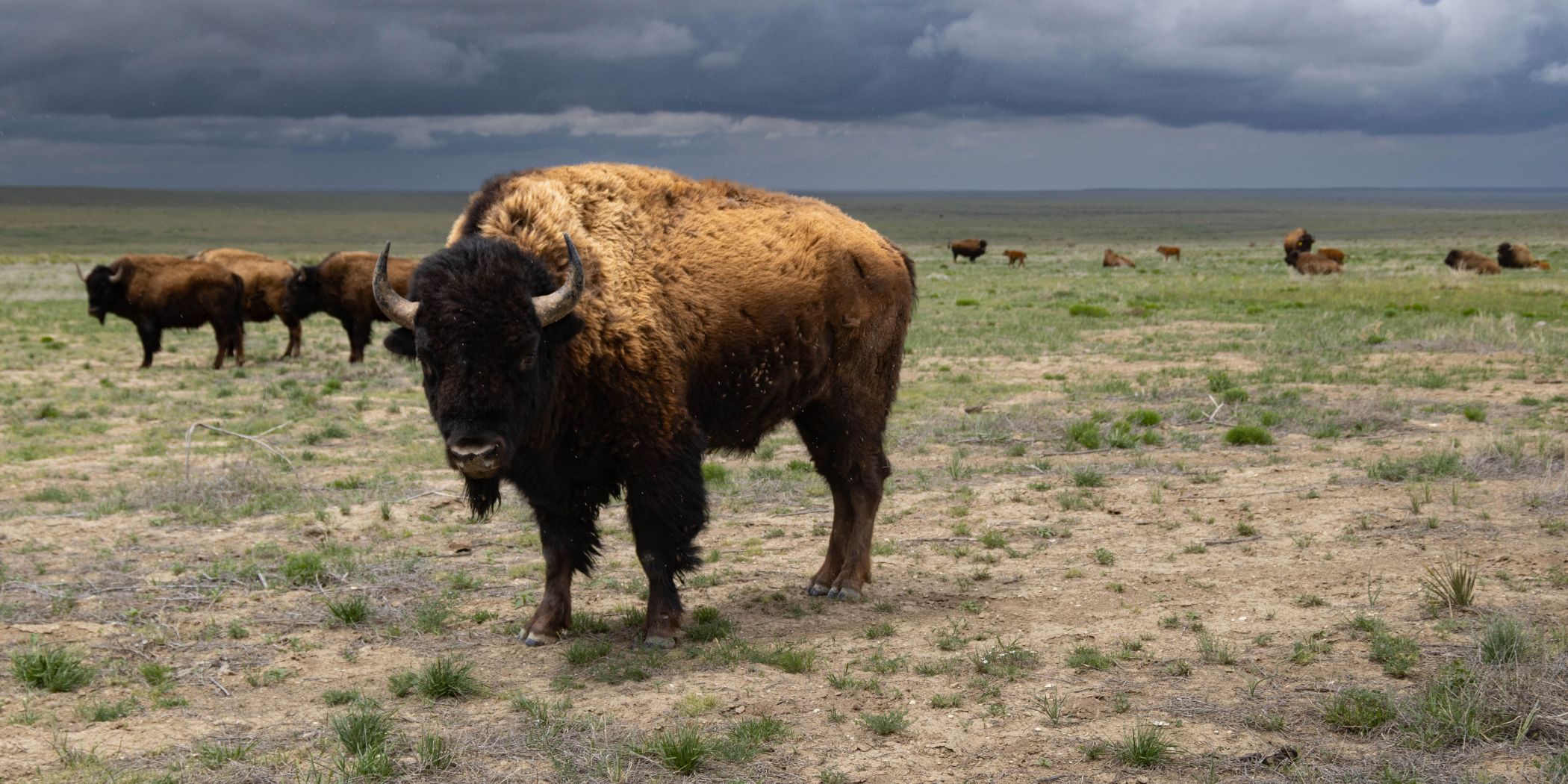
It’s difficult to imagine a starker contrast to Vermont’s humid, hardwood forests than the dry, flat, spiny sweep of a shortgrass prairie. As Northeast Wilderness Trust’s (NEWT) Wildlands Ecologist, I spend most of my time studying the former—traversing rolling, rewilding forests of hemlock, maple, birch, and spruce, dotted with beaver ponds and bogs. But on a late-spring morning in early May, I found myself at work in an almost unrecognizable landscape: binoculars in hand, surrounded by sagebrush, yucca, and cholla on the banks of the Purgatoire River in southeastern Colorado.

Bison herd

Perhaps the term “river” is a generous description for that particular waterway. In the Northeast, it would likely be called a “creek” or “brook,” but on these arid plains, which receive only about 12 inches of rainfall annually, this modest waterway serves as a vital corridor and safe haven for plants, wildlife, and people. For three days this May, it also became a meeting place for rewilding advocates from across the United States to network and discuss bird conservation.

Studying the Rewilding Long-Game: Ecology Research on NEWT Forest Plots

What happens when a forest is given the freedom to rewild after a long history of logging? This might seem like a question that science and ecological research have already answered; that each step of the rewilding process has been mapped out with great precision, telling us exactly what happens in the absence of active management.

After all, we know very well what happens under active management. Many land managers work hard to produce the outcomes they want, constantly tweaking variables to shift species composition, adjust light levels, or thin out tight tree stands. This management leads to fairly predictable results—why shouldn’t the opposite, passive rewilding, entail the same predictability?

How Beavers, Rewilding Allies, Transform the Landscape

Several years ago, I moved into a cabin in a cold mountain hollow adjacent to NEWT’s Woodbury Mountain Wilderness Preserve. At the time, an alder swamp fed by the headwaters of Pekin Brook filled the bottom of the valley. According to the previous landowners, there had been a beaver pond there until floodwaters from Hurricane Irene breached the dam in 2011, draining the pond within minutes. With the area’s hardwood supply depleted, preventing the resident beavers from rebuilding the destroyed dam, they apparently chose to relocate. Over the 13 years since the beavers left, the pond transitioned first to a wet meadow, and then eventually to an impenetrable alder swamp.

According to Tom Wessells’ Reading the Forested Landscape, beavers will almost always return to the site of a previous pond, though they will usually wait until the woody vegetation reaches at least “pole size.” Since beavers receive most of their nutrition from cambium – the outermost layers of a tree – a decade-old alder swamp provides them with an abundant source of stems that are relatively easy to fell and transport, as well as plenty of cambium-filled surface area for them to chew on.

Towards Coexistence with Large Predators

Northeast Wilderness Trust’s (NEWT) conservation work is guided by a trio of principles: cores, corridors, and carnivores. These, referred to as the “3Cs,” inform NEWT’s decision-making when prioritizing potential land projects in pursuit of an ecologically connected and vibrant Northeast.

The third of these principles, carnivores, refers to the presence on wildlands of large predator species. These species exert downward pressure on the web of life that makes up ecosystems, helping to keep them balanced. But human domination of the landscape, as well as outright extermination campaigns of these species in some instances, has led to the decimation of these vital ecosystem engineers and their disappearance from wide swathes of their original ranges, with far-ranging consequences for ecological health and resilience.

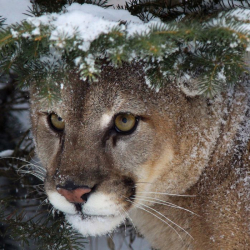
In the Northeast, the two primary predator species now mostly absent from the landscape are wolves and mountain lions. The latter of these was the focus of NEWT’s recent Speaker Series webinar, “The Role of Large Carnivores in Rewilding Ecosystems.” Dr. Mark Elbroch of Panthera, the global wildcat conservation organization, joined NEWT’s Wildlands Ecology Director Shelby Perry for a conversation about mountain lions (or catamounts, or cougars, or pumas, or any of the “more than 250 names documented across the Americas” for this species, according to Elbroch) and the ecosystem role of large predators.

NEWT Staff on What Rewilding Means to Them

March 20 is World Rewilding Day, a celebration of the many ecological, societal, and climate benefits of this ecocentric conservation method. To mark the occasion, several NEWT staff members from across the organization reflected on why rewilding is important to them, and offered additional thoughts on everything from their favorite wilderness experiences to how rewilding has made them rethink their views on humans’ relationship with the nonhuman world.

A Woody Window into Wildlife Habitat and Behavior

As a member of NEWT’s Wildlands Ecology team, I study how ecological processes play out on our forever-wild preserves and easements. A key difference between these and managed forests is that the former tends to be “messier.” A walk through a rewilding forest, where human influence is minimal, will reveal landscape features like the exposed root balls of fallen trees (“tip-up mounds”) and other forms of dead and decaying wood strewn about the forest floor. This material, which scientists refer to broadly as “coarse woody debris” (CWD), is a critical ecosystem element that provides everything from homes for numerous species to vital soil nutrients. And because wildlands abound with CWD, which is often lacking in managed landscapes, they offer a terrific opportunity to better understand how wildlife interact with CWD as they go about their wild business.

To investigate further, I piloted a year-long CWD study at NEWT’s Woodbury Mountain Wilderness Preserve in Vermont to examine whether the size of a CWD element, such as a fallen tree, plays a role in how different species of wildlife make use of it. I deployed five pairs of cameras, 10 cameras in total, on five of our preexisting research plots across Woodbury Mountain. At each plot, I pointed one camera toward a large piece of CWD (greater than 40 centimeters in diameter), and the other toward a small one (10 to 30 centimeters in diameter). The motion-activated cameras collected footage over five months.

Reviewing the Footage

After collecting the cameras, I sorted through the more than 5.5 hours of footage, which captured 23 species, including raccoon, Ruffed Grouse, white-tailed deer, and more.

Typically, the largest of the species recorded made use of the larger CWD: a bobcat perching on a  large fallen tree, a black bear family dancing across an old yellow birch, curious coyotes sniffing the cameras after walking across gnarled, decaying logs. Moose stepped over large trunks and weasels settled on branches to wait for an opportunity at dinner.

The footage of the small CWD featured a different suite of species. Hermit Thrushes and other songbirds alit in search of a snack, while flying squirrels leapt from tree limbs. Mink scampered along a sunlit branch, fisher cats stopped as though enjoying the quiet, and chipmunks bounded along limbs of fallen tree crowns in pursuit of nuts and seeds.

In Support of Messy Landscapes

The CWD interactions documented by each of the 10 cameras are hallmarks of wilderness. Downed wood might look unsightly to us, but as the footage demonstrates, wildlife might depend on it for a diversity of uses. The family of bears ambling single file across a rotting birch suggests that some species take advantage of higher ground to monitor for threats. A flycatcher landing on a detached branch and zipping out to catch a flying insect highlights how these landscape features we might not notice on a walk in the woods serve a vital purpose for aerial insectivores, an ailing class of birds.

The ecological benefits of CWD showcased by the footage are many. Dead wood forms part of the structural complexity typical of old forests, which tend to host higher levels of biodiversity and sequester more carbon than their younger, cleaner counterparts. But the footage also peels back another layer of significance. It allows us to peer into the wild, untrammeled world; to see many of the Northeast’s revered species thriving in their natural habitat. And it shows them doing so on a property that, thanks to NEWT’s forever-wild conservation method, is protected as wilderness in perpetuity, where Nature directs the ebb and flow of life and our wild kin have the freedom to exist simply for their own sake.