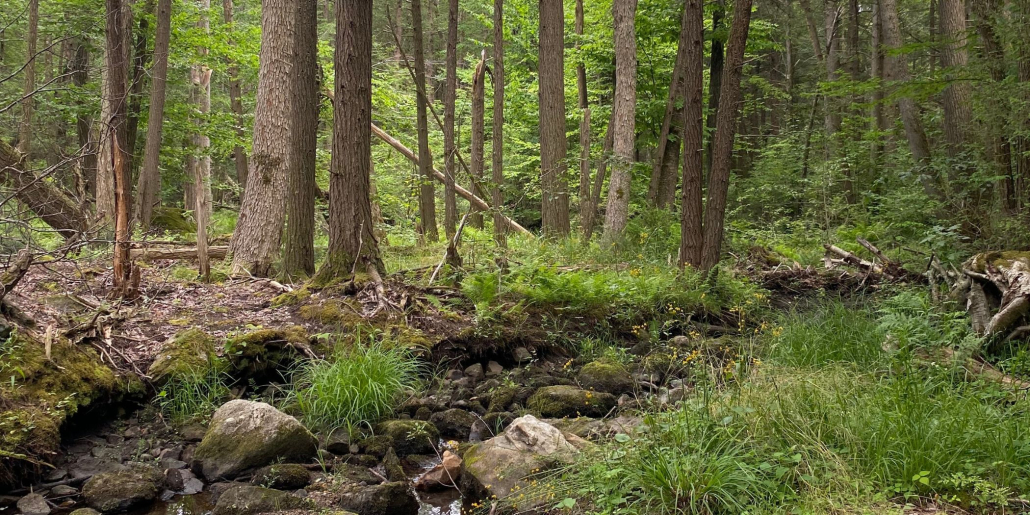
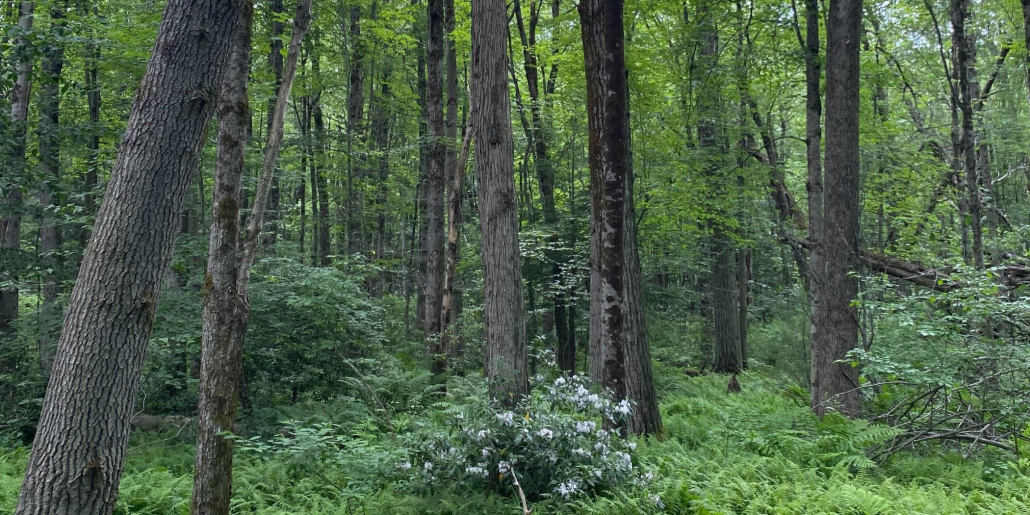
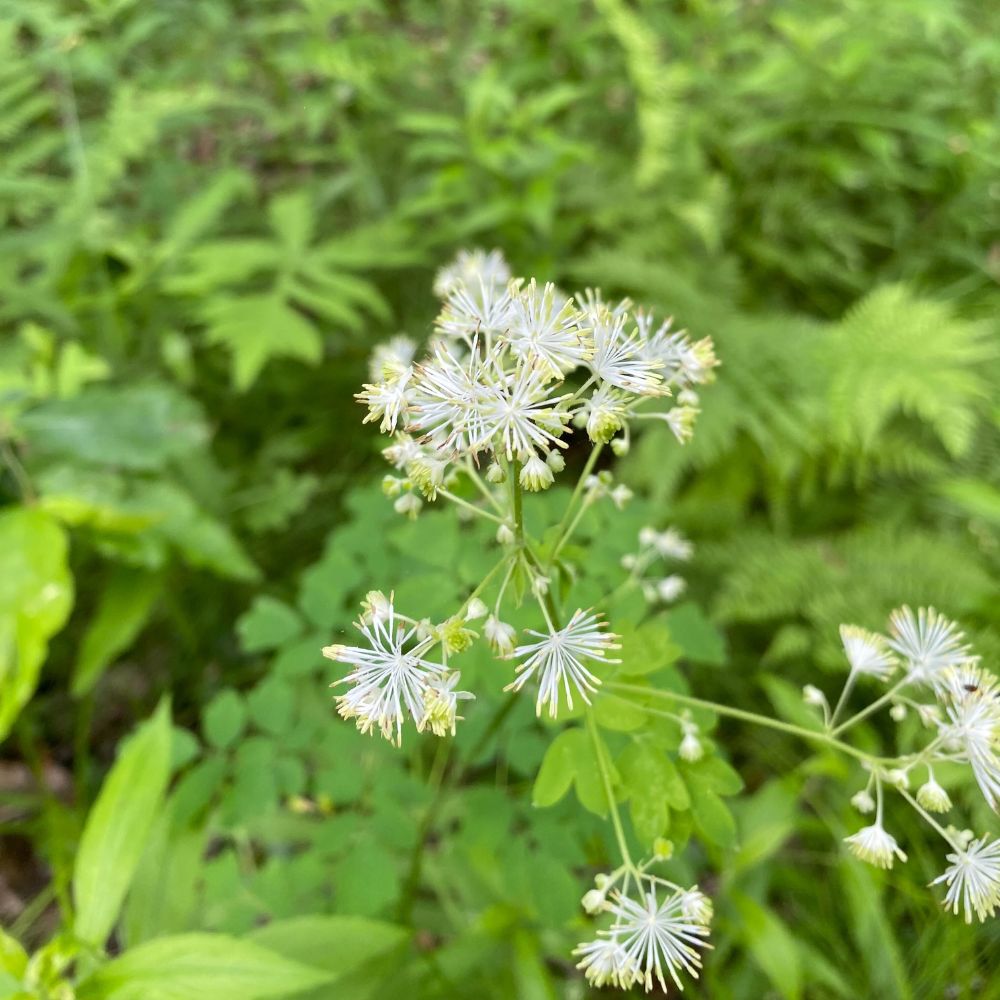
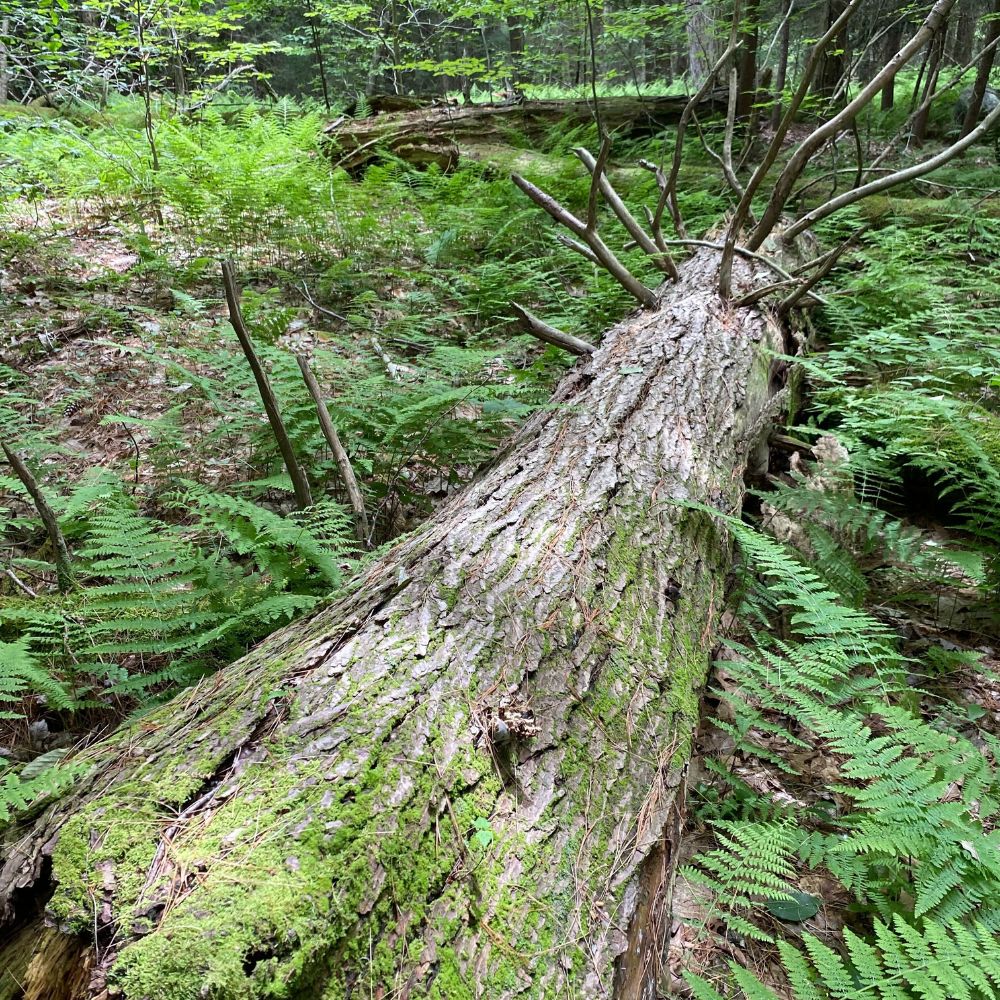
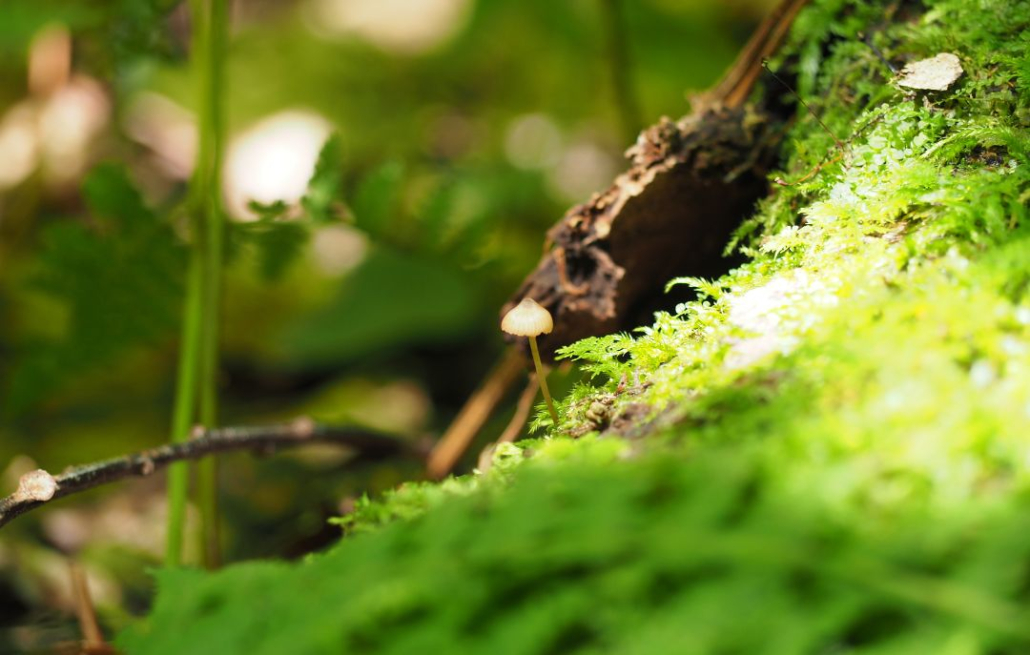
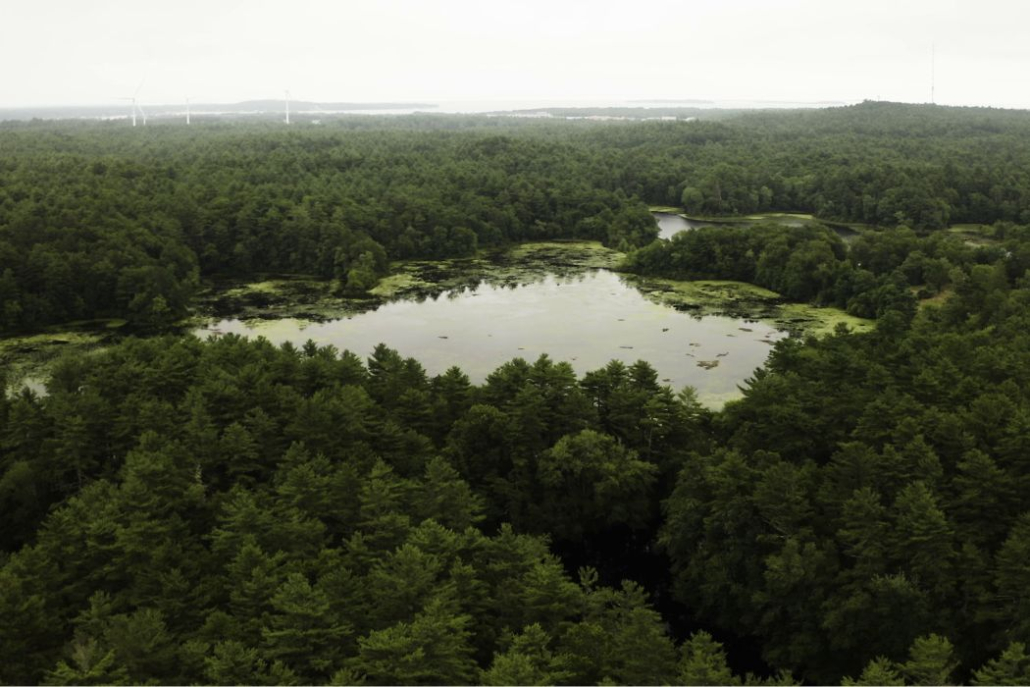
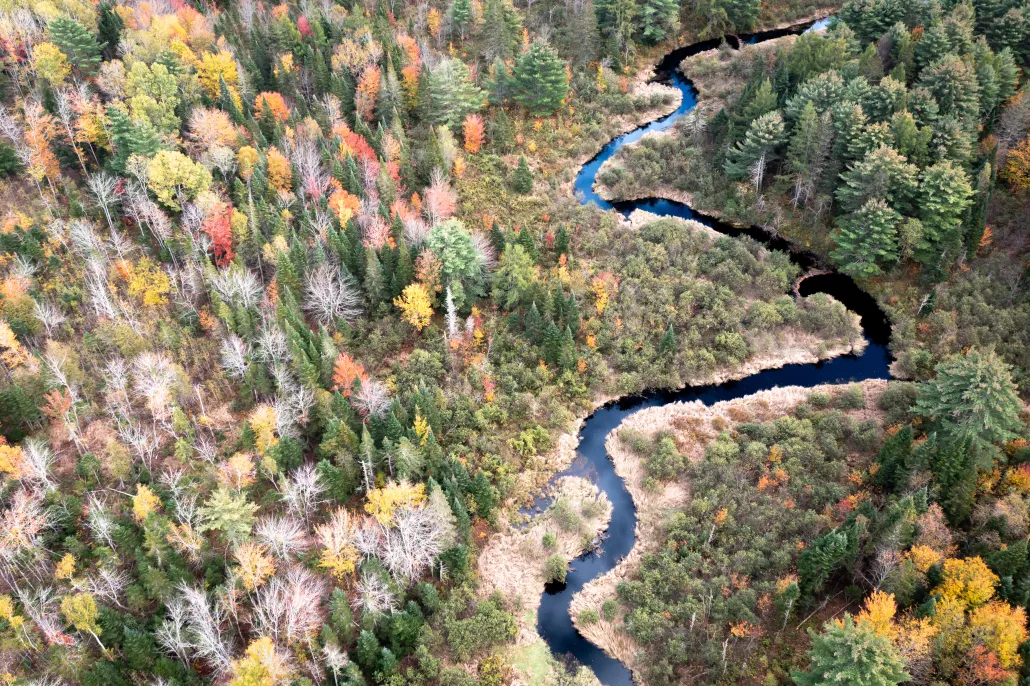
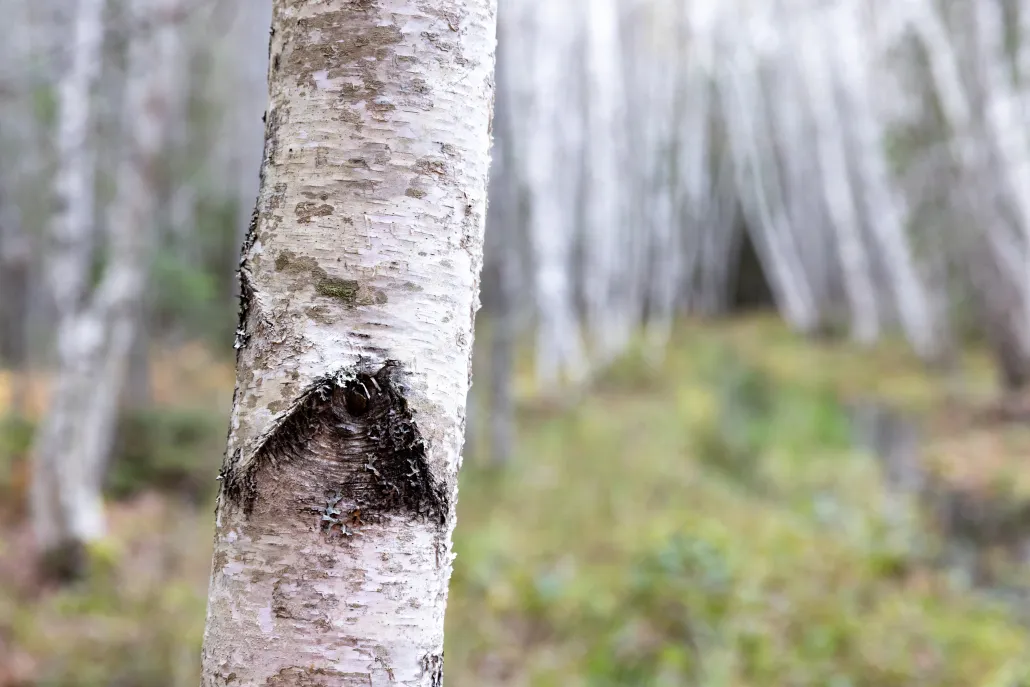
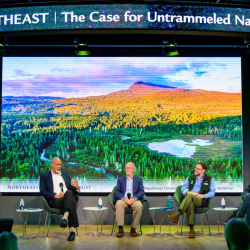
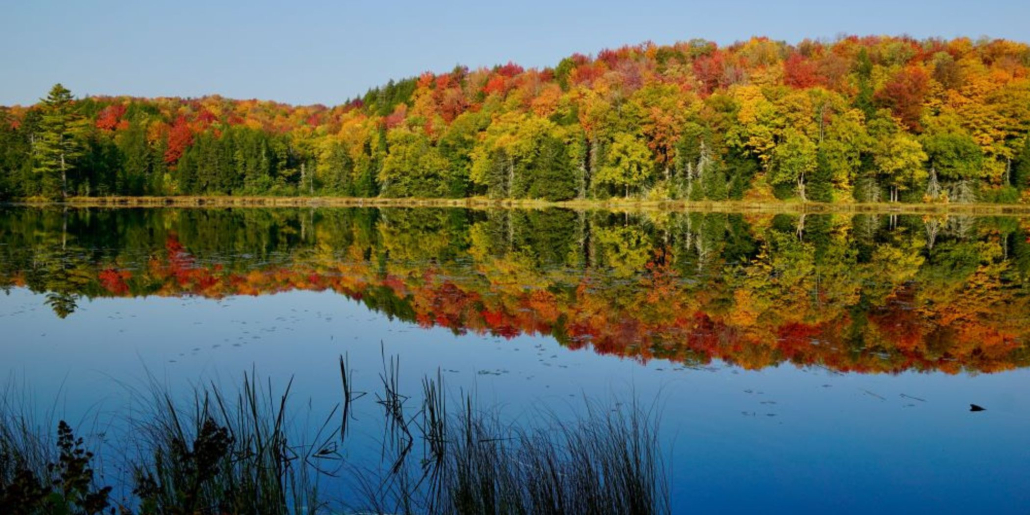
March 20 is World Rewilding Day, a celebration of the many ecological, societal, and climate benefits of this ecocentric conservation method. To mark the occasion, several NEWT staff members from across the organization reflected on why rewilding is important to them, and offered additional thoughts on everything from their favorite wilderness experiences to how rewilding has made them rethink their views on humans’ relationship with the nonhuman world.
https://newildernesstrust.org/wp-content/uploads/2025/03/World-Rewilding-Day-2025-Blog-Cover.jpg7001050Northeast Wilderness Trusthttps://newildernesstrust.org/wp-content/uploads/2020/01/NEWTLogo.pngNortheast Wilderness Trust2025-03-17 11:45:422025-03-17 11:47:20NEWT Staff on What Rewilding Means to Them
As a member of NEWT’s Wildlands Ecology team, I study how ecological processes play out on our forever-wild preserves and easements. A key difference between these and managed forests is that the former tends to be “messier.” A walk through a rewilding forest, where human influence is minimal, will reveal landscape features like the exposed root balls of fallen trees (“tip-up mounds”) and other forms of dead and decaying wood strewn about the forest floor. This material, which scientists refer to broadly as “coarse woody debris” (CWD), is a critical ecosystem element that provides everything from homes for numerous species to vital soil nutrients. And because wildlands abound with CWD, which is often lacking in managed landscapes, they offer a terrific opportunity to better understand how wildlife interact with CWD as they go about their wild business.
To investigate further, I piloted a year-long CWD study at NEWT’s Woodbury Mountain Wilderness Preserve in Vermont to examine whether the size of a CWD element, such as a fallen tree, plays a role in how different species of wildlife make use of it. I deployed five pairs of cameras, 10 cameras in total, on five of our preexisting research plots across Woodbury Mountain. At each plot, I pointed one camera toward a large piece of CWD (greater than 40 centimeters in diameter), and the other toward a small one (10 to 30 centimeters in diameter). The motion-activated cameras collected footage over five months.
Reviewing the Footage
After collecting the cameras, I sorted through the more than 5.5 hours of footage, which captured 23 species, including raccoon, Ruffed Grouse, white-tailed deer, and more.
Typically, the largest of the species recorded made use of the larger CWD: a bobcat perching on a large fallen tree, a black bear family dancing across an old yellow birch, curious coyotes sniffing the cameras after walking across gnarled, decaying logs. Moose stepped over large trunks and weasels settled on branches to wait for an opportunity at dinner.
The footage of the small CWD featured a different suite of species. Hermit Thrushes and other songbirds alit in search of a snack, while flying squirrels leapt from tree limbs. Mink scampered along a sunlit branch, fisher cats stopped as though enjoying the quiet, and chipmunks bounded along limbs of fallen tree crowns in pursuit of nuts and seeds.
In Support of Messy Landscapes
The CWD interactions documented by each of the 10 cameras are hallmarks of wilderness. Downed wood might look unsightly to us, but as the footage demonstrates, wildlife might depend on it for a diversity of uses. The family of bears ambling single file across a rotting birch suggests that some species take advantage of higher ground to monitor for threats. A flycatcher landing on a detached branch and zipping out to catch a flying insect highlights how these landscape features we might not notice on a walk in the woods serve a vital purpose for aerial insectivores, an ailing class of birds.
The ecological benefits of CWD showcased by the footage are many. Dead wood forms part of the structural complexity typical of old forests, which tend to host higher levels of biodiversity and sequester more carbon than their younger, cleaner counterparts. But the footage also peels back another layer of significance. It allows us to peer into the wild, untrammeled world; to see many of the Northeast’s revered species thriving in their natural habitat. And it shows them doing so on a property that, thanks to NEWT’s forever-wild conservation method, is protected as wilderness in perpetuity, where Nature directs the ebb and flow of life and our wild kin have the freedom to exist simply for their own sake.
https://newildernesstrust.org/wp-content/uploads/2025/02/Trees-at-Little-River-Janelle-Jones.jpg7001050Eric Baileyhttps://newildernesstrust.org/wp-content/uploads/2020/01/NEWTLogo.pngEric Bailey2025-03-12 10:33:442025-06-20 17:04:11A Woody Window into Wildlife Habitat and Behavior
In late January, NEWT’s Wildlands Ecology Director Shelby Perry was invited to testify before the Committee on Environment of the Vermont House of Representatives. The focus of the Committee’s meeting was the value of old and wild forests in Vermont Conservation Design (VCD), a statewide framework meant to guide efforts to preserve Vermont’s landscapes and biodiversity. (Perry was part of the team responsible for the latest update to VCD, published just over one year ago.) As Vermont’s human and natural communities change, state lawmakers are looking to VCD and the experts who had a hand in building it to ensure that state-led conservation initiatives balance the needs of Vermont’s many stakeholder communities.
Perry’s testimony made the case for robust representation of wildlands in VCD implementation planning. In her presentation, titled “Protecting the Wild: Northeast Wilderness Trust and the Case for Wildlands Conservation in Vermont,” she told Committee members that just 3.7 percent of Vermont is protected wilderness, where Nature directs the ebb and flow of life. These places tend to store more carbon than managed tracts, and act as critical havens of biodiversity in an era of precipitous wildlife declines. Perry then delved into the meticulous research and analysis that informed VCD, as well as ongoing work to improve the framework as a tool for creating a vibrant, resilient conservation landscape in Vermont.
To watch Perry’s testimony and presentation, play the YouTube video below. Her full written remarks follow.
January 30, 2025
Shelby Perry
Wildlands Ecology Director
Northeast Wilderness Trust
17 State Street, Suite 302
Montpelier, VT 05602
Testimony to House Committee on the Environment
Re: Northeast Wilderness Trust and Wildlands and Old Forest Background
Madame Chair and Members of the Committee:
Setting the Stage
History is a critical baseline from which to discuss wilderness conservation. Starting about 100,000 years ago an ice sheet covered all of the Northeast. That lasted until about 12,000 years ago. Following the retreat of the ice, humans arrived in this region, and for the next several thousand years before the arrival of European colonists, the region was home to many rich Indigenous cultures and a diversity of old forests that today we would call “old growth.” The region was a tapestry of diverse human and natural communities and was between 90 and 93% forested.
European colonists arrived in the late 1400s, with the establishment of colonies picking up steam in the 1600s. In an ecological split second, upwards of 80% of the forested landscape was cleared by the early 1900s in a race to domesticate the land for agriculture and produce charcoal and timber. Though these colonists had entered a landscape with a long and rich history of human habitation and use of the land, the scale of use and technology utilized by these new inhabitants far outpaced that of those they displaced.
From that ecological devastation, the modern wilderness movement was born. From his family cabin in the Adirondacks, Howard Zahniser, principal author of the Wilderness Act (1964), had a look at what forever wild conservation could do, and penned the wilderness act with these outcomes in mind. In it he chose the word “untrammeled” to refer to wildlands, using the word specifically because it does not refer to lands that are pristine or untouched, but instead means “not deprived of freedom.”
Wilderness as a conservation outcome is indeed a relatively recent concept in the long history of human presence in our region, but so too is industrialization, urbanization, anthropogenic climate change, the extirpation of apex predators, the damming of rivers, and the rapid loss of natural areas, biodiversity, and ecological function. Wilderness as a legal designation didn’t need to exist 400 years ago, but I would argue it does today. It is a critical component of a strategic and resilient vision that also includes woodlands, farmlands, communities, cities, and everything in between. Remembering the logging and cleared lands of our not-so-distant past are important reminders that wilderness conservation is not about conserving pristine or “unpeopled” landscapes, an all-too-common misconception. It’s about freedom and equity for the entire life community.
Introduction to Northeast Wilderness Trust
“Wilderness is not a special kind of place, but rather a special commitment we can make to any place.”
This quote is from Daryl Burtnett, a former ED of Northeast Wilderness Trust (NEWT), in response to a comment from another land trust professional about there being “no wilderness left to protect” in the northeast. Daryl is making the point that wilderness is a choice, it is about deciding to reserve some places particularly for the non-human world to experience freedom.
If wilderness is a choice then, Wilderness, by definition, can be found anywhere where humans decide to make this choice. It is a place where humans decide to practice humility, and concede that some places deserve to exist unencumbered by human expectations and desires. The moment Northeast Wilderness Trust protects a place, we are taking an intentional step, a radical one, to step aside and to let nature control its destiny. That is the essence of our work.
Northeast Wilderness Trust (NEWT) is a non-profit land trust based in Montpelier, VT and focused exclusively on wildlands conservation in New England and New York. With a mission of protecting forever-wild landscapes for nature and people, we envision a landscape of connected, resilient wildlands shared by a human culture that recognizes the benefits of wild places. To date, we protect over 93,000 acres either through fee ownership, deed restriction, or conservation easement. We protect over 18,000 acres in Vermont.
Wildlands and Old Forests
81% of New England is forested, and only 3.3% is wildlands. In Vermont that number is closer to 3.7%, does that mean that VT has 3.7% old forest?
Just like the person who told Daryl that there was “no wilderness left” in the northeast, sometimes these two terms get mixed up, but they are not precisely analogous. One refers to a protection status (protected as forever-wild) and the other refers to a forest structural condition, one that usually requires extended periods without human-caused disturbance to develop.
If we were to think of these two terms as a Venn diagram, there would be some overlap, but it would not be complete. Many of the wildlands protected in VT have not yet developed old forest structure, but some have. Likewise, some of the old forests of Vermont are protected from harvest, but some are not.
These old forest features support a suite of species that rely on minimally disturbed forests. The suite of species changes with the forest type – so the biodiversity values of protected old forest of the Northern Hardwood assemblage are different from that of a Spruce-Fir Forest, for example. Ideally, wildlands protections would be proportionally representative of the different types of forest communities.
Ecological Representation of Wildlands
Vermont Conservation Design (VCD), presented to the committee last week by Robert Zaino, an ecologist with Vermont Fish and Wildlife, sets an old forest target for VT of roughly 15% of highest priority forest blocks, which works out to about 10% of Vermont. The Wildlands report from WWF&C which Liz Thompson of Wildlands, Woodlands, Farmlands, and Communities presented to the committee earlier this morning sets a goal of 10% of the region and makes a recommendation to “evaluate elevating the goal for wildlands in the region to 20% or more.” Both indicate that these protected wildlands and old forests should be broadly representative of forest types.
I’ve been part of a collaboration with both of these efforts to look at how representative our wildlands currently are, meaning what forest types are we doing a good job of protecting as wildlands, and what forest types are we missing. VCD breaks VT up into nine biophysical regions, areas that host similar ecology throughout. Of these nine biophysical regions, we have nearly reached that 10% goal in just two of them, the Northern Green Mountains and the Southern Green Mountains. The Vermont Valley and the Champlain Hills are the two farthest away from the target, each having made very little progress toward that 10% goal, meaning that there will be few old forests of the forest types common in this region, and putting at a disadvantage all of the species that rely on them. Slide 18 of my accompanying PDF shows these tables.
This gives us an idea of where progress could be made to make wildlands conservation representative of biophysical regions in the state, but this is only one layer of representation. Ideally you want those protected acres to also be broadly representative of the forest types that occur within each biophysical region as well.
So how closely does the composition of protected forest match up with the composition of the entire forest? In a perfect world, each forest type would make up the same percentage of protected wildlands in a region, as it does in the region as a whole. Meaning that if a forest type makes up 20% of the total forest, it should also make up 20% of the wild forest within that biophysical region.
Slide 24 of the accompanying PDF shows the breakdown of forest types and wildlands within the Southern Green Mountains biophysical region of VT. Forest types in the table where the green bar is higher (arrow 1) are more common in the biophysical region than they are in the wildlands, and when the blue bar is higher (like arrow 2) that forest type makes up a higher percentage of protected wildlands than percentage of the overall matrix forest. This is not a bad thing – and usually occurs with higher elevation community types. Higher elevation areas often have sensitive ecology and are more often protected as wild, but we want to make sure we don’t miss providing protections for a representative percentage of the lower elevation communities too – so we can be sure to represent the full ecology of a biophysical region in protected wildlands and their future old forests.
Role of Private Lands
So far I have been referencing biophysical regions, which are a product of VCD. They are similar, but not identical to EPA ecoregions, but they are only mapped for VT, so when we are looking at the whole northeast, we need to use ecoregions. The map on slide 30 of the PDF color codes ecoregions by perfect wildlands, from the Wildlands Dataset that resulted from the Wildlands Report. A few patterns are immediately visible: We’ve done a pretty good job protecting wildlands at high elevations and along mountain ranges, we’ve done a better job protecting northern forest types than southern, and even within VT there are big gaps in lower elevation protections, like in the Champlain and Connecticut River Valleys.
We know that these areas host a really different roster of species from the higher elevation forests of the Adirondacks and Appalachians, where wildlands protections are high. Reaching our old forest and wildlands targets here will require more than just upgrading protections on already protected lands, it will also require new wildlands conservation. This effort will necessarily require both public and private conservation work.
NEWT is a member of the Forest Partnership, a coalition of organizations focused on the development of policy and creative funding opportunities to conserve forestland, and public awareness about the risks of increasing forest fragmentation. We also participate in the Forest Roundtable, Vermont Biodiversity Alliance, Wildlands Woodlands, Farmlands and Communities, the Maine Mountain Collaborative, the Staying Connected Initiative and more. Partnerships like these help Vermont and the region take a long-term view on the maintenance and protection of our forests and keep both public and private lands organizations aligned and updated on progress towards common goals.
A lot of really dedicated people are working together in Vermont and across the region to take a balanced look at our forests, and how we want to sustain them into the future, maintaining the integrity of and sustainability of both our managed (often called “working”) forests, while also extending protections to increase the amount of old and wild forest in our region. This work is both complementary and necessary to ensure an enduring home for both human and non-human residents of Vermont’s forest. We can and must do both, and I’m convinced the best outcome will come from working across interests and affiliations to chart a collaborative and cooperative path forward together.
Thank you for the opportunity to address the committee, and thank you for all of the work you do on behalf of Vermont’s environment and forests.
https://newildernesstrust.org/wp-content/uploads/2025/02/Shelby-Perry-Woodbury-Flowers.jpg7001050Northeast Wilderness Trusthttps://newildernesstrust.org/wp-content/uploads/2020/01/NEWTLogo.pngNortheast Wilderness Trust2025-02-26 11:13:012025-02-26 11:13:01NEWT Testifies in the Vermont Statehouse on the Value of Wildlands
Herds of mammoth. Saber-tooth tigers lurking in the tall grasses. American cheetahs—yes, you read that correctly—speeding after pronghorns.
Thousands of years ago, this was the scene on the Great Plains—current day Colorado and surrounding states. Tall- and shortgrass prairie predominated across a wide swathe of the lower 48 states, maintained by grazing bison and natural fires that kept woody encroachment by shrubs and trees at bay. This was a rich, biodiverse expanse that, in its labyrinthian root systems in the soil, sequestered vast quantities of carbon. In the words of Henry Pollock, the executive director of Southern Plains Land Trust (SPLT) and the kickoff speaker in Northeast Wilderness Trust’s (NEWT) 2025 Speaker Series, the prairie was “a veritable American Serengeti.” Pollock and NEWT President and CEO Jon Leibowitz discussed the differing challenges and opportunities in rewilding the Great Plains and NEWT’s service region, the Northeast. Check out the full recording of the webinar below.
At the same point in geological time that mammoths, tigers, and cheetahs prowled the Plains, old forests sprawled across what is now New England a thousand or more miles east. Hurricanes, ice storms, and other forms of natural disturbance blew through every so often, felling trees, opening up canopy gaps, and creating structural complexity. In these great forested wildlands, wolves and cougars hunted deer and other ungulates. Streams and rivers shaded by hemlocks teemed with brook trout and Atlantic salmon. Massive flocks of passenger pigeons darkened the skies. Caribou walked across parts of the landscape and harbor seals called Lake Champlain home.
https://newildernesstrust.org/wp-content/uploads/2025/02/Trees-at-Little-River-Janelle-Jones.jpg7001050Northeast Wilderness Trusthttps://newildernesstrust.org/wp-content/uploads/2020/01/NEWTLogo.pngNortheast Wilderness Trust2025-02-18 11:03:042025-02-18 11:03:04Perspectives on Rewilding, from the Northeast to the Great Plains
Norfolk, Connecticut —Norfolk Land Trust, Inc. (NLT) and Northeast Wilderness Trust (“the Wilderness Trust”) have teamed up to permanently protect a sprawling forest block in northwestern Connecticut. NLT, which owns the 600-acre parcel, has conveyed a forever-wild conservation easement on the land to the Wilderness Trust. The South Norfolk Wildlands conservation easement ensures that habitat for rare plant and animal species remains preserved into the future and expands Litchfield County’s forever-wild acreage.
The conservation easement was made possible by the Wilderness Trust’s “Wildlands Partnership.” The program provides land trusts in the Northeast with funds for stewardship and other operating costs in exchange for the establishment of forever-wild conservation easements on eligible lands. The South Norfolk Wildlands conservation easement brings the number of Connecticut acres conserved via the Wildlands Partnership to nearly 2,100. Image from the South Norfolk Wildlands conservation easement by Eric Bailey.
The completion of the South Norfolk Wildlands conservation easement caps a more than 40-year, community-led effort to permanently protect a collection of forested parcels in the town of Norfolk. Several Norfolk families banded together in the 1980s to buy and conserve a 500-acre property to spare the land from development. NLT began purchasing pieces of the property in 2004, and with the recent acquisition of a 235-acre holding north of the original property, now owns a 610-acre forest block. The conservation easement on the land, held by the Wilderness Trust, adds another layer of legal protection to this exemplary property that the State of Connecticut’s Natural Diversity Database indicates supports at least 10 species of rare animals and plants, including silver-haired, red, and hoary bats and sharp-lobed hepatica.
The property hosts mature upland forests. These range from hardwood-dominated areas, where species like sugar maple and American beech form a tall canopy underlain by blankets of mountain laurel and jewelweed, to damper settings of Eastern hemlock and white pine towering over shaded understories of Canada mayflower and starflower. Among these forests are two “key habitats” for conservation designated by the state: Mixed Northern Hardwood and Central Appalachian Oak-Pine. The Wilderness Trust’s conservation easement ensures that these forests can grow old and store carbon into the future, free from the pressures of logging and development.
Forest at the South Norfolk Wildlands conservation easement by Eric Bailey.
Nearly a mile and a half of streams flow through the property, providing headwaters for both the east and west branches of the Naugatuck River. These waterways anchor the parcel’s 26 acres of wetlands, a forested wetland in the southern portion of the property, and a handful of beaver meadows.
The wider context in which the South Norfolk Wildlands sits also boosts its ecological benefits. The parcel is just south of the state’s Dennis Hill State Park, and near to the 7,500-acre Great Mountain Forest. Also in the area are the Wilderness Trust’s Cornwall Wildlands and Salisbury conservation easements. This proximity expands the South Norfolk Wildlands’ significance beyond its borders, helping to stitch together a vibrant corridor of conserved lands essential for landscape connectivity and species movement.
https://newildernesstrust.org/wp-content/uploads/2025/01/1.jpg10502100Northeast Wilderness Trusthttps://newildernesstrust.org/wp-content/uploads/2020/01/NEWTLogo.pngNortheast Wilderness Trust2025-01-17 13:03:402025-06-20 17:07:26Land Trusts Partner to Protect 600 Acres of Norfolk Forest
Cornwall Conservation Trust’s Forever-Wild Holdings Now Exceed 800 Acres
Cornwall and West Cornwall—Cornwall Conservation Trust, Inc. (CCT), in partnership with Northeast Wilderness Trust (NEWT), has added two forever-wild conservation easements to more than 400 acres in northwest Connecticut’s Litchfield County. The NEWT-held easements, one covering the Cathedral Pines Preserve, Quarry Hill, and Thurber’s Arrowhead properties (hereafter referred to as the “Cathedral Pines conservation easement”) and another on the Trinity Forest Preserve property, both in Cornwall, bring CCT’s forever-wild holdings to more than 800 acres. The easements were made possible by NEWT’s Wildlands Partnership. The Partnership is an innovative program that provides local land trusts with the financial assistance and technical resources necessary to protect more of their land as forever wild, reducing or eliminating active management and allowing natural processes, rather than human intervention, to shape the land’s future.
Image from the Cathedral Pines easement by Shelby Perry.
The conservation easements are the second and third of their kind for CCT. In 2021, CCT and NEWT collaborated to place a forever-wild conservation easement on the 375-acre Cornwall Wildlands property, also in Cornwall. After the success of that collaboration, CCT and NEWT set out to add additional forever-wild easements to CCT lands.
“CCT has appreciated its relationship with NEWT and the organization’s practical approach to ensuring that these properties remain ‘forever wild’ and a boon for both humans and wildlife,” said Bart Jones, President of CCT. “In addition, CCT’s financial ability to steward these forests has been significantly enhanced by NEWT’s Wildlands Partnership grant program.”
The Cathedral Pines conservation easement covers three CCT holdings: the preexisting Cathedral Pines Preserve and two new additions, Quarry Hill and Thurber’s Arrowhead. CCT acquired the original 42-acre Cathedral Pines Preserve, which hosts the remnants of a 150-year-old white pine and hemlock forest, from The Nature Conservancy in 2020, and expanded the property by a combined 32 acres with the Quarry Hill and Thurber’s Arrowhead additions in 2023.
Wetland on the Trinity Forest conservation easement by Shelby Perry.
The Quarry Hill and Thurber’s Arrowhead additions will boost preexisting old forest and excellent wildlife habitat on the Cathedral Pines Preserve. A series of tornadoes in 1989 leveled many of the towering pines for which the Preserve is named, but rather than “clean up” the forest after the tornado, The Nature Conservancy allowed natural, post-disturbance processes to persist. As a result, the Cathedral Pines Preserve showcases old-growth forest characteristics hard to find in the Northeast. The standing white pines measure between 120 and 140 feet tall, and the forest displays the “messiness” indicative of ecological complexity and health. This structural complexity, including standing dead trees (“snags”) and an abundance of coarse woody debris, make the Cathedral Pines conservation easement a haven for wildlife. Meanwhile, adjacent younger forests on Quarry Hill and Thurber’s Arrowhead will now have the opportunity to grow old like those on the Cathedral Pines Preserve, creating 74 contiguous acres of exemplary old forest thanks to NEWT’s forever-wild conservation easement.
The Trinity Forest conservation easement, which encompasses CCT’s Trinity Forest Preserve and Brokaw Preserve, has tremendous conservation and wildlife value. The property features abundant upland forests of hard- and softwood species like sugar maple, black cherry, and eastern hemlock; many of these forested areas exhibit mature-forest characteristics. Deep ravines and pathways to the high-elevation ridges of Housatonic State Forest offer excellent views of nearby Mohawk Mountain, the town of Sharon, and the Housatonic River. The easement also hosts substantial waterways and wetlands, including 1.6 miles of streams that eventually feed into the Housatonic River and a 10-acre beaver pond. These aquatic and wetland habitats support rare wildlife like the Northern Saw-whet Owl, a species of special concern in Connecticut that has been documented on the property. Trinity Forest’s plentiful ledges and cliffs may also provide needed habitat for the state’s nine—and imperiled—bat species.
The wider context in which the easement is located also speaks to its ecological value. The Trinity Forest conservation easement falls within the Appalachian Trail Corridor focal area and abuts Connecticut’s roughly 700-acre Housatonic State Forest to the southwest. The forever-wild easement guarantees that this unique slice of a major forest block and wildlife and aquatic corridor, used by species from bobcat to turkey to trout, stays protected in perpetuity.
The Cathedral Pines and Trinity Forest conservation easements bring NEWT’s Connecticut conservation holdings to more than 1,500 acres—the lion’s share protected through the Wildlands Partnership.
https://newildernesstrust.org/wp-content/uploads/2024/12/Trinity-1.jpg7001050Northeast Wilderness Trusthttps://newildernesstrust.org/wp-content/uploads/2020/01/NEWTLogo.pngNortheast Wilderness Trust2025-01-08 14:35:022025-06-20 17:09:34More Than 400 Acres in Northwest Connecticut Conserved as Forever Wild
Star Lake, NY— Northeast Wilderness Trust (NEWT), a regional land trust based in Montpelier, Vermont, announced today that it has conserved 257 acres of prime wildlife habitat just north of the Adirondack Park’s Five Ponds Wilderness Area. The newly conserved Little River Wilderness Preserve in Star Lake, New York adds forever-wild acreage to the Algonquin to Adirondacks (A2A) wildlife corridor connecting Ontario’s Algonquin Park with the Adirondacks.
“Little River’s 257 acres carry outsized ecological and conservation significance,” said Jon Leibowitz, President and CEO of Northeast Wilderness Trust. “This Preserve’s plentiful wetlands, sustained by a healthy beaver population, provide habitat for an array of plant and animal species. With its shared border with the Five Ponds Wilderness Area, Little River builds on one of the wildest regions of the Adirondack Park, which is among the most successful landscape-scale rewilding projects in modern history and an enduring inspiration for our work at Northeast Wilderness Trust.”
The Little River Wilderness Preserve is shaped by water. As suggested by its name, the property includes about half a mile of the Little River, which flows through the Preserve’s southeast corner. In this area and others are more than 70 acres of wetlands, many of which are maintained by beavers. Speckled alder, black spruce, and balsam fir abound in these waterlogged areas, while Great Blue Herons stalk prey along shores thick with species like blue flag iris and swamp candles. The Preserve’s abundant water has also helped to discourage development and extraction, leaving the wetland complexes in excellent ecological shape.
A 1,534-foot summit at the center of the property is home to impressive upland forests, bedrock outcroppings, and a steep escarpment. From this vantage point, one can look south and see the Little River and, beyond, the Five Ponds Wilderness Area. This remote region of the Adirondack Park hosts stands of old, uncut forest, a rarity for the Northeast. With the Preserve now protected as forever wild, Little River’s upland forests, as well as the property’s lower-altitude Northern Hardwood Forest communities of sugar maple, hobblebush, red trillium, and other species, will also have the freedom to grow old.
As the climate changes, species like moose, snowshoe hare, and fisher will need to move north to access suitable habitat and adapt to ecosystem shifts associated with rising temperatures and boom-and-bust precipitation patterns. Forever-wild protection of the Little River Wilderness Preserve adds a vital piece to the A2A corridor and bolsters efforts to connect the landscapes and ecosystems of the Northeast, where only about 5% of the region is conserved as forever-wild.
“When large parcels like the Little River Wilderness Preserve are protected, it’s a win,” said Jackie Bowen, Conservation Director for the Adirondack Council, a frequent NEWT partner. “And when these parcels are connected to protected public lands, it’s a big win. Linking these landscapes means expanded corridors for wildlife movement and migration, and a boost for the ecological processes that support clean water and resilient forests in the Adirondack Park. NEWT’s purchase and management of this tract ensures the parcel and its connection are guaranteed lasting protection.”
About Northeast Wilderness Trust: Northeast Wilderness Trust conserves forever-wild landscapes for Nature and people. It accomplishes this work by acquiring and stewarding land as forever-wild, and by holding forever-wild conservation easements on properties owned by other organizations or individuals. Across New England and New York, the Wilderness Trust secures wild places where Nature can thrive, wildlife can wander, and people can find beauty and quiet. Since its founding in 2002, Northeast Wilderness Trust has protected more than 92,000 forever-wild acres. Learn more at www.newildernesstrust.org.
https://newildernesstrust.org/wp-content/uploads/2024/03/Save-this-Land-Little-River-Images.jpg6871080Northeast Wilderness Trusthttps://newildernesstrust.org/wp-content/uploads/2020/01/NEWTLogo.pngNortheast Wilderness Trust2025-01-07 13:05:002025-01-07 13:05:00257 Acres of Wetlands, River Frontage, and Forests Protected in a Critical Wildlife Corridor
This story first appeared in the Cape Cod Times on November 18, 2024.
KINGSTON, MA—With a recent gift of 33 acres of land in Kingston from a regional land trust, Native Land Conservancy in Mashpee now holds almost 100 acres across seven Massachusetts towns.
Prior to this gift, the Conservancy held titles to about 65 acres in Mashpee, Yarmouthport, Easton, Barnstable, New Salem, and Aquinnah.
“This donation from Northeast Wilderness Trust serves to deepen our relationship as neighbors,” said Conservancy Founding President Ramona Peters, a member of the Mashpee Wampanoag Tribe. “And gives us the opportunity to care for these lands in our fullest capacity as Indigenous land protectors.”
The 322-acre Muddy Pond Wilderness Preserve, owned by Northeast Wilderness Trust, that abuts the 33 acres of land recently gifted to Native Land Conservancy.
The 33 acres joins with the Conservancy’s 32-acre Wampanoag Common Lands at Muddy Pond in Kingston and the abutting 322-acre Muddy Pond Wilderness Preserve, owned by the trust, also in Kingston.
“Working together with the Native Land Conservancy has been an enriching experience for Northeast Wilderness Trust,” said Jon Leibowitz, the trust president and CEO. “Our partnership with NLC has secured habitat and freedom for the wild creatures who call these places home.” The trust is based in Vermont.
The newly donated lands represent a portion of the Wampanoag’s ancestral homelands, according to the Conservancy. The land is also part of the rare Atlantic Coastal Pine Barrens and habitat for four-legged, winged, and finned creatures including garter snakes, bats, coyotes, red-tailed hawks, and wood frogs.
What will the Conservancy do with the land?
The Conservancy plans to permanently conserve the 33 acres, according to a press release.
Alongside the donation, the trust is also conveying a forever-wild conservation easement, which is pending approval from the commonwealth. The easement would be located on the trust’s Muddy Pond Wilderness Preserve.
In reciprocation, the Conservancy will convey a forever-wild conservation easement on the lands gifted by the Trust.
A conservation easement, according to the National Conservation Easement Database, is a legal agreement between a landowner and a conservation organization or government agency that limits how a property can be developed. A conservation easement can protect the land’s conservation values, such as the quality of water or the preservation of forests and agricultural lands.
LAGRANGE, ME—Northeast Wilderness Trust, a regional land trust serving Maine and five other northeastern states, announced today that it has purchased and will permanently protect nearly 3,400 acres of wetlands and forests in Lagrange. The new Birch Stream Wilderness Preserve adds to nearby wildlands in the area and safeguards exemplary habitat for a variety of amphibians, mammals, birds, and more while ensuring the property continues to be a source of natural carbon storage.
“The extensive wetlands at Birch Stream Wilderness Preserve haven’t attracted a lot of human activity, making the property a great home for shy wildlife species,” said Shelby Perry, Northeast Wilderness Trust’s Wildlands Ecology Director. “However, shorelines of any sort are often under immense development pressure, and when these habitats are developed, wetland species that do poorly around human habitation, like Black Ducks and wood turtles, tend to lose out. Protecting these more remote, undeveloped wetland areas ensures that sensitive wildlife continue to have a place to themselves.”
The property, crossed by four different streams that eventually feed into the Penobscot River, includes more than 2,000 acres of mostly undisturbed wetlands composed of several distinct natural communities. These are home to sphagnum moss, small cranberry, and numerous other wetland species. Several of these natural communities are peatlands—ecosystems of sedges, mosses, and shrubs—where drenched soils prevent the full decomposition of dead plant material. Peatlands are a potent natural climate solution, storing more carbon than any other terrestrial ecosystem, but are frequently destroyed when wetlands are drained and developed.
On certain portions of the property, wet soils and open-water areas have discouraged logging and allowed for the evolution of mature ecological characteristics, creating high-quality habitat for an abundance of species. Evidence of beaver, otter, moose, and other wildlife are present. The State of Maine has categorized swathes of the property as deer wintering habitat and others as inland waterfowl and wading bird habitat.
“Birch Stream Wilderness Preserve is a tremendous example of the multiple benefits of forever-wild places,” said Jon Leibowitz, President and CEO at Northeast Wilderness Trust. “As the Preserve’s forests and wetlands, particularly its peatlands, grow older, they will draw more and more carbon from the atmosphere. Meanwhile, myriad wildlife will continue to thrive on the property as it rewilds.”
Northeast Wilderness Trust conserves forever-wild landscapes for Nature and people. It accomplishes this work by acquiring and stewarding land as forever wild, and by holding forever-wild conservation easements on properties owned by other organizations or individuals. Across New England and New York, the Wilderness Trust secures wild places where Nature can thrive, wildlife can wander, and people can find beauty and quiet. Since its founding in 2002, Northeast Wilderness Trust has protected more than 85,000 forever-wild acres. Learn more at www.newildernesstrust.org.
https://newildernesstrust.org/wp-content/uploads/2024/07/DJI_0547-1030x686-1-1.webp6861030Northeast Wilderness Trusthttps://newildernesstrust.org/wp-content/uploads/2020/01/NEWTLogo.pngNortheast Wilderness Trust2024-11-27 10:38:592024-12-02 16:00:39Vast Stretch of Central Maine Wetlands and Forests Gains Forever-Wild Protections
“How do we create a more habitable world for our children, for our grandchildren, and for all the species with whom we share this beautiful planet” at a time of climate change and an accelerating extinction crisis? This was the central question posed by Kelsey Wirth, Founder of Mothers Out Front, at a panel and reception event convened by Northeast Wilderness Trust (NEWT) last month.
There is, of course, no single solution to these multidimensional challenges, but NEWT leaders and key partners shared the power and promise of forever-wild land conservation with a sold-out audience at WBUR CitySpace in Boston, Massachusetts.
NEWT President and CEO Jon Leibowitz argued that to preserve the Northeast’s natural heritage and the wellbeing of future human and nonhuman generations, we should intentionally create room for Nature to do what it did on its own for millions of years before human intervention: evolve freely, with forests growing old, fostering biodiversity, and storing massive amounts of carbon.
This may sound like a straightforward proposal, but in Leibowitz’s words, rewilding is an “incredibly underutilized” conservation tool. Though New England is more than 80-percent forested, just 3.3 percent of these forests are protected in perpetuity as wildlands, where Nature calls the shots. Increasing this number by creating more wilderness preserves means “to work with Nature, rather than against it,” Leibowitz added. Rewilding “restores ecosystems not through control or manipulation, but by trusting in Nature’s innate resilience and proven ability to find stability.”
https://newildernesstrust.org/wp-content/uploads/2024/11/1-1.jpg10502100Northeast Wilderness Trusthttps://newildernesstrust.org/wp-content/uploads/2020/01/NEWTLogo.pngNortheast Wilderness Trust2024-11-07 12:39:492024-11-07 12:39:49NEWT and Partners Convene in Boston to Make the Case for Rewilding
Vermont River Conservancy took the final steps to permanently protect more than 6,000 acres owned by Northeast Wilderness Trust at the headwaters of the Lamoille and Winooski Rivers, the organization’s largest undertaking in its 30-year history.
The “forever-wild” conservation easement ensures the property’s abundant wetlands and forests will be allowed to grow old over time, improving flood resilience for adjacent communities and protecting key wildlife habitat. The project was initiated by Northeast Wilderness Trust, which acquired multiple properties to create the expansive Woodbury Mountain Wilderness Preserve and subsequently donated the conservation easement to Vermont River Conservancy. “Northeast Wilderness Trust conveys conservation easements to other land trusts to ensure permanence beyond our ownership,” said Caitlin Mather, Land Conservation Director at Northeast Wilderness Trust. “This added layer is the highest form of legal protection. We are grateful to have partnered with Vermont River Conservancy to achieve this forever-wild outcome.”
The Preserve protects the summit of Woodbury Mountain, Eagle Ledge, expansive wetlands, and 36 miles of headwater streams.
“All climate models predict central Vermont will see more drought and more floods, just as we’ve seen over the past 2 years. Protecting vibrant wetlands and allowing headwater forests to grow old is critical to rebuilding the spongy soils that store massive amounts of water – ultimately helping keep communities safer during droughts and floods,” said Erin De Vries, conservation director for Vermont River Conservancy.
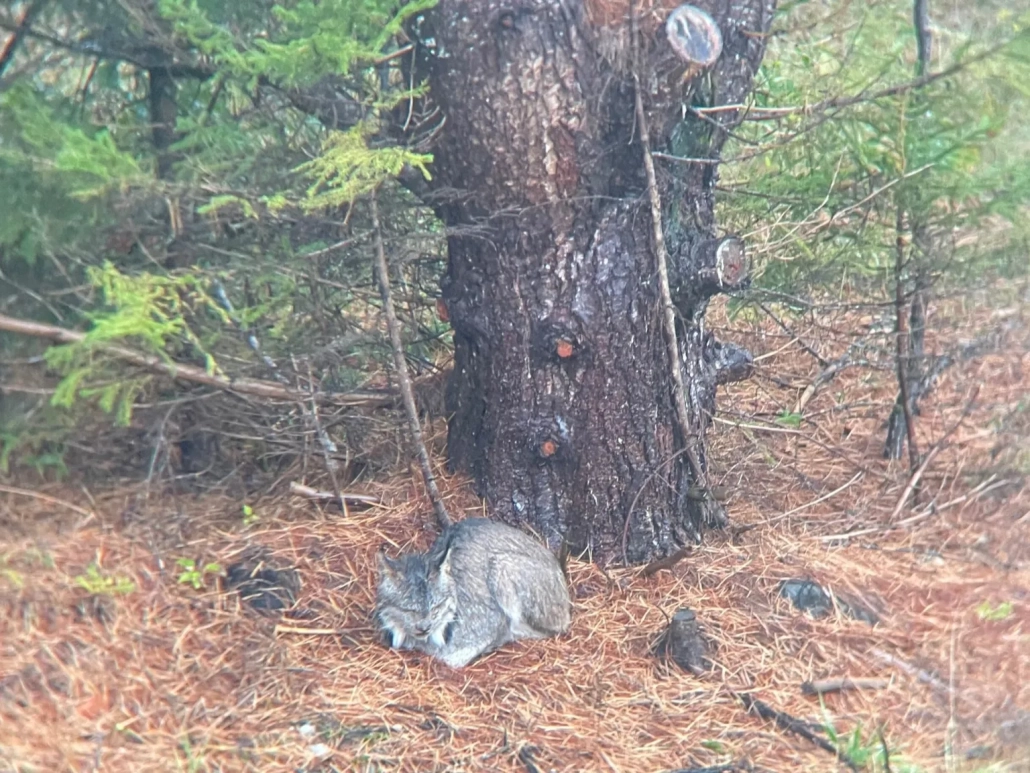
One of North America’s most elusive predators has grabbed the Vermont spotlight this autumn. A Canada lynx was sighted in August in Rutland County and has been spotted multiple times since in its journey north. Just seven sightings of the state-endangered and nationally threatened wildcat have been confirmed in Vermont, mostly in the Northeast Kingdom, since 2016. Northern New England forms the southern periphery of the lynx’s range, most of which spreads across Canada’s boreal forest.
According to Shelby Perry, Northeast Wilderness Trust’s (NEWT) Wildlands Ecology Director, the lynx in question was probably after love and land: “Like cougars and other wide-ranging carnivores, lynx will travel long distances in search of a home range and a mate. This lynx was likely on the move in search of a female and a place to settle down.”
The Canada Lynx in question photographed in Vermont’s Addison County during dispersal. Courtesy of the Vermont Fish and Wildlife Department.
https://newildernesstrust.org/wp-content/uploads/2023/12/Lynx028_Ghost-Cat-in-Spruce-Cover_REPLACEMENT-PHOTO-scaled.jpg19202560Northeast Wilderness Trusthttps://newildernesstrust.org/wp-content/uploads/2020/01/NEWTLogo.pngNortheast Wilderness Trust2024-10-24 11:44:492024-10-31 14:00:27Rare Lynx Sightings Put Carnivores and Wildlands in the Spotlight
Erin is a land and water conservation specialist with over 20 years of experience passionately protecting watersheds throughout the Northeast, Great Lakes, and Caribbean. She holds a bachelor’s degree in environmental science focused on conservation biology from Franklin Pierce University and a master’s degree in ecological planning through the University of Vermont. As Land Conservation Manger, Erin works with NEWT colleagues and external partners to actualize forever-wild conservation initiatives. Outside the office Erin can be found hiking, camping, river wading, cooking, and baking with her family and while solo sauntering in nature writing prose poetry.
Email Erin
Jack Downing
Jack is a hiker, backcountry skier, and gravel biker who is happiest on New England’s trails and back roads, and who believes the region’s remaining wild places are worth protecting permanently. He is a CPA who leads the accounting organization at a software and data company in Vermont, and over his career he has built and scaled finance teams through periods of rapid growth, strengthening internal controls, reporting, and day-to-day financial operations along the way. Jack brings that experience to the Trust as a partner to the staff who steward its lands and as a resource to the board on the financial questions behind every conservation decision. He lives in Waterbury, Vermont with his wife and children.
Brian Conrad
Brian’s passion for wildlife began as a child, wading in ponds and flipping over rocks in search of reptiles, amphibians and invertebrates to identify and research. His curiosity only grew as he earned a BS in Biology from Keene State College and is currently a graduate student pursuing a MS in Wildlife Ecology and Management from Unity Environmental University. After college, Brian worked as a Quality/Sterility Assurance Microbiologist, but found himself missing that connection with nature. Brian worked for Northeast Wilderness Trust in 2023 as a Wildlands Ecology Intern, which rekindled his desire to work in wilderness conservation. For fun Brian enjoys long distance backpacking (thru hiking the Appalachian, Pacific Crest and Continental Divide trails), ski patrolling, foraging, mycology, fishing and hunting.
Email Brian Conrad
Email Annie
Annie Norland
Annie’s connection to the outdoors began as a baby being toted up and down mountains in the Adirondacks. Since then, she has built a life grounded by the curiosities and adventures of the natural world. Annie holds a B.S. in Wildlife and Fisheries Biology from the University of Vermont, and a breadth of experience in ecological monitoring, outreach, human-wildlife conflict mitigation, and Mexican wolf recovery. After working across many states and natural communities, Annie is thrilled to be back in her old stomping grounds of the northeast and dedicating her efforts towards wilderness conservation. In her free time, Annie can be found wandering the woods, foraging, baking bread and making jewelry from things she finds in the wild.
Email Ann
Ann Wilson
Ann Wilson is the Engagement and Events Coordinator for Northeast Wilderness Trust, supporting the mission to conserve forever-wild landscapes across the Northeastern United States through event coordination, community engagement, and stewardship initiatives.
She brings a diverse background that includes experience as a legal assistant in business law, a Montessori educator, and has worked within the nonprofit sector, with a focus on stewardship, annual giving campaigns, fundraising, and community outreach programs. Wilson is passionate about creating meaningful experiences that foster connection and strengthen nonprofit communities.
In her free time, she enjoys being outdoors, gardening, cooking, and spending time with her family and her dog, Campbell.
David Foster
Massachusetts
David Foster is Director Emeritus of the Harvard Forest, President Emeritus of the Highstead Foundation, and a founding member of Wildlands, Woodlands, Farmlands and Communities. His research focuses on interpreting and conserving landscapes through an understanding of the linked histories and people and nature. Relevant recent publications include A Meeting of Land and Sea. The Nature and Future of Martha’s Vineyard and Wildlands in New England. Past, Present and Future. David lives on Martha’s Vineyard with his wife Marianne.
Tucker Taft
Massachusetts
Tucker is director of language research at AdaCore. Tucker’s specialty is programming language design, focused on designing and implementing languages for long-lived applications where safety, security, and reliability are critical. Tucker has been the lead designer of the Ada programming language for the past thirty-five years and has more recently designed a new parallel programming language, ParaSail, to simplify the programming of highly parallel computers. Tucker is passionate about the environment, both the natural one we must preserve, and the hopefully humane one we create for ourselves and our communities. Tucker is a skier and an active masters track athlete, being part of a world-record-setting men’s 65+ 4x400m relay team. Tucker resides in Lexington, MA, and in the summers, on Martha’s Vineyard, with his wife Phyllis Yale. They have two grown daughters, and three growing grandsons.
Joan Ray
Maine
Joan has worked in the land trust world for the last fifteen years, most recently as Director of Land Conservation at Coastal Rivers Conservation Trust in Damariscotta, Maine, and prior to that at Medomak Valley Land Trust in Waldoboro, Maine. She volunteered for land trusts and conservation organizations for many years before that. With degrees from Colby College and Boston University, Joan worked in the high tech world for a number of years before deciding to do something more meaningful. Returning to Maine after a decade in Boulder, Colorado, Joan switched careers and fully immersed herself in the land trust world, taking on roles in both stewardship and land conservation. Of course, in a small land trust, She did a little bit of everything! Joan is also certified as a Maine Master Naturalist, and loves leading hikes to introduce people to the natural world. Her happy place is on a mountaintop, or along a mountain stream, surrounded by wildflowers. Joan also loves to travel, hike, cross-county ski and snowshoe, and foster horses and dogs.
Tim Purinton
Vermont
Tim grew up with unfettered access to nature on the edge of a mill town that was famous for snuff manufacturing. The house he called home was built in the 1600s and full of hand-worn hemlock and oak from the surrounding forest. King pine floorboards of exceptional width and a bat-filled barn swim in his memory growing up along the banks of the Parker River. Tim was a C student, only and until he discovered you could spend your time studying geomorphology, atmospheric science and ecology. From that time Tim has pursued a life where protecting and restoring nature was usually somewhere close by. Today he loves the sound of hermit thrushes and the smell of linden trees.
Mark Pener
Massachusetts
Mark Pener is Director of Project Scheduling at Skanska USA Building in Boston, where he helps plan complex construction projects across New England. He has combined a career in the built environment with a lifelong passion for the natural world that began at Pond Mountain Trust, a conservation area his family has managed for more than 50 years in Kent, Connecticut. There, he developed an enduring appreciation for the land through trail work, stonewall repair, and countless days exploring the woods.
He serves on the Board of Pond Mountain Trust and lives with his family in Brookline, Massachusetts. Together they find deep meaning in time spent outdoors, from hiking remote peaks to quietly observing the rhythms of nature across the Northeast.
Alix Hopkins
Maine
Alix has worked in collaborative land conservation, communications and related fields for more than thirty years. However, she took a somewhat circuitous route in getting there – learning to control avalanches in Utah, working on a ranch in Wyoming and at a salmon cannery in Alaska during the 1970s. In the early 1980s, she worked in public relations, political organizing, and as a freelance photojournalist – acquiring skills which would come in handy down the road.
She found her niche at the Natural Lands Trust, a regional organization headquartered near Philadelphia, in the late 1980s. In the 1990s she was founding executive director of Portland Trails, the urban, trails-oriented land trust in Portland, Maine. At the same time, she chaired the Mountain Division Alliance, which promoted the vision for a 50-mile rail-with-trail, now in the works. Her first book, Groundswell: Stories of Saving Places, Finding Community, was published in 2005 by the Trust for Public Land. Co-sponsors included the National Park Service Rivers & Trails Program, The Conservation Fund and The Nature Conservancy.
She lives on a farm in Pownal, Maine, and is a board member of Maine Coast Heritage Trust and the Forest Society of Maine, and an advisory board member of QLF/Atlantic Center for the Environment, among others. She has served as staff, board member, volunteer and consultant for nonprofits of all sizes, and on numerous international exchanges. She co-created the Irish ~ US Land Use & Leadership Network, and serves as project director for the Biddeford RiverWalk Coalition in southern Maine. Alix is currently raising funds and support for a pioneering book of community stories from the Middle East, where she has done extensive travel and interviewing in recent years.
During this time she has learned that passion and a touch of madness are prerequisites for launching new endeavors.
Kim Elliman
New York
Christopher (Kim) Elliman is the co-founder of Accelerate Wild America, a capital fund to accelerate the conservation of land and protect the nation’s biodiversity. Mr. Elliman retired as CEO of the Open Space Institute, a nationally recognized land conservation organization, in 2024. During his 32 years at the helm, OSI conserved more than 2.5 million acres in the eastern United States and created or enhanced over 600 parks and protected lands..
Mr. Elliman’s financial acumen and experience in complex land transactions was key to OSI’s success. Prior to joining OSI, he worked for investment management companies and diversified holding companies for 25 years. Specializing in retail food and land management companies, Elliman served as Chairman of Piggly Wiggly Southern and a founding Director of Fresh Fields Markets (later Whole Foods Markets). He was President of Grey Siefert & Co, of Overhills Group, General Partner of Elmrock Partners, and Director of Barrett Associates, all investment companies.
He has also served on numerous non-profit and foundation boards, chairing The Geraldine R. Dodge Foundation; Overhills Foundation; Wild Wings Foundation; Samuel Freeman Charitable Trust; The Wilderness Society; Grow NYC; and as Vice Chair of the Wildlife Conservation Society and the Environmental Defense Fund; Black Rock Forest Preserve; Storm King Art Center; among others, and on numerous advisory boards. Mr. Elliman received his B.A. from Yale University and now serves on the Leadership Council Steering Committee of its School of the Environment.
Kasey DeLuke
New York
Kasey DeLuke is the Executive Director of the Gallogly Family Foundation. She leads the Foundation’s work to support land conservation and cancer research. Kasey also serves as a Trustee for The Nature Conservancy in New York. She earned a J.D. from American University Washington College of Law and a B.A. in Environmental Studies from the University of Colorado at Boulder. She lives in Western New York with her husband and two sons.
Henry Blodget
New York, Connecticut
A former top-ranked Wall Street analyst, Henry co-founded Business Insider in 2007, where he served as Editor in Chief until 2017 and CEO until 2023.. Henry is often a guest on CNBC, CNN, MSNBC, NPR, and other networks. He has contributed to The Atlantic, Slate, The New York Times, Fortune, New York, the Financial Times, and other publications (including, of course, Business Insider!). He has written extensively about technology and investing and is the author of “The Wall Street Self-Defense Manual: A Consumer’s Guide to Investing.” Henry is currently the Founder and CEO of Regenerator.
Melody Badgett
Vermont
Melody Badgett brings strong commitment and years of leadership at the intersection of the environment and business, as well as decades exploring Nature, snow, backcountry and mountains all over the world—pursuing travel, and adventure on every continent and across cultures.
As Managing Director of 1% for the Planet, working alongside Patagonia, a global alliance was started and built. From its beginnings in a small one-room office with a staff of three, Yvon’s vision grew to 50+ countries, thousands of companies and environmental nonprofits, numerous ambassadors and partners, and a globally known brand, providing recurring revenue for the planet. Now over $500M in cumulative giving is one of the biggest funders of environmental work out there.
Melody went on to co-launch the International Affairs arm of a global foundation in SE Asia, focused on education for leaders in the environment and peace. Most recently, she was an honorary co-founder of an early-stage software company for executives—making the complex simple.
Prior work includes a dozen years in management consulting—Deloitte Consulting, IBM, an early employee in Mainspring, an Internet strategy firm IBM bought, and a founding researcher in IBM’s Institute for Business Value think tank.
Melody has an undergraduate degree and an MBA from the University of North Carolina Chapel Hill. She lives in the Mad River Valley VT. She has held positions on numerous advisory boards, currently sits on two others focused on environment and global travel, bikes to fight cancer, skis as often as possible, volunteer teaches Science & Nature to (and learns a lot from) kindergarten and first graders.
Katie Bacon
Massachusetts
Katie Bacon is a writer and editor; she also supports students applying to college as a counselor and writing specialist for Educational Advocates, a firm based in Brookline, Mass. Katie’s deep connection with the outdoors began on the dramatic, beautiful nature trails of Block Island, Rhode Island, a place that has worked hard to preserve land amid encroaching development. Like her son, Jamie, she spent several summers in the Adirondacks, hiking in and appreciating the vast swath of wilderness there. It took her a little longer than Jamie to become a 46er, but she finished in the spring of 2025, accompanied by Mark and their daughter, Elizabeth.
Because of Jamie’s love of the wilderness, Katie and her family asked people to donate to Northeast Wilderness Trust in his memory. That connection led to a day spent at Bear Pond Forest, a 1056-acre parcel in the Adirondacks recently preserved by NEWT, where Katie could see the importance of protecting and rewilding this beautiful and diverse piece of land, in the middle of the Five Ponds Wilderness.
Email Anna
Anna Dundas
A childhood of discovery in Vermont’s forests inspired both artistic and scientific pursuits for Anna and her siblings. As the Director of Development for Northeast Wilderness Trust, Anna brings a passion for connecting with people and building frameworks of support to sustain wilderness conservation in the region. With a background in music education and nonprofit development, she has been an integral member of the fundraising teams at Shelburne Farms and Palm Beach Opera. Anna holds a Bachelor of Music in Music Education and a Master of Arts in Art and Culture Management from the University of Denver. Home in Vermont with her two dogs, Dublin and Echo, she enjoys snowboarding, hiking, cycling, paddleboarding, and reading.
Michael Gauthier
Michael is a proud native Vermonter who’s maternal side of the family dates back many generations. Michael graduated from Champlain College with a BA in accounting and has worked in nonprofit accounting for over thirty years. He has worked for a community action agency, a New England healthcare organization, and an international nonprofit before coming to Northeast Wilderness Trust as the Finance Manager. He likes to trail run, read, cook, and strum on his ukulele as well as taking urban and rural hikes with his dog Ethel who you will find by his side in his office at NEWT most every day. Michael was very happy to find an organization that holds the same values as he does concerning rewilding by allowing nature to evolve and adapt naturally.
Email Michael
Laura Appell-Warren
Laura taught in independent schools for 41 years. First at Milton Academy, in Milton, MA, and then at St. Mark’s School, in Southborough, MA. At St. Mark’s School she was the founding Director of Global Citizenship. Recently retired, Laura and her husband, John, now reside in Weybridge, VT.
Laura has been involved in land conservation and environmental education in the Western Mountains of Maine for several decades and serves on the Board of Directors of the Rangeley Lakes Heritage Trust and also on the Board of Directors of The Chewonki Foundation. She cares deeply about land conservation as a way to build climate change resilience and as a way to educate the next generation about the importance of sustainable forest management and the natural world.
Email David
David Mallard
Dave joined the Wilderness Trust in 2025 with over 15 years of experience as a Stewardship Director, first with the York Land Trust in Maine, and then with Lakes Region Conservation Trust in New Hampshire for the past 12+ years. Before that, Dave was a Biologist with Maine Audubon and an educator and guide with the Appalachian Mountain Club, Adirondack Mountain Club, the University of New England, and the Vermont State Parks. Dave holds a B.S. in Environmental Science from the University of Vermont and a Master’s of Science in Conservation Biology from Antioch University New England. In his spare time, he enjoys studying natural communities and wildlife habitats while hiking, paddling, fishing, and skiing.
Jason Mazurowski
Jason is an ecologist and naturalist with a wide range of interests and expertise. Before arriving at NEWT, he taught courses in the Field Naturalist program at the University of Vermont and led projects studying pollination ecology at the Gund Institute for Environment. He holds an M.S. in Plant Biology from UVM’s Field Naturalist program and a B.S. in Geology and Environmental Studies from SUNY Buffalo. Jason’s love for the north woods stems from his experiences as a guide and dog sled musher in the Boundary Waters Canoe Area Wilderness, and as a naturalist in the Appalachian Mountain Club’s high mountain huts. He now lives on an off-grid homestead adjacent to the Woodbury Mountain Wilderness Preserve. In his spare time he enjoys exploring the wilds of Woodbury, chasing bumblebees, baking bread, and spending as much time as possible running, skiing, and hiking above treeline with his border collie, Raven.
Email Jason
George Bakajza
George grew up in rural central Pennsylvania where he developed an early interest in nature and the impacts humans have on it. He attended Penn State University earning a B.S. degree in Environmental Resource Management and an M.S. degree in Agronomy centered on the restoration of severely disturbed lands. His conservation career started in 1977 as a Soil Conservationist at the USDA Soil Conservation Service (SCS) at various locations in Pennsylvania. He moved to Maine in 1982 to continue working with the SCS as the District Conservationist for the for Piscataquis County and later for Somerset County. After leaving the SCS, he worked as a self-employed soil scientist in Maine doing soil & environmental consulting. The work centered on the sustainable use and management of soil, land and water with an emphasis on soil health, land conservation and the protection of water quality. George later was employed by Sweet Water Trust and has been involved with Northeast Wilderness Trust since its founding. George and his wife Anne have three adult daughters and have a home on Moosehead Lake near Rockwood, ME. He enjoys his family, gardening, hiking, fishing, hunting and various other activities.
Email George
Aram Calhoun
Aram Calhoun is Professor Emerita of Wetland Ecology and Conservation in the Department of Wildlife, Fisheries, and Conservation Biology at the University of Maine. Her research focuses on wetland conservation, in particular how vernal pools function as keystone ecosystems. She grew up in the woods of Rhode Island, and mostly stuck to the Ocean State for her studies, attending Brown University (A.B.), Rhode Island College (M.A. in Teaching), and the University of Rhode Island (M.S. in Wetland Ecology).
Mark Zankel
Mark serves as the Director of Community Solar for ReVision Energy, a 100% employee-owned working to make life better by building our just and equitable electric future. Mark previously spent 28 years at The Nature Conservancy, serving as the NH Chapter’s Director of Conservation Programs and then a decade as NH State Director. He and his wife Susan live in New Hampshire, where they raised their two children, and proudly power their home with two ReVision-installed ground-mount solar arrays. Mark enjoys hiking, biking, snowshoeing and skiing with family and friends, playing guitar, and brewing up homemade maple syrup. He is an alumni and current trustee of Leadership NH, sits on the Hopkinton Budget Committees and chairs the town’s Community Power Committee, and has served on the boards of Capital Center for the Arts and Five Rivers Conservation Trust.
Ptarmigan Abbott
Ptarmigan Abbott
As Operations Manager, Ptarmigan coordinates day-to-day operations for the Wilderness Trust. She brings years of experience navigating the world of operations and administration in a variety of Vermont non-profits and is thrilled to combine her passion for detail with her love of nature and wild places. Ptarmigan received her B.A. from Middlebury College and M.P.A. from the University of Southern California. Outside of work, Ptarmigan can be found enjoying the outdoors, in the woods or on the water, reading, or playing agility with her dog.
Peter Mandych
Peter’s passion for wilderness conservation comes from hours spent exploring the outdoors as a child, and later as a professional guide throughout the Mountain West and Vermont. As Land Conservation Director, Peter draws on his experience as a commercial real estate attorney at a large Boston law firm. In his free time, Peter serves on the board of the Duxbury Land Trust and enjoys hiking, backcountry skiing and spending time outdoors with his family and giant dog.
Email Peter
Rich Knox
Rich’s love of nature, combined with his nonprofit communications management experience, makes a perfect fit for his role as Communications Director. Rich has a master’s degree in marketing from the Carlson School of Management and has worked in the land conservation field for nearly two decades. Based in Brunswick Maine, Rich travels to and from Montpelier and various Wilderness Trust Preserves as part of his continued exploration of the waters, woods, and wildlands of the region—sharing stories of impact that advance the cause of rewilding the Northeast.
Email Richard
Bill Roper
Bill Roper has dedicated his professional and personal life to landscape conservation, inclusive community engagement, and sound land use planning. He has done this first as an environmental attorney in Vermont, then as the head of the Orton Family Foundation, and finally as a community watershed-resilience consultant to the High Meadows Fund. He’s served on VT non-profit boards and on his local planning commission. He is an avid cyclist and lives with his wife on a conserved 80-acre parcel in Weybridge, Vermont.
Alan Jutras
Alan is a managing director in the audit practice of a large international audit, tax, and advisory firm where his is responsible for overseeing financial statement audits for not-for-profit and privately held organizations. He has worked with non-for-profit organizations his entire career, including for several years at a Massachusetts land trust. Alan is an outdoor enthusiast and lives with his family Beverly, Massachusetts.
Colby Galliher
After growing up in Massachusetts and attending college in Maine, Colby started his career as a researcher and analyst at a public policy think tank in Washington, D.C. He soon realized that the Northeast’s forests, rivers, and mountains were calling him home. In past positions and as a freelancer, Colby has written a book chapter, scholarly reports, and articles for local, regional, and national publications. His short fiction has also been published in a variety of literary journals. At the Wilderness Trust, he writes about the organization’s work and helps formulate and execute its external communications strategy. He holds a B.A. in Political Science with honors from Bates College and is an avid birder, amateur naturalist, and self-taught musician.
Email Colby
Email Nicie
Email Maddie
Nicie Panetta
Wandering alone amid the birches in New Hampshire woods and sleeping beneath the stars in a California forest with her big sisters are some of the childhood experiences that seeded Nicie’s love for, and sense of home in, wild nature. In her role as the Wilderness Trust’s VP of Advancement, Nicie brings together her experience in finance, communications and non-profit leadership to lead our fundraising and communications teams and to help build the Wilderness Trust for the future. Outside of work, you will find her either outside, hiking, running or sailing the coast of Maine with her husband Jay Panetta in their old wooden sailboat, Owl. Or she might be inside by the fire reading or studying Japanese with her tiger cat Kenji.
Maddie Hatoum
With a deep passion for the landscapes of the Northeast, and a background in data, design and communication, Maddie Hatoum is the Digital and Technical Coordinator for the Wilderness Trust. Her passion for conservation was fostered by a childhood spent in Vermont, summers hiking in Acadia National Park, and receiving a B.S. in Communication from Ithaca College in upstate NY. Maddie enjoys supporting a team that communicates the importance of protecting these beloved places for everyone. She spends most of her free time outside on the lake, reading, and making her own clothes using natural fibers.
Email Mandy
Mandy Yonkman
Mandy Yonkman is the Donor Impact Coordinator for the Wilderness Trust, responsible for coordinating fundraising campaigns, donor relations, and engagement efforts, and maintaining and managing data. Mandy has a B.S. from the Rubenstein School of Environment and Natural Resources at the University of Vermont and has spent time working for Vermont nonprofits as well as managing a social justice retreat center on an organic farm. Mandy’s interest in wilderness preservation stems from her years spent working and playing in the mountains, lakes, and streams of New England.
Kathleen H. Fitzgerald
Kathleen is a protected area specialist with over two decades of experience in integrated large landscape conservation and development programs in Africa, Central America, and North America. She created new protected and conserved areas (PCA), improved management and financial sustainability of PAs, established Collaborative Management Partnerships for PA management in six countries covering 14 million hectares and led community and climate resiliency initiatives. She was Vice President at the African Wildlife Foundation and a partner at Conservation Capital. She is the Project Director, Enduring Earth at Pew Charitable Trusts, a Senior Advisor to the World Bank’s Global Wildlife Program and was co-founder and Executive Director of the Northeast Wilderness Trust.
Email Janelle
Janelle Jones
Janelle joined Northeast Wilderness Trust with a background that complemented the wild terrain of the Northeast. After taking a brief break from higher education, Janelle obtained a master’s degree in conservation biology from Green Mountain College in 2019, but her environmental journey did not start there. Her “forever-passion” for “forever-wild” places stems from a lifetime of outdoor explorations and professional and volunteer endeavors across northern New York. As a resident of the Adirondack Park, Janelle enjoys canoeing, birding, skiing, and day-dreaming about the next adventure. Janelle can answer any questions about the Wilderness Trust’s conserved properties in New York.
Liz Thompson
Liz Thompson is a conservation ecologist and botanist, recently retired from a 40-year career in land conservation in Vermont but remains actively involved in the work. She co-authored Wetland, Woodland, Wildland, A Guide to the Natural Communities of Vermont, as well as Vermont Conservation Design and, most recently, Wildlands in New England, Past, Present, and Future. For 20 years she taught Field Botany and Ecology at the University of Vermont. Liz’s current favorite pastime is walking in nature with a camera, finding the beauty in small and ordinary things.
Email Eric
Eric Sorenson
Eric has worked as an ecologist in New England for 36 years. He most recently retired from 25 years with the Vermont Fish and Wildlife Department, where he conducted statewide inventories of natural communities and associated rare plants and animals, consulted with landowners, and was involved with numerous plans and projects to protect biological diversity. He is a co-author of Wetland, Woodland, Wildland: A Guide to the Natural Communities of Vermont and was one of the principal authors of Vermont Conservation Design, a vision for maintaining an ecologically functional landscape. Eric lives in Vermont with his wife, and they love being in their woods or visiting wild places.
Email Nadine
Nadine Canter
Nadine joined Northeast Wilderness Trust in 2022. As Communications Director she guides NEWT’s strategic outreach and communication work. Nadine has led award-winning communications efforts on air quality, land use, and climate in the Pacific Northwest and Northeast. Since 1998 Nadine has worked with Middlebury College, most recently teaching as a Visiting Scholar and as Outreach Specialist with the New Perennials Project. Her master’s degree at the University of Pennsylvania focused on community engagement to support Wild and Scenic River Conservation. On the Middlebury Natural Foods Co-op Board of Directors for 8 years, she co-founded the Justice, Equity, Diversity, and Inclusivity Committee. From a childhood spent in the forests and shores of New England, to her discovery of the Cascades and lakes of the Adirondacks, to her Daoist studies, forever-wild is simply “the way through this time.” Nadine enjoys practicing Tai Chi Chuan, photography, knitting, paddling, cooking, gardening, and walking.
Tom Garback
Tom Garback (he/him) is currently pursuing an MA in Writing and Publishing at Emerson College, where he’s worked as Publisher of Wilde Press and Staff Writer, Copyeditor, Editor, Designer, and Marketing Associate across eight different literary, lifestyle, and fashion magazines. Most recently was a Marketing Intern at HarperCollins and an Editorial Intern at Aevitas Creative Management. In addition to his role at NEWT, Tom also currently works as a literary assistant for NYT bestselling author Danielle Trussoni and as an intern for the Boston Book Festival. In his spare time, Tom enjoys singing with his a cappella group Achoired Taste and building community with his professional co-ed fraternity Zeta Phi Eta. His fiction, poems, and essays have been featured in numerous horror anthologies and over twenty magazines, including catapult, Collective Realms, Cabinet of Heed, Blind Corner, and Sonder.
Tom Garback
Tom Garback (he/him) is currently pursuing an MA in Writing and Publishing at Emerson College, where he’s worked as Publisher of Wilde Press and Staff Writer, Copyeditor, Editor, Designer, and Marketing Associate across eight different literary, lifestyle, and fashion magazines. Most recently was a Marketing Intern at HarperCollins and an Editorial Intern at Aevitas Creative Management. In addition to his role at NEWT, Tom also currently works as a literary assistant for NYT bestselling author Danielle Trussoni and as an intern for the Boston Book Festival. In his spare time, Tom enjoys singing with his a cappella group Achoired Taste and building community with his professional co-ed fraternity Zeta Phi Eta. His fiction, poems, and essays have been featured in numerous horror anthologies and over twenty magazines, including catapult, Collective Realms, Cabinet of Heed, Blind Corner, and Sonder.
Eric Bailey
Eric is a graduate of Sterling College with a B.A. in Ecology, with a focus on the intersections between recreation and ecology. He has always had a deep appreciation for outdoor spaces and conservation, and finds interest in studying how human recreation can impact natural spaces and alter their functionality. For his capstone project at Sterling College he assessed impacts of recreation along a stretch of the Northern Forest Canoe Trail in order to understand how paddling is affecting the ecology of the area. In his free time, he enjoys wandering through the woods, swimming, paddling, painting, tending to his garden, singing, and playing his guitar.
Justin Pikulski
Justin is a member of the Herring Pond Wampanoag Tribe of Plymouth and Cape Cod, MA. After high school he took a three-month journey on the Appalachian Trail to try and determine what is “necessary.” He has since spent as much time as he is afforded with Nature, trying to cultivate skills of self-sufficiency and traditional knowledge. He studies and practices tracking animals, trapping, hunting, fishing, foraging, herbal medicine, and gardening among many other disciplines known to his indigenous ancestors. His career goals include natural resources research and management and Native American cultural awareness.
Reciprocity
Reciprocity is the rekindling of humanity’s affection for the riotous, wondrous wild. At its core, reciprocity is a visceral revelation of our interdependence with all the astounding entities of this planet.
Places where people may witness a kaleidoscope of beings evolving freely are integral to cultivating the will to preserve diverse, resilient ecological communities. When other life forms are honored for their own sake, and granted the freedom to flourish, the wonder of the natural world becomes increasingly palpable. Experiencing this innate awe can transform us, and inspire the wisdom and compassion needed to protect and pass on a vigorous, beautiful world.
Northeast Wilderness Trust is dedicated to the reciprocal act of offering our wild neighbors places where they may rest, recover, and thrive. The Wilderness Trust welcomes careful, responsible experiences of reciprocity with these cherished lands and waterways.
Carbon Storage
Old forests store immense amounts of carbon. Across the Northeast Wilderness Trust’s portfolio of 37,000+ forever-wild acres, there are approximately 3 million metric tons of potential carbon storage.
As a forest’s age increases, so too does the amount of carbon it stores. It was once believed that old-growth forests were sources of carbon (giving off carbon into the atmosphere) but we now know that they are more often carbon sinks, continuing to absorb carbon even when they are centuries-old.
To avoid the worst effects of a changing climate, we must implement “Natural Climate Solutions.” Legally protecting forests as forever-wild—sometimes called proforestation—is among the most cost-effective and efficient tools to combat climate change.
Resilience
Vast, interconnected habitats offer the best hope for species to survive and adapt to climate change as weather events become more unpredictable and temperatures rise.
In wild forests where soil is undisturbed, vast mycorrhizal networks help trees, especially older ones, “share” carbon with one another, even between different species. These subterranean networks of fungi become more connected the older and less disturbed a forest is. They help forests react to and survive stresses such as drought or pests.
In addition, complex habitats are resilient habitats. No matter the state of a forest when the Wilderness Trust first protects it, from that day forward, it will grow in age and complexity year after year, becoming more resilient as time goes on.
Biodiversity
In wild forests, a cornucopia of species can be found. Old and young trees, standing dead trees (snags), and fallen trees and branches (woody debris) create a mixed canopy and understory. This complex forest structure supports a myriad of niche habitats often absent from young and managed forests.
The sheer amount of life—and death—is the secret to biodiversity in wild forests. Up to 30% of the biomass found in an old forest is made up of snags and trees in various states of decay. Decomposing logs host an abundance of insects, fungi, and slime molds. In some forests, a third of bird species live in cavities of old trees. Wild forests have also been found to have a higher density and diversity of species in studies on salamanders and lichen.
Merloyd Ludington
Board Emeritus
1932-2022
In 2001, Merloyd Ludington joined a small, dedicated group of wilderness advocates in Boston to sound the bell for increased wilderness conservation in the Northeast. The group unanimously agreed that there was a strong need for a new land trust to fill this niche, and a year later the Northeast Wilderness Trust was born.
Merloyd served on the board of the Wilderness Trust for 15 years. She led the organization with her deep knowledge of the field, thoughtful insight, tenacious line of inquiry, and strong wilderness ethic for which we are deeply grateful.
Annie Faulkner
Board Emerita
New Hampshire
Annie is a founding board member of the Northeast Wilderness Trust, and served as President, Secretary and Treasurer during her 15-year tenure on the Board of Directors. She is a landowner with conserved properties in New Hampshire and Maine. Annie has worked as an environmental activist and writer, community organizer, and reproductive health researcher, educator and counselor. Annie likes to hike, ski, and camp in remote and/or high elevation terrain. She lives with her husband, Bob King, their two amazing teenagers, and two pets in a nicely converted woodshed in Keene, New Hampshire.
Paul Torrence
New York
Paul Torrence was a staff scientist and Section Chief at the National Institutes of Health where he pursued research on antiviral and anti-cancer therapeutics from 1969 until 1999. He then became Professor of Chemistry and Biochemistry at Northern Arizona University in Flagstaff where he continued his research and teaching until 2007 when he was appointed Emeritus Professor. Paul has wandered in and defended wildlands from Alaska to Arizona and from New Hampshire to the Oregon coast. Since 2008, he has served on the Board of Directors of the Wilderness Land Trust. Paul resides in southwestern New York on the traditional lands of the O-non-dowa-gah (Seneca Nation).
Brian Tijan
Vermont
Brian is an entrepreneur in the hospitality and insurance industries. Previously, he worked for Deutsche Bank and Credit Suisse in their fixed income divisions. Prior to that, he was a finance attorney with Latham & Watkins. Brian lives in Underhill, Vermont with his wife and a menagerie of animals, and spends as much time as he can in the wilderness.
Henry Tepper
Massachusetts
Henry is a conservation consultant and an instructor in the Master’s Program in Sustainability at the Harvard University Extension School. He has a background in land conservation and has played a direct role in the protection of almost one million acres around the world. Henry’s past work experience includes fourteen years at The Nature Conservancy, first as the Director of the New Hampshire Program and then as the Director of the New York State Program. Henry serves on the Board of Directors of Tierra Austral Land Trust in Chile. Henry holds a B.A. from the University of Michigan and an M.A. and Admission to Doctoral Candidacy from Cornell University. He lives with his family in Lincoln, Massachusetts.
Randy Kritkausky
Vermont
Randy Kritkausky is the president and co-founder of ECOLOGIA, an international environmental non-profit. ECOLOGIA projects have included: NGO development in “countries in transition” (former Soviet bloc and China), water monitoring, greenhouse gas accounting, corporate responsibility standards, and environmental remediation and restoration. After decades of approaching environmental issues through the lens of science, activism, and policy making, he recognized that spiritual grounding which encourages us to approach the natural world as our kin is a critical part of environmental problem solving. Randy is an enrolled member of the Citizen Potawatomi Nation, author of Without Reservation, and advocate for indigenous affairs.
Daniel Hildreth
Maine
Daniel is board chair of Diversified Communications, a family-owned trade media company based in Portland. Diversified produces trade shows and conferences for a variety of industries in North America, Europe, and Australia. Daniel currently serves on the board of Acadia Center, a clean energy policy and advocacy nonprofit, and on the Maine advisory board of the Conservation Law Foundation. In the past, he has also served on the board of Maine Audubon. He and his wife live in Falmouth, Maine.
Carol MacKinnon
New York
Carol is the Deputy Publisher of the Adirondack Explorer , a nonprofit newsmagazine covering the Adirondack Park. She received a BA from Yale University and an MBA from the University of Virginia. She is a certified Master Composter. Carol is based in Saranac Lake and New York City and spends much of her free time hiking, skiing, biking and swimming in the Adirondacks.
Brett Engstrom
Vermont
Brett is a consulting ecologist and botanist specializing in the inventory and mapping of wetland and upland natural communities, and the inventory of rare, threatened and endangered plants, in Vermont, New Hampshire, New York, and Maine. He has worked on many inventory projects in northern New England, especially Vermont and New Hampshire focused on inventorying a wide variety of natural communities, and rare, threatened, and endangered plants for a variety of clients. He also teaches workshops on natural communities and plant identification and was part-time faculty at Lyndon State College for ten years. Brett lives with his family in Vermont.
Rachel Drakon
Vermont
Rachel Drakon is an Associate Analyst at Champlain Investment Partners, LLC in Burlington, VT. She holds a BS in Finance from Champlain College and is a CFA Level II Candidate. Originally from Bangor, ME, she has a background in grassroots conservation and rewilding efforts. An avid backpacker, Rachel spends her free time in the Green Mountains with her husband, Bill.
Jim Dehner
Massachusetts
Jim is the Executive Director for the Indiana Land Protection Alliance, serving the land trusts of Indiana. He has been in the land trust field for 30 years working for organizations including the Trustees of Reservations, the Wildlands Trust of Southeastern Massachusetts, the Northeast Wilderness Trust, and was the Founding Board President for the Ashburnham Conservation Trust. He has taught graduate level courses in nonprofit management, and is currently completing his doctorate at Northeastern University. He holds BS and MS degrees in environmental science, and an MS in nonprofit management. Jim and his wife Vickie are avid hikers and walkers, have two sons, and residences in both Indiana and Massachusetts.
Kristin DeBoer
Massachusetts
Kristin is the Executive Director of Kestrel Land Trust, which is dedicated to conserving, caring for, and connecting people to the wildlands, woodlands, and farmland of the Connecticut River Valley in western Massachusetts. Kristin has a BA in economics and environmental science from Bucknell University and an MS in Environmental Studies from Antioch University, and has worked in the environmental field for more than 25 years. Kristin lives with her family in Massachusetts.
Emily Bateson
Vermont
Emily Bateson has worked for 40 years in environmental advocacy and land conservation, recently retiring as Director of the Network for Landscape Conservation, a North American leader in advancing collaborative conservation at the necessary landscape scale. Past positions have included: Coordinator of the New England Wildlands and Woodlands Initiative; senior staff at the Conservation Law Foundation; Associate Director of the Wildlands Program at Sweet Water Trust; and founder and first director of Two Countries, One Forest/Deux Pays, Une Foret in the Northern Appalachian/Acadian region of the U.S. and Canada. Emily lives with her family in Vermont.
Rick Rancourt
Treasurer
Vermont
Rick is a CPA and he currently works as the controller of a fast growing tech company in Vermont. Previously he worked for a large public accounting firm performing financial statement audits and other financial reporting services for various organizations. Rick is a wilderness enthusiast who currently lives in Stowe, Vermont with his wife, son and daughter.
Susie O'Keeffe
Maine
Susie writes poetry and prose, teaches, and plays with photography and outdoor recording. She serves as a Research Associate at the College of the Atlantic in Bar Harbor, Maine, and is exploring how contemplative inquiry can be developed as a field practice. Susie is also working on efforts to restore and support wild Atlantic salmon populations in Maine and Canada through involvement over the past several years with the Penobscot Bay Water Keepers. Previously Susie worked with a variety of environmental organizations in the United States and Europe. She holds a Master’s of Science with distinction in Environmental Management from Oxford University, England. Her writing has appeared in Spring: A Journal of Archetype and Culture, Naropa University’s Phylogeny, and the Spoon River Poetry Review and in the Maine Review.
Susie served on the Board of Directors at Northeast Wilderness Trust from 2017 to 2025, serving as Vice President for several of those years.
Mark Anderson
Board Emeritus
Massachusetts
Mark was Director of Conservation Science for The Nature Conservancy’s eastern U.S. region. Mark provided science leadership, ecological analysis, and landscape assessment tools for conservation efforts across twenty-two states. His research interests included ecological resilience, disturbance processes, geophysical landscape properties, and seafloor mapping. Mark lives with his family, two goats, three cats, one dog, occasional chickens, a visiting pair of barred owls, and a lot of trees in coastal MA.
Becky Clough
With a B.S. in Adventure Education Leadership from Maine’s Unity College, Becky has spent much of the last few decades teaching people how to rewild themselves in the remote river canyons of the Southwest, the coral reefs of the Caribbean, along trout streams of the high Sierras, and throughout the mountains and arctic tundra of Alaska. Her return home to Maine provided the opportunity build herself a small home in the woods, live close to family, and realize her dream of stewarding the same forests that give adventure to her soul by working as Northeast Wilderness Trust’s Maine Stewardship Manager. When not in the woods, Becky enjoys woodworking, packrafting, gardening, coffee by the woodstove, and ski/mountain bike patrolling at her local hill. Get in touch with Becky if you have questions about the Wilderness Trust’s conserved properties in Maine.
Caitlin Mather
Caitlin came to Northeast Wilderness Trust with a background in a wide range of land conservation transactions while working as a Paralegal at the Vermont Land Trust. Outside the office Caitlin can be found in her garden, swimming in the Northeast’s many lakes, cooking up delights in her kitchen, and honing her skills as a backyard naturalist. As Land Protection Director, Caitlin is the person to contact if you have questions about the Wildlands Partnership program, or if you are interested in exploring forever-wild conservation for your land.
Nathaniel Williams
Nathaniel joined Northeast Wilderness Trust in 2022 after working in nonprofit development for several years. Since graduating with a B.A. from Cornell University in 2018, Nathaniel has worked as a grant writer for a mental healthcare provider and in grants management with GlobalGiving, a large international grantmaking foundation. Outside of work, he is an accomplished artist whose landscape paintings have been recognized for several awards. He enjoys connecting with the natural world through his painting practice, as well as through kayaking, hiking, and trail running.
Hannah Epstein
Hannah joined Northeast Wilderness Trust with a background in land stewardship and a lifelong connection to the northeastern landscape. After receiving her B.S. in Environmental Sciences from the University of Vermont, she began her career as a land steward with the Southeast Land Trust of New Hampshire followed by the Vermont Chapter of The Nature Conservancy. She has also worked growing and planting native trees and plants for restoration projects with the Intervale Conservation Nursery (Vermont) and the National Park Service (Nevada). In her free time, Hannah can usually be found exploring new places with her dog. Hannah can answer inquiries about the Wilderness Trust’s stewardship policies and conserved properties.
Bob Linck
In his youth, Bob formed an early connection with wilderness. At his family’s Lynx Camp for Boys he led summertime wilderness canoe trips in the Adirondacks and Canada. During the school year, he witnessed the Hudson Highlands’ beauty and their environmental degradation. Those experiences led him to earn a B.S. in Biology and Environmental Studies from St. Lawrence University and an M.S. in Water Resources Management from the University of Wisconsin. Bob has worked for four land trusts, including serving as a Regional Director for 19 years at Vermont Land Trust. Devoting himself to expanding the forever-wild landscape represented the opportunity of a lifetime. Bob lives in Hinesburg, VT with his wife Leanne Klyza Linck, who has also devoted her career to wild nature. Their grown sons, Ethan and Garrett, also care deeply about wilderness.
Tom Butler
Tom Butler is a founding board member and past board president of Northeast Wilderness Trust. During his years working for the Foundation for Deep Ecology and Tompkins Conservation (where he serves as a board member) he had the privilege to learn from some of Earth’s leading wilderness champions. A former editor of Wild Earth journal, Tom is the author or editor of more than a dozen books including Wildlands Philanthropy, Plundering Appalachia, Keeping the Wild, and ENERGY: Overdevelopment and the Delusion of Endless Growth. When not in front of a laptop he spends as much time as he can exploring in his canoe.
Erin Meiman
As the Operations Director, Erin handles all of the administration for the organization. With a history degree from Miami University and an MBA from Northern Kentucky University, she has worked in non-profit management since 2000 when she escorted Peter, Paul and Mary to the concert stage at the Columbus Symphony. In that time, she has helped thousands of artists, educators and reformers by allowing them to ply their craft rather than worrying about whether the lights were going to be on or if there would be snacks. In her spare time, Erin loves to hike, kayak and curl up with her two cats.
Joe Falconeiri
After spending 15 years climbing the ladder of wealth management in Boston, Joe decided to trade in his suit and tie for his true passion, land conservation and stewardship. In the years since he held stewardship posts across New England while serving as a Ranger and Naturalist Interpreter with Waquoit Bay National Estuarine Research Reserve. He continues to pursue his mission to help people, institutions, and organizations become more keenly aware and connected to the cultural, social, economic, and environmental benefits land conservation brings to our lives in his role as Southern New England Land Steward. Contact Joe if you have a question about the Wilderness Trust’s conserved properties in southern New England.
Sophie Ehrhardt
Sophie’s desire to be involved with protecting the forests and waters of the Northeast for all the species who reside there, and to play a role addressing the challenges of climate change, made the Wilderness Trust a natural work habitat for her. Sophie has a bachelor’s degree in Classics from St. John’s College and a master’s degree in Environmental Law and Policy from Vermont Law School. She feels incredibly fortunate to spend more time in the woods than at a desk. In her free time Sophie enjoys paddling, walking among trees, and spying on birds. Indoors, she loves feeding her friends and family, and roping them into playing strategy games. Contact Sophie if you have a question about one of the Wilderness Trust’s conserved properties in Vermont.
Sophi Veltrop
Sophi comes to Northeast Wilderness Trust with a background in land conservation, communications, and outdoor and environmental education. She received her B.S. in Environmental Science from Washington University in St. Louis in 2013. Since then, she has worked at Vermont Land Trust, Yestermorrow Design/Build School, and Earthwalk Vermont. Sophi is committed to helping create a world where all species have the chance to survive, thrive, and evolve. Outside of work, she can be found roaming forests and rivers with her dog, tending an ever-expanding garden, and cultivating community and creative practice.
Shelby Perry
Shelby Perry is the Wildlands Ecology Director at Northeast Wilderness Trust. She oversees all aspects of the Wildlands Ecology program, which conducts, supports, and shares ecological research pertaining to wildlands and inventories ecological values on the Wilderness Trust’s protected lands. She holds a B.S. in Environmental Engineering from Rensselaer Polytechnic Institute and an M.S. in Plant Biology – Field Naturalist from the University of Vermont, and speaks and presents frequently around the Northeast on wildlands, rewilding, and old forests. When not working in them, Shelby can usually be found playing in wild forests, exploring them on foot, in snowshoes, or through the lens of her camera.
Cathleen Maine
Having grown up north of the Catskill Mountains, Cathleen spent most of her time outdoors wandering and exploring the forest and streams around her, fostering a deep commitment to wildlife and nature. Cathleen brings three decades of nonprofit experience in finance, operations, HR, and development to the Wilderness Trust. In her role as Vice President of Operations, she helps to move the Wilderness Trust strategically forward by supporting and strengthening its organizational structure and people power. In her free time, she enjoys spending time with her daughter, reading, exploring New England, cooking, and making art.
Jon Leibowitz
Jon Leibowitz is the President & CEO of Northeast Wilderness Trust, a position he has held since 2017. With a decade of conservation experience, Jon began his career in 2012 as a transaction specialist at Montezuma Land Conservancy in Colorado, where he later served as Executive Director. In addition to his conservation work, he co-owns WildEdge Brewing Collective in Cortez, Colorado.
Jon holds a Juris Doctor and a Master’s in Environmental Law and Policy from Vermont Law School, and a Bachelor’s degree from the University of Colorado Boulder. He actively volunteers on various state, regional, and national committees, including the Steering Committee of Wildlands, Woodlands, Farmlands & Communities, the Leadership Council of The Rewilding Institute, and the national Land Trust Alliance Leadership Council.
In his free time, Jon enjoys gardening and exploring the forest surrounding his home in Middlesex, Vermont, at the southern edge of the Worcester Mountains. He shares his home with his wife, two sons, a border collie, chickens, and an abundance of wildlife—his favorite being Hermit Thrushes, fishers, and red efts.